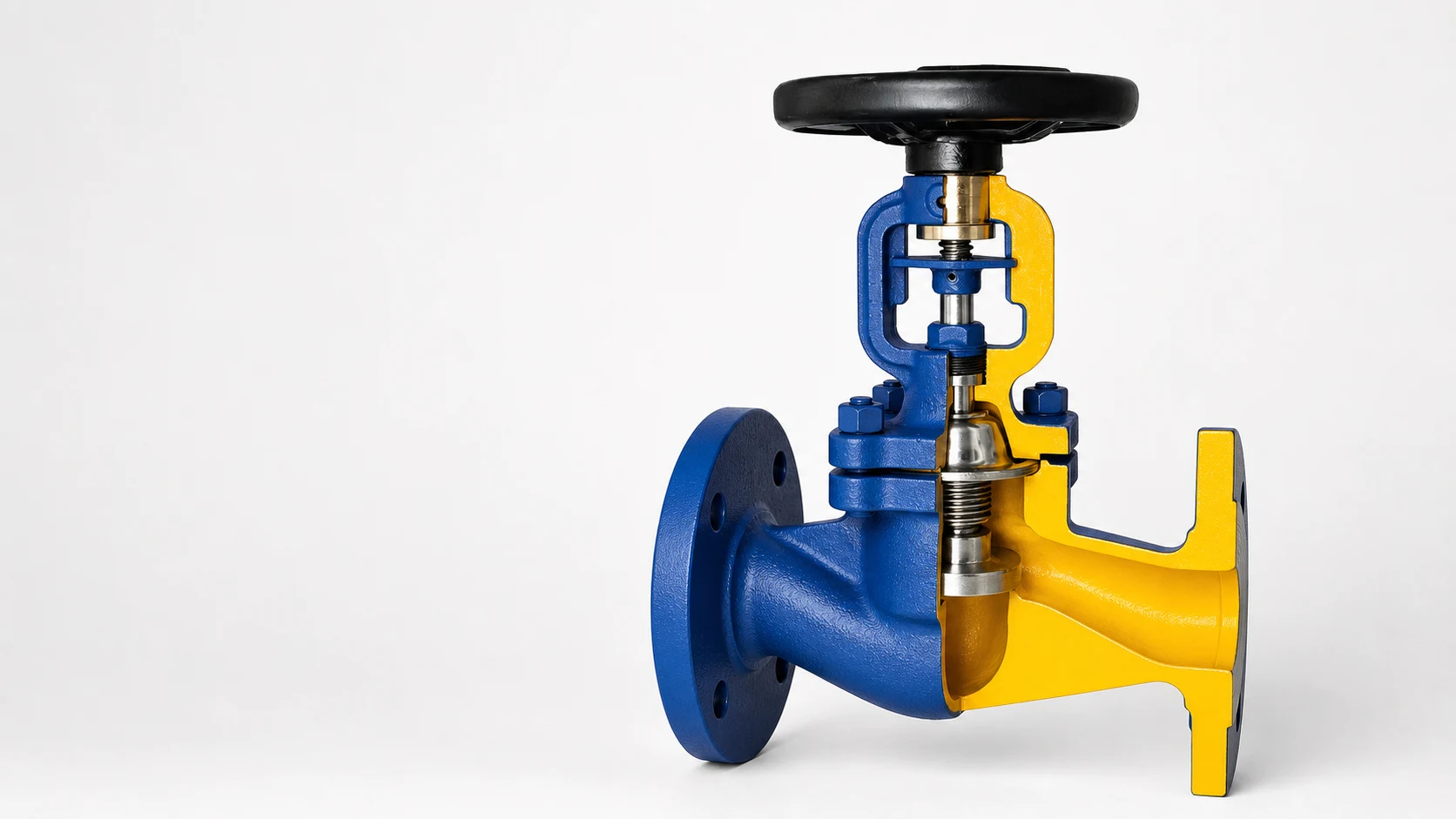
In refinery and petrochemical projects, one common valve selection mistake is using gate valves for throttling service. The result: eroded seats within weeks of operation, a forced shutdown, and avoidable replacement costs that should never have happened.
The root cause wasn’t a manufacturing defect. It was a valve type selection error — one that could have been avoided with a clear understanding of API valve types and what each design is actually engineered to do.
API valves are widely used in oil, gas, petrochemical, refinery, power generation, and industrial pipeline projects worldwide. The four core API valve types — gate, globe, check, and ball — each solve a distinct operational problem. Get the type wrong, and the spec falls apart — sometimes expensively. Get it right, and the valve just works.
Key Takeaways
– API gate valves are designed for full-open or full-closed isolation — never throttle with a gate valve
– API globe valves may support shut-off and controlled throttling when the offered configuration and service conditions are suitable
– API swing check valves prevent reverse flow passively; installation orientation determines whether they work
– API ball valves deliver quarter-turn tight shutoff with fire-safe and anti-static design options
– Matching each API valve type to the correct API standard (600, 608, 6D, 594, 623) is essential for project compliance
What Are API Valves?
API valves are built to standards published by the [American Petroleum Institute (API)](https://www.api.org/products-and-services/standards), with dimensional and pressure-temperature requirements from [ASME](https://www.asme.org/codes-standards). Design, manufacturing, and testing all follow a documented engineering framework — not a generic commercial specification.
The key API and ASME standards governing industrial valves include:
– API 600 — Bolted bonnet steel gate valves for refinery and process plant service
– API 608 — Metal ball valves with flanged, threaded, and welding ends
– API 6D — Pipeline and piping valves (gate, ball, check, plug) for transmission service
– API 598 — Valve inspection and testing (shell test at 1.5× rated pressure, seat test at 1.1×)
– ASME B16.34 — Pressure-temperature ratings and material groups for valve bodies
– ASME B16.5 — Flange dimensions and facing requirements
– ASME B16.10 — Face-to-face and end-to-end valve dimensions
– ASME B16.25 — Butt-welding end preparation
For procurement teams, the distinction between these standards is not academic. Specifying API 6D on a refinery isolation valve — or API 600 on a pipeline transmission system — creates a mismatch between design intent and actual service conditions. Both errors pass a cursory review. Neither survives a technically rigorous one.
As a factory-backed API valve supplier in China, Honiks supplies API Valves and ANSI Valves across gate, globe, check, and ball configurations — matched to project specifications with full documentation.
API Gate Valves — Full-Bore Isolation
How They Work
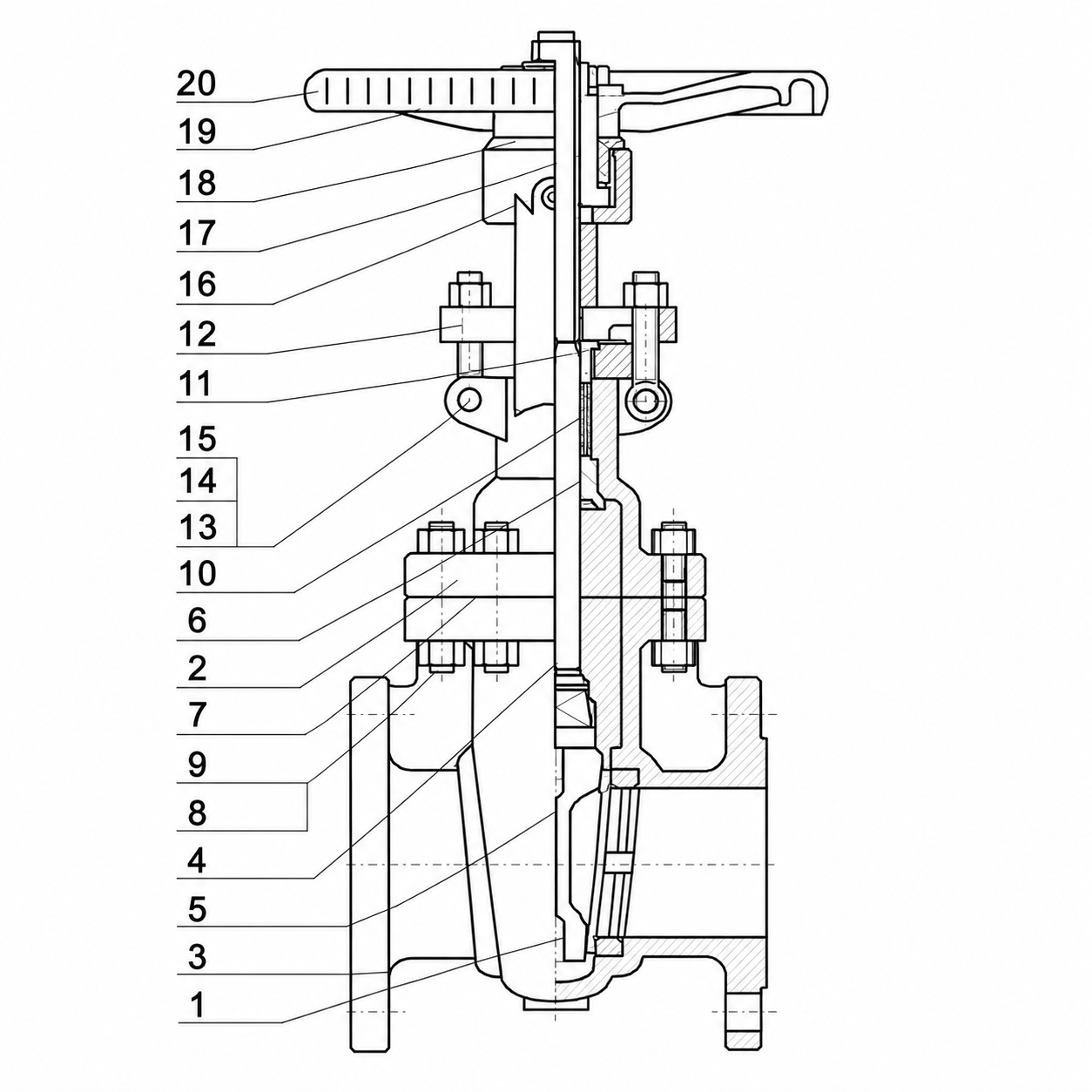
An API gate valve is a linear-motion isolation valve designed for one clear purpose: fully open or fully closed service. When the valve is open, the gate retracts completely into the bonnet, creating an unobstructed full-bore flow path with minimal pressure drop. When closed, the wedge is driven into the seat rings by stem torque, forming a metal-to-metal seal.
Critical engineering note: Do not use gate valves for throttling. A partially open gate exposes the seating surfaces to high-velocity flow erosion. The wedge vibrates against the guides, and within weeks — sometimes days — the seat faces are scored beyond repair. The valve that was supposed to isolate your line now leaks through when “closed.”
API Standards for Gate Valves
| Standard | Application | Key Features |
|---|---|---|
| API 600 | Refinery and process plant gate valves, NPS 2 and above | Bolted bonnet, flexible wedge, Class 150–2500 |
| API 602 | Compact forged steel gate valves, NPS 4 and below | Compact design for congested pipe racks, Class 150–1500 |
| API 603 | Stainless steel gate valves for corrosive service | Corrosion-resistant body and trim materials |
Engineering Note: In gas processing service with H₂S-rich conditions and thermal cycling, API gate valve selection should account for pressure class, trim material, and corrosion resistance. Standard gate valves can suffer rapid seat degradation under these conditions. For applications requiring hardfaced seating surfaces — such as API Cast Steel Gate Valve HN100 units with Stellite-faced trim — the hardfacing may be selected for the stated service; confirm the material grade, temperature limits and test basis for the offered configuration.
For high-pressure steam and boiler feedwater applications where pressure classes reach Class 1500 or Class 2500, Pressure Seal Gate Valve HN101 designs use system pressure to reinforce the bonnet seal — the higher the line pressure, the tighter the bonnet joint becomes.
For a side-by-side technical comparison between these two workhorse valve types, read our API gate valve vs API globe valve comparison.
API Globe Valves — Precision Flow Control
How They Work
Where gate valves say “binary,” API globe valves say “analog.” A globe valve uses a disc that moves perpendicular to the seat, with the flow path making an S-shaped turn through the body. This tortuous path creates flow resistance — and that’s why globe valves throttle well where gate valves can’t.
API 623 is an applicable steel globe-valve specification for some petroleum and refinery projects; BS 1873 or another project-specified standard may also apply. Confirm the controlling standard against the purchase specification and approved product package. API 623 adds globe-valve-specific design requirements beyond the general ASME B16.34 pressure-temperature framework , larger stem diameters for high-pressure sealing reliability, and full-stroke disc guidance to prevent seat chatter under high-velocity flow.
Y-Pattern vs T-Pattern
Two body patterns are commonly used in industrial applications:
– T-pattern (Z-body): The traditional configuration with a horizontal seat. Highest pressure drop, best throttling precision. Standard choice for bypass lines, drain service, and vent applications.
– Y-pattern: Stem and seat angled at approximately 45° to the flow axis. May offer lower pressure drop than a comparable T-pattern; confirm the actual performance for the body geometry, size, trim and operating conditions. Preferred for high-pressure steam service where flow efficiency matters alongside control capability.
Engineering Note: In high-pressure steam service, globe valve selection should account for pressure class, temperature, and stem strength. At Class 900 and above with superheated steam, standard BS 1873 globe valve stems may deform under seating load at temperature. For such conditions, API Cast Steel Globe Valve HN102 should be reviewed against the pressure class, temperature, stem design and approved product data; any API 623 applicability must be confirmed for the offered configuration.
For Class 900 and above, Pressure Seal Globe Valve HN103 construction provides the same self-energizing bonnet seal principle used in high-pressure gate valves.
Got a globe valve spec with a pressure class and material requirement? Browse the full industrial valve range matched to API 623 and BS 1873 options.
API Swing Check Valves — Backflow Prevention
How They Work
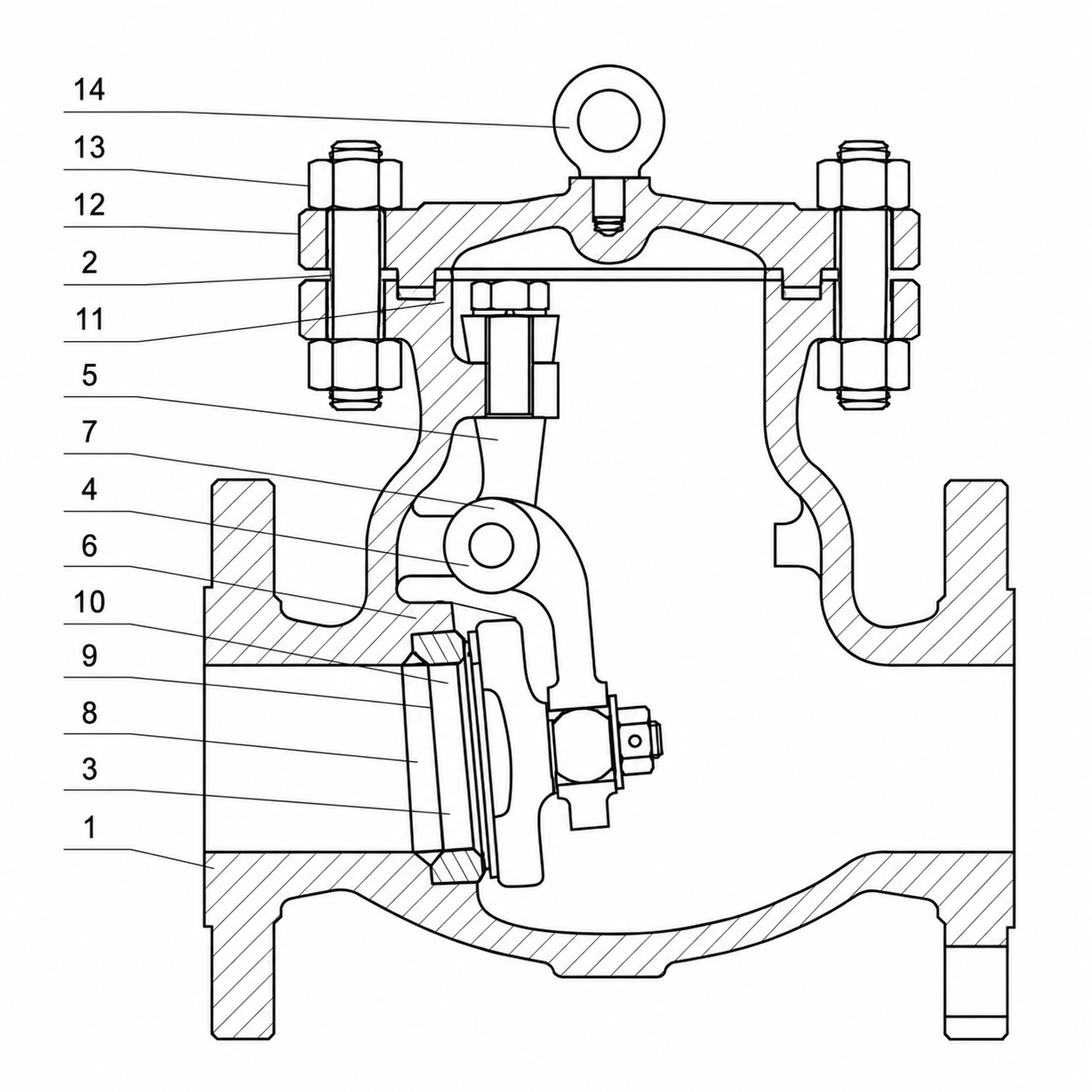
An API swing check valve is a self-acting non-return valve. It requires no external actuation — the disc swings open under forward flow pressure and closes by gravity (and optionally, spring assistance) when flow reverses. Its only job: prevent backflow that could damage upstream equipment, contaminate process streams, or cause pump reverse rotation.
API swing check valves fall under API 594, which covers two types:
– Type A: Short face-to-face, wafer/lug/double-flanged design — compact and lightweight
– Type B: Bolted-cover swing check with long face-to-face per ASME B16.10 — the traditional heavy-duty design
BS 1868 remains the legacy reference for bolted-cover swing check valves, often cited alongside API 594 in project specifications.
Installation Requirements
Installation orientation is a make-or-break detail. Swing check valves installed in horizontal lines with the bonnet facing upward operate reliably through gravity-assisted closure. Vertical installation requires upward flow only — and often demands a spring-assisted disc to ensure positive closure before reverse flow builds momentum and slams the disc into the seat.
The API Swing Check Valve HN104 line covers bolted-cover designs with renewable seat rings and optional Stellite hardfacing for services where backflow would carry abrasive particles across the seating surfaces.
For high-pressure Class 900 and above applications, see our API globe valve vs pressure seal globe valve selection guide.
API Ball Valves — Fast, Tight Shutoff
How They Work
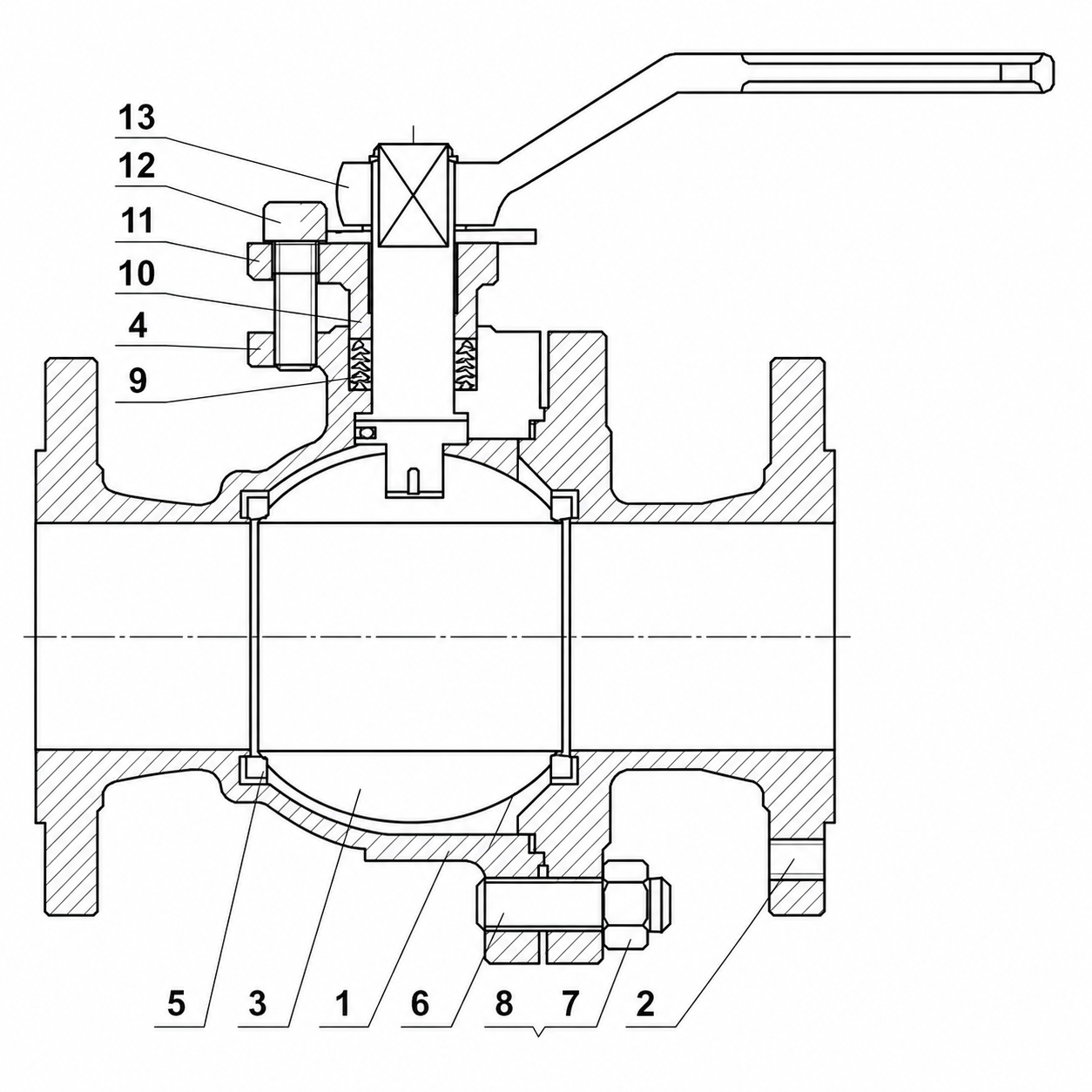
An API ball valve delivers quarter-turn isolation: 90 degrees of handle or actuator rotation takes the valve from fully open to fully closed. The ball’s spherical closure element rotates against seat rings that surround the flow port, providing bubble-tight shutoff (for soft-seated designs) or controlled metal-seat leakage rates per API 598.
Floating vs Trunnion-Mounted
Two ball support configurations define the performance envelope:
– Floating ball: The ball is unsupported except by the seat rings. Line pressure pushes the ball against the downstream seat to create the seal. Simple, cost-effective, and dominant in sizes up to NPS 8. The Floating Ball Valve HN105 covers this configuration for general process isolation.
– Trunnion-mounted (fixed ball): The ball is supported by bearings at top and bottom. Seats are spring-loaded against the ball rather than relying on line pressure. This design handles larger sizes (NPS 8 and above), higher pressure classes, and provides double block and bleed (DBB) capability. The Fixed Ball Valve HN106 is the trunnion-mounted option for demanding isolation service.
For a buyer-focused comparison of process-plant and pipeline ball valve scope, use the API 608 vs API 6D ball valve guide before finalizing the governing standard, edition, bore, testing and documentation requirements.
API 608 vs API 6D
API ball valves are covered by two standards that serve different markets:
| Standard | Application | Key Requirement |
|---|---|---|
| API 608 | Process plant ball valves, NPS ½–24, Class 150–600 (flanged) | Anti-static stem (≤10 Ω continuity), blowout-resistant stem, fire-tested construction to API 607 should be specified and verified when required by the project |
| API 6D | Pipeline transmission ball valves, NPS 2–60+, Class 150–2500 | Full-bore piggable construction, DBB capability, or cavity pressure relief |
API 608 ball valves may include anti-static design when required by the project specification — an electrical continuity path between ball, stem, and body — critical in explosive atmospheres where static discharge could ignite flammable gases. Where fire-tested construction is required, specify the applicable API 607 edition and verify the test certificate or report for the offered valve design, seat materials, size and pressure class. The ball seats against a secondary metal lip to maintain a limited but functional seal. For a deeper look at pipeline-grade valve requirements, see [Valve Magazine’s coverage of API 6D pipeline valves](https://valvemagazine.com/articles/where-valves-are-used-pipeline-valvesalways-ready/).
For a head-to-head selection comparison with gate valves, check our API gate valve vs ball valve guide.
API Valve Types Comparison Table
| Valve Type | Primary Function | API Standard | Typical Pressure Class | Common Size Range | Best For | Not For |
|---|---|---|---|---|---|---|
| Gate | Full-bore on/off isolation | API 600, API 602, API 603 | Class 150–2500 | NPS 2–48+ | Pipeline isolation, tank farm block valves, refinery process isolation | Throttling, frequent cycling, slurries |
| Globe | Shut-off + throttling | API 623, BS 1873 | Class 150–2500 | NPS 2–24 | Steam regulation, bypass lines, drain/vent service, chemical dosing | Low-pressure-drop applications, piggable lines |
| Swing Check | Backflow prevention | API 594, BS 1868 | Class 150–2500 | NPS 2–48+ | Pump discharge, compressor discharge, gravity-fed lines | Pulsating flow, vertical-downward flow |
| Ball | Quarter-turn tight shutoff | API 608, API 6D | Class 150–2500 | NPS ½–60+ | Emergency shutdown, piggable pipelines, frequent operation, fire-safe zones | Throttling (unless V-port), high-temperature >260°C (soft seats) |
When API 6D is the governing route, use the API 6D ball valve RFQ checklist to define the project basis, configuration, service data, testing and document deliverables; the standard name alone is not a complete purchase specification.
How to Select API Valves for a Project
Valve selection for an API-compliant project begins with the process data sheet. Here’s the factors that matter, in order:
Start with valve type — the function dictates the form. The comparison table above provides the decision matrix for isolation, throttling, non-return, or emergency shutoff.
NPS size and pressure class come off the pipe sizing calculations and ASME B16.34 pressure-temperature ratings for the selected body material. A Class 300 carbon steel valve at 400°C has a significantly lower allowable working pressure than at ambient — verify the derated rating, not just the flange class.
Match body material to what’s flowing through the line: A216 WCB carbon steel for general hydrocarbon service, A351 CF8M stainless for corrosive environments, A352 LCC for low-temperature applications. Trim materials — seats, disc, stem — are specified through the API trim numbering system.
End connection determines how the valve joins the piping system: raised face (RF) flanged per ASME B16.5 for standard bolted connections, butt-weld (BW) per ASME B16.25 for high-integrity welded joints, or ring-type joint (RTJ) for high-pressure gas service where gasket blowout is a risk.
Operation method and testing requirements round out the specification. Manual handwheel, gear operator (for larger sizes/higher torques), or actuated (electric, pneumatic, hydraulic) — the torque required to seat the valve under full differential pressure must inform actuator sizing. For testing, API 598 is the baseline (shell test at 1.5× rated pressure, seat test at 1.1× rated pressure). Additional requirements such as NDE (RT, UT, PT, MT), positive material identification (PMI), low-emission certification per API 624, or fire-safe testing per API 607/6FA must be explicitly stated in the purchase specification.
Practical Note: The most common specification error seen in valve RFQs is listing standards without defining which standard controls which requirement. Separating the design standard (e.g., API 600), the testing standard (API 598), and the dimensional standard (ASME B16.10/B16.5) in the specification eliminates ambiguity and ensures suppliers quote on the same basis.
Common Applications
API valves serve across the full oil and gas value chain and adjacent industrial sectors. The valve type deployed in each application is determined by service conditions and operational requirements. See valve solutions by application for a broader application overview before finalizing the valve selection:
– Oil and gas pipelines: API 6D ball valves and through-conduit gate valves for transmission lines requiring piggability; API 6D check valves at pump and compressor stations
– Petrochemical and refinery systems: API 600 gate valves for process unit isolation; API 623 globe valves for steam and hydrocarbon bypass control; API 608 ball valves for fast-acting emergency isolation
– Power plant pipelines: Pressure seal gate and globe valves for high-pressure steam (Class 900–2500); swing check valves at boiler feed pump discharge
– Water, steam, oil, and gas service: Gate valves for main line isolation, globe valves for flow regulation, check valves for backflow prevention, and ball valves for quick-acting shutoff
– General industrial ANSI pipeline systems: Gate and globe valves per ASME B16.34 for utility headers, compressed air, and cooling water circuits
Frequently Asked Questions
Q: What is the difference between API 600 and API 6D valves?
API 600 governs bolted-bonnet steel gate valves for refinery and process plant service. These use a wedge-type gate design, do not require full-bore piggability, and are built for the thermal cycling and corrosion conditions inside process facilities.
API 6D covers pipeline transmission valves such as gate, ball, check and plug valves. Project specifications under API 6D may call for full-opening or reduced-opening construction, double-block-and-bleed arrangements and cavity-pressure-relief provisions depending on valve type, configuration and purchaser requirements.
Using API 600 on a piggable pipeline will trap and destroy pipeline inspection gauges. API 6D may not be required for every refinery process-unit service; confirm the controlling standard from the service, specification and approved valve package. The choice comes down to whether the valve serves plant piping or pipeline transmission.
Q: What API standard is used for ball valves?
Two API standards apply. API 608 covers metal ball valves (floating and trunnion-mounted) for process plant service in sizes NPS ½ through 24, with requirements for anti-static stem design, blowout-resistant stem, and optional fire-safe certification per API 607. API 6D covers ball valves for pipeline transmission service in sizes NPS 2 through 60+. Piggable full-bore passage, DBB capability and cavity pressure relief are configuration- and project-dependent; confirm the required features against the applicable API 6D scope and approved datasheet. The choice between API 608 and API 6D depends on whether the valve is in plant piping or pipeline service.
Q: Which API valve is suitable for shut-off service?
Gate valves, globe valves, and ball valves all provide shut-off capability — but for different scenarios. Gate valves are often considered for infrequent full-bore isolation where low open-position pressure loss is important; confirm the valve type against the process duty and approved specification. Globe valves provide shut-off plus throttling in applications where flow regulation is needed alongside isolation. Ball valves deliver the fastest shut-off (quarter-turn) and the tightest seat seal, making them preferred for emergency shutdown, frequent cycling, and fire-safe isolation. The selection depends on operational frequency, required shut-off tightness, and whether throttling is needed.
Q: Can Honiks help match API valves to project specifications?
Yes. As a factory-backed API valve supplier, Honiks matches your specifications to suitable production options and coordinates material test certificates, pressure test reports, and dimensional inspection documentation. Send your valve list, data sheet, pressure class, material grade, end connection type, and quantity requirements for a specification-matched quotation. Contact Honiks with your project requirements.
Conclusion
A valve type mismatch — such as specifying a gate valve where a globe valve is needed — is not a material defect. It is a specification error. Each API standard number (600, 623, 594, 608, 6D) encodes decades of operational experience about what works and what fails under specific service conditions.
The four core types map to four distinct functions: gate valves for full-bore isolation, globe valves for controlled throttling and shut-off, check valves for passive backflow prevention, and ball valves for fast, tight quarter-turn isolation. For your next project, start with the valve function, then work through size, pressure class, material, end connection, and testing requirements — using the comparison table and selection factors above as your specification checklist.
Need API valves from a factory-backed supplier? Send your valve data sheet, quantity, and delivery requirements to Honiks for a specification-matched quotation.