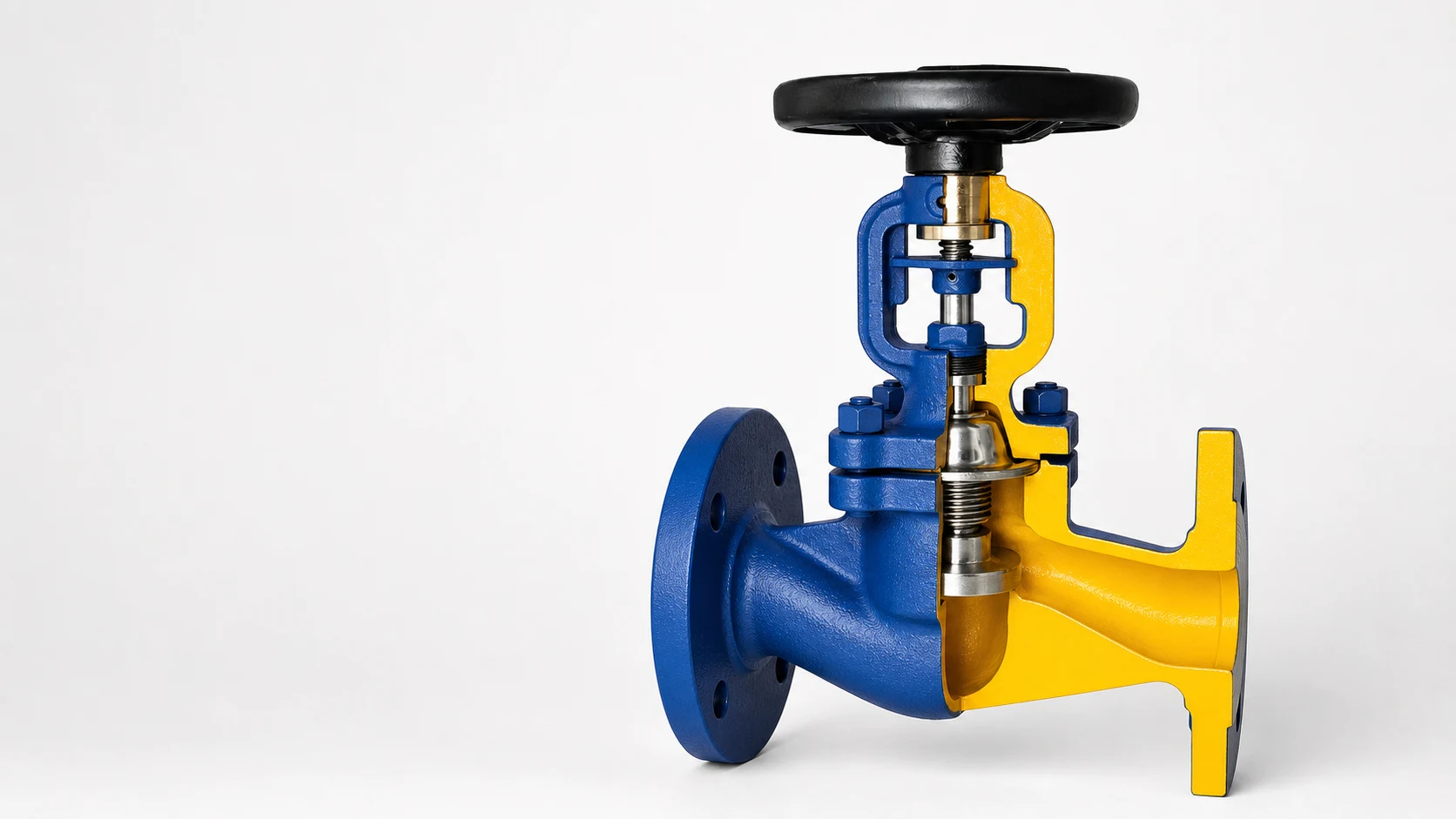
Every isolation valve decision starts with one question: gate or ball? Get it wrong, and you are not just losing efficiency — you are buying a maintenance problem that follows the plant for years. An API gate valve and an API ball valve solve different problems, and understanding where each one fits is what turns a spec sheet into a working pipeline.
This comparison covers what matters for procurement and engineering teams: how each valve works, where it belongs, where it is less suitable, and how to match the right type to your service conditions. Honiks is a factory-backed industrial valve supplier in China, working with qualified partner factories to supply industrial pipeline isolation valve solutions across gate and ball configurations.
Key Takeaways
- Gate valves use a wedge that lifts out of the flow path — when fully open, there is almost nothing left in the pipe. That means minimal pressure drop.
- Ball valves turn 90 degrees from open to closed. That quarter-turn speed is why they are commonly used in emergency shutdown and frequent-cycle service.
- Gate valves handle high temperatures where soft-seated ball valves fail. Ball valves deliver tighter shutoff on gas and light liquid service.
- For NPS 24 and above, gate valves are commonly specified — large-bore ball valves may require project-specific design and a higher budget, depending on size, pressure class and project specification.
- Honiks HN100 (gate), HN105 (floating ball), and HN106 (fixed ball) cover all three configurations, matched to project specifications.
What Is an API Gate Valve?
Crank open a gate valve and you feel it: turn after turn as the wedge climbs out of the flow path. When fully open, the gate retracts into the bonnet. What remains is a straight shot through the valve body — a full-bore passage with nothing in the way.
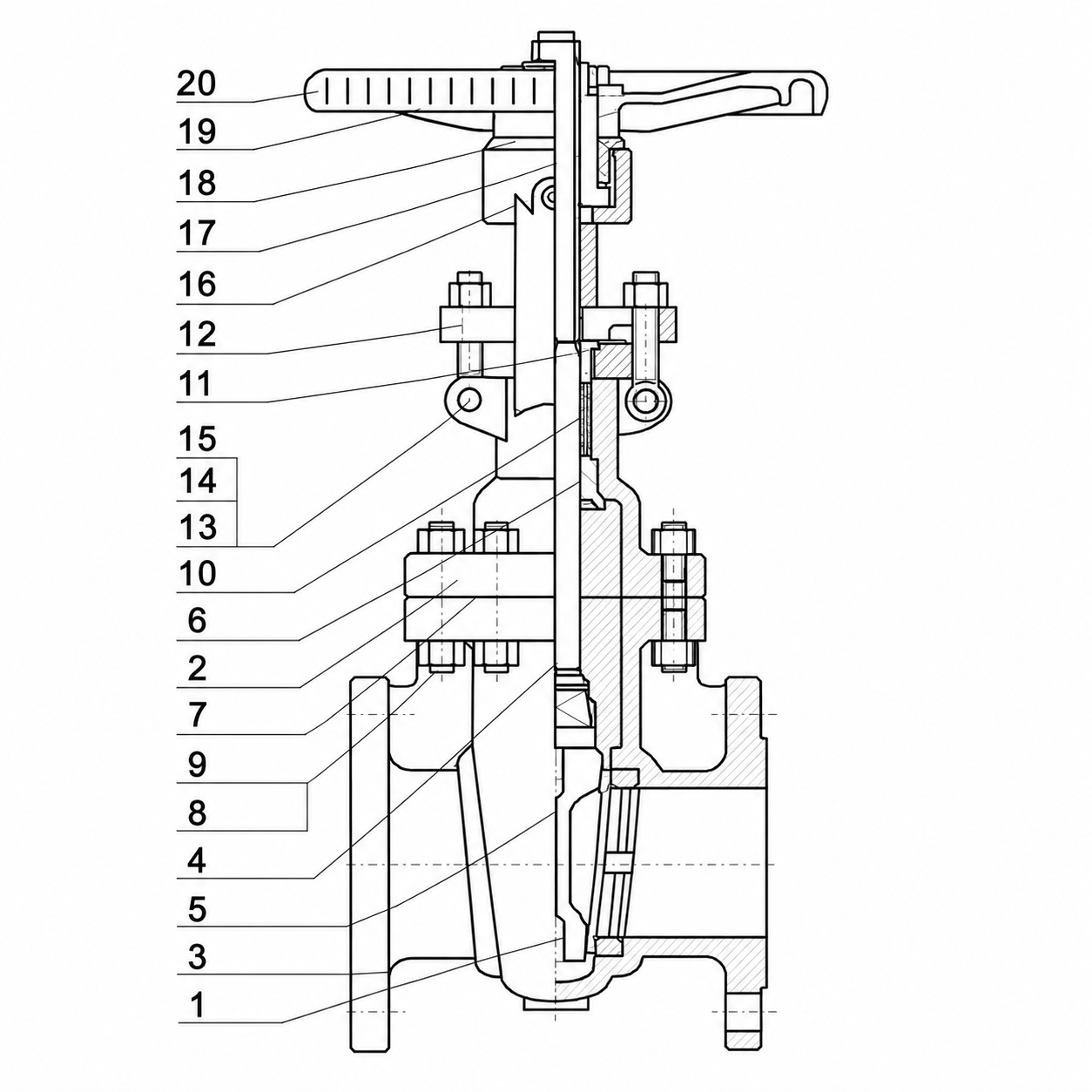
This is the API gate valve — a linear-motion isolation valve built to standards published by the American Petroleum Institute, including API 600 (cast steel), API 602 (compact forged), API 603 (stainless), and API 6D (pipeline valves). Dimensional and pressure-temperature requirements follow ASME standards B16.34, B16.10, B16.5, and B16.25. Testing is performed per API 598.
Gate valves are designed for fully open or fully closed service. They are not intended for throttling. Crack a gate partially open, and high-velocity flow scours the seating surfaces — what field technicians call wire drawing. Within weeks, the valve that was supposed to isolate the line leaks through.
Where gate valves excel: infrequent operation, high-temperature service (metal-to-metal seating survives conditions where soft seats degrade), and large diameters. A 36-inch crude-oil header should be evaluated against required isolation, pressure drop, piggability, actuation and project specifications; a gate valve is not an automatic requirement. The API Cast Steel Gate Valve HN100 covers these applications from Class 150 through Class 2500. For the full range, see the Gate Valves and API Valves categories.
For pressure seal gate valve selection guidance, see our API gate valve vs pressure seal gate valve guide.
What Is an API Ball Valve?
A ball valve takes 90 degrees of rotation from open to closed. No handwheel counting, no stem-thread engagement checks — just a quarter turn. That speed is what separates ball valves from everything else on the rack.
An API ball valve uses a spherical closure element with a bore through the center. When aligned with the pipe, flow passes straight through. Rotated 90 degrees, the solid ball body blocks the flow path against seat rings. API ball valves are commonly specified under API 608 for process plant service or API 6D for pipeline service. Anti-static design, blowout-resistant stem construction, and API 607 fire-tested construction should be specified and verified when required by the project.
Ball valves deliver tight shutoff performance, depending on seat design and test requirements, for soft-seated designs — and operate at quarter-turn speed. They are suited to frequent quarter-turn operation when seat material, pressure class, media and actuator sizing are selected correctly, making them a common specification for frequent operation and emergency shutdown systems. The trade-off: soft seats (PTFE, PEEK, Devlon) limit the upper temperature range. For high-temperature service above approximately 200°C for PTFE seats, metal-seated gate valves become necessary.
See the Ball Valves category for the full Honiks range, including floating and trunnion-mounted configurations.
API Gate Valve vs Ball Valve: Main Differences
| Feature | API Gate Valve | API Ball Valve | Selection Note |
|---|---|---|---|
| Primary function | Full-bore on/off isolation | Quarter-turn tight shutoff | Gate = low pressure drop; Ball = speed + seal |
| Flow path | Straight through (full bore) | Straight through (full or reduced bore) | Both are full-bore capable; gate achieves it with fewer components |
| Pressure drop | Negligible when fully open | Low (full-bore); moderate (reduced-bore) | Gate wins on ΔP in large diameters |
| Operation speed | Multi-turn (slow) | Quarter-turn (fast) | Ball is commonly used in ESD and frequent cycling |
| Throttling suitability | Not designed for throttling | Not designed without V-port or characterized trim | Neither standard type throttles well |
| Pigging suitability | Through-conduit gate per API 6D: yes | Full-bore ball per API 6D: yes | Both require full-bore configuration |
| Large size availability | NPS 2–48+ commonly available | NPS ½–24 standard; NPS 24–60 possible at cost | Gate valves may be more economical in some large-bore isolation duties |
| Typical applications | Crude oil, tank farms, refinery isolation, steam, large water lines | Gas transmission, ESD, compressor stations, product pipelines, frequent cycling | Application, not superiority, drives selection |
| Common API standards | API 600, API 602, API 603, API 6D | API 608, API 6D | API 6D applies to both for pipeline service |
| Maintenance | Seat and wedge inspection with bonnet removal; standard tools | Seat ring replacement; ball surface inspection; commonly simpler disassembly | Ball valves generally easier to service |
When to Choose an API Gate Valve
Gate valves earn their keep when:
- The line runs wide open most of the time. If the valve cycles a few times per month or per shutdown, gate actuation speed does not matter. The pressure drop advantage of full-bore design does.
- Temperatures exceed soft seat limits. Metal-to-metal gate seating handles temperatures where PTFE and PEEK break down. Steam lines, hot oil, refinery process units — these are gate valve territory.
- The pipe diameter is large. Above NPS 24, gate valves are commonly the more economical specification. Large-bore ball valves exist, but the cost and weight penalty is significant. For 36-inch Class 600 service, compare gate and trunnion-ball options against the project flow, pressure-drop, actuation, maintenance and cost requirements; do not infer the selection from diameter alone.
- Piggability is required. Through-conduit gate valves per API 6D pass pigs cleanly — a requirement on any pipeline designed for inline inspection.
The API Cast Steel Gate Valve HN100 represents this category for standard API pipeline isolation service.
For a detailed comparison of gate and globe valve selection, see our API gate valve vs API globe valve comparison.
When to Choose an API Ball Valve
Ball valves take over when:
- Operation speed matters. Emergency shutdown valves, compressor station isolation, pig launcher/receiver closures — anywhere the valve needs to close in seconds, not minutes. A quarter-turn actuator achieves what a gate valve’s multi-turn mechanism cannot.
- Tight shutoff is a priority specification requirement. Soft-seated ball valves achieve tight shutoff performance, depending on seat design and test requirements. On gas transmission lines, product pipelines, and hazardous fluid service, that sealing performance is often a priority specification requirement.
- The valve cycles frequently. Ball valves are well suited to frequent quarter-turn operation when seat material, bearing design, operating torque and actuator sizing are selected for the required cycle duty. Gate valve stem threads and wedge guides are designed for low-cycle service. If operators open and close the valve daily, specify a ball valve.
- Space is constrained. Quarter-turn actuation means smaller actuators and less headroom. In congested pipe racks and offshore modules, the compact actuation envelope matters.
Floating Ball Valve vs Fixed Ball Valve
The distinction between floating and trunnion-mounted ball valves affects cost, size range, and seat performance.
A floating ball valve supports the ball only through the seat rings. Line pressure pushes the ball against the downstream seat to create the seal. Simple, cost-effective, and commonly used up to around NPS 8, depending on pressure class and design. The Floating Ball Valve HN105 covers this configuration for general process isolation.
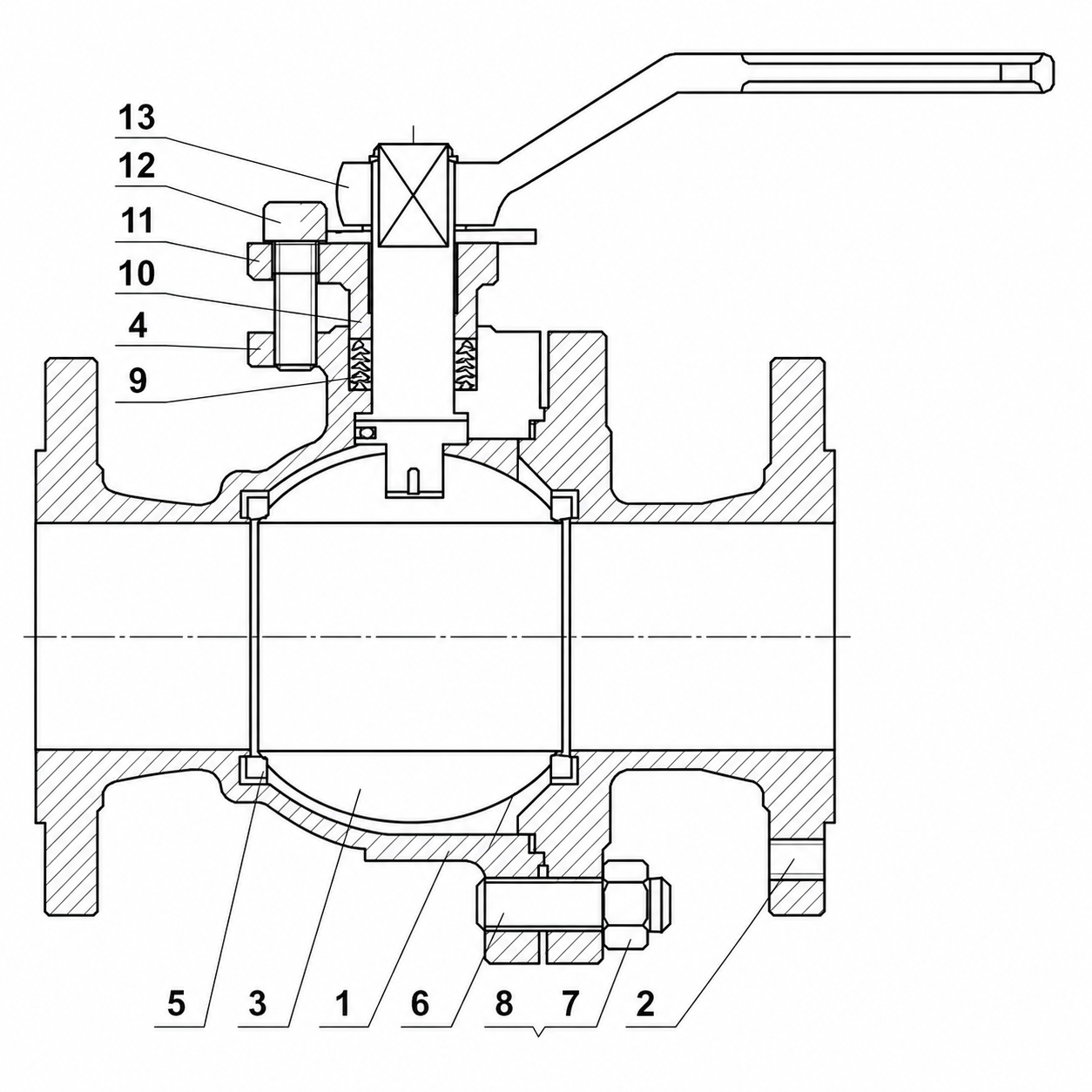
A fixed (trunnion-mounted) ball valve supports the ball with bearings at top and bottom. The seats are spring-loaded against the ball rather than relying on line pressure. This is often selected for larger sizes (NPS 8 and above) and higher pressure classes, and a trunnion configuration may be offered with DBB. Confirm the specific seat, cavity and bleed arrangement and test evidence for the offered valve. The Fixed Ball Valve HN106 is the trunnion-mounted option for demanding service.
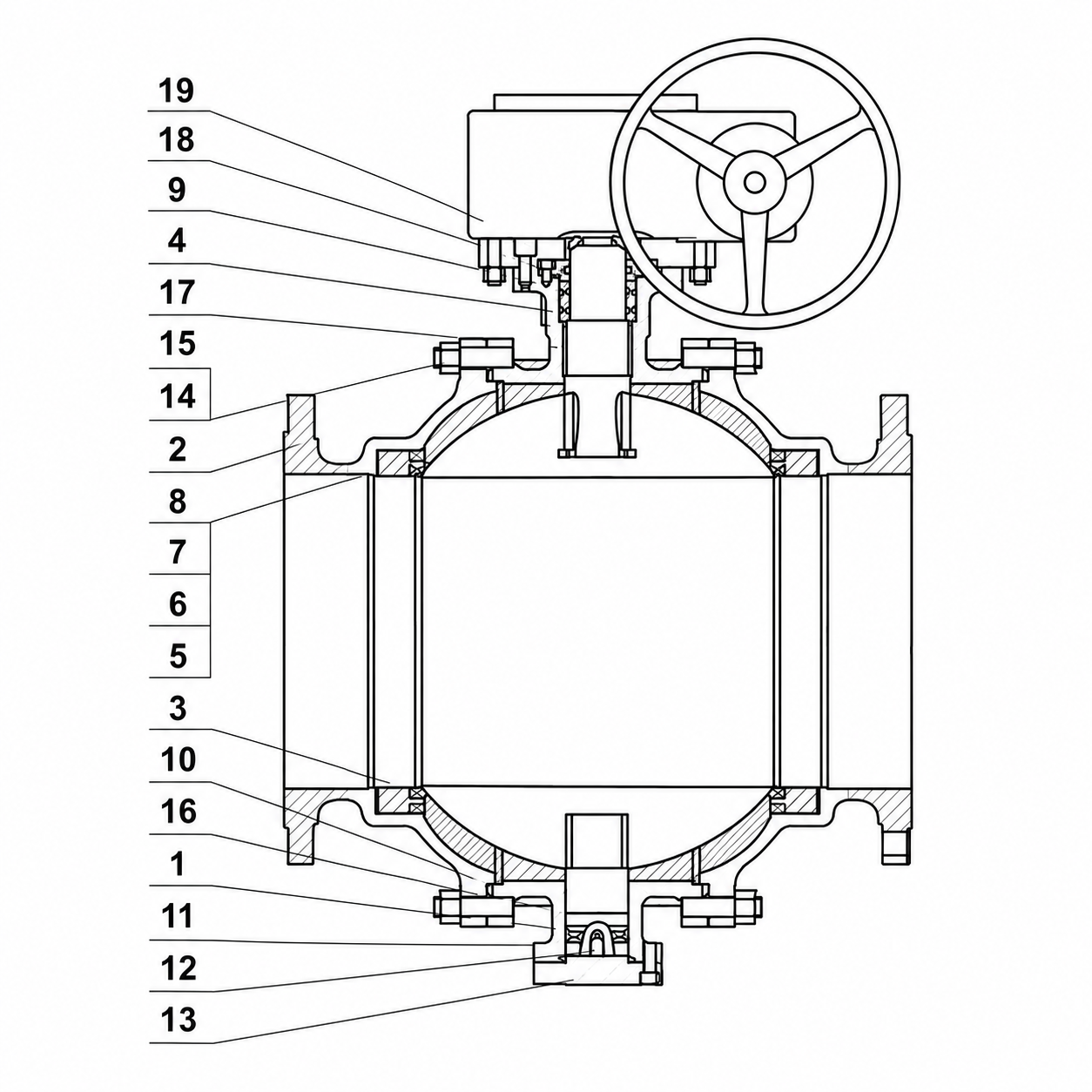
The rule of thumb: below NPS 8, floating ball is standard. Above NPS 8, or at Class 900 and above regardless of size, fixed ball is the configuration. Final selection should be confirmed against the project piping specification.
Common Selection Mistakes
Using a gate valve where cycling is frequent. Gate valve stem threads and wedge guides wear under daily operation. If operators need to open and close the valve multiple times per shift, specify a ball valve.
Specifying a soft-seated ball valve on high-temperature service. PTFE seats degrade above approximately 200°C. For steam, hot oil, or refinery process temperatures, metal-seated gate valves or specialized high-temperature ball valve designs are required.
Selecting a reduced-bore ball valve for a piggable line. Only full-bore valves pass pigs. A reduced-bore ball valve on a pipeline designed for inline inspection will stop the pig — a discovery nobody wants to make during an ILI run.
Ignoring the standard. A gate valve built to API 600 for refinery service and a gate valve built to API 6D for pipeline service have different face-to-face dimensions, piggability, and leakage criteria. The pressure class matching does not mean the standard matches. For projects referencing ANSI piping specifications, proper ANSI valve selection should consider both the design standard and the dimensional standard.
If the selected valve type is a ball valve, resolve the governing standard separately: the API 608 vs API 6D buyer guide explains why application context, configuration, edition, testing and documentation must be confirmed before quotations are compared.
Buyer Checklist for API Valve Selection
When preparing a valve inquiry, providing complete information reduces clarification rounds:
Size and pressure class. NPS size and Class (150/300/600/900/1500/2500 per ASME B16.34). This determines the basic pressure-containing envelope.
Material and service conditions. Body material (WCB, WC6, WC9, CF8M, LCB), trim material, process medium, and operating temperature range. Temperature derates allowable working pressure — verify against ASME B16.34 tables.
End connection and operation. RF flanged, BW, or RTJ. Manual handwheel, gear operator, or actuated (electric, pneumatic). For actuated valves, specify fail position if applicable.
Applicable standard. API 600, API 6D, API 608, or other governing standard. The standard affects dimensions, testing requirements, and documentation scope.
Quantity and documentation. Number of valves per size/class. Material certificates (EN 10204 3.1/3.2), PMI, NDE scope, API 598 test reports, and project ITP requirements.
FAQ
Is a gate valve better than a ball valve?
That depends on the application. The better question is: what is flowing, how hot, how large is the pipe, and how often does it need to operate? Gate valves win on temperature tolerance, large diameters, and low pressure drop for infrequent operation. Ball valves win on operation speed, shutoff tightness, and cycle life. They are different tools, not competing ones.
Can API ball valves be used for throttling?
Standard ball valves are not designed for throttling. Cracking a ball valve partially open concentrates flow velocity across the seat edges, accelerating wear. For throttling applications, a globe valve, control valve, or a ball valve with V-port or characterized trim is required — not a standard full-bore or reduced-bore ball valve.
Which valve has lower pressure drop?
A full-bore gate valve, fully open, has negligible pressure drop — the flow path is a straight-through passage with no obstruction. A full-bore ball valve, fully open, is close behind. A reduced-bore ball valve introduces a modest pressure drop. In practice, both gate and full-bore ball valves are low-ΔP devices; the difference matters more in large-diameter, high-flow-rate lines where even small head losses translate into pumping energy costs.
Should I choose floating ball valve or fixed ball valve?
Up to NPS 8 and Class 600, floating ball is often a cost-effective starting configuration. Above NPS 8 or at Class 900 and above, fixed (trunnion-mounted) ball is often considered because bearing support can reduce operating torque and seat loading. For DBB requirements, specify the required definition and verify the offered seat, cavity and bleed arrangement and test evidence; fixed/trunnion is often used, but mounting style alone is not proof. Final selection should be confirmed against the project valve datasheet.
When should I choose an API gate valve?
Choose a gate valve when the line runs wide open most of the time, when pipe diameter is NPS 24 or above, when operating temperatures exceed soft seat limits, or when infrequent operation makes actuation speed irrelevant. If none of these conditions apply, compare the application against ball valve capabilities — the overlap zone exists, and the project specification should guide the final call.
For a complete overview of API gate, globe, check and ball valve selection, read our API valve types guide.
For a deeper ball-valve-only comparison, see the floating ball valve vs fixed ball valve selection guide.
Conclusion
Choosing between a gate valve and a ball valve is not about which valve is better. It is about which one matches the service — and which one saves your operations team from problems six months after commissioning.
For high-temperature, large-diameter, infrequent-operation service, the API Cast Steel Gate Valve HN100 is commonly specified. For fast-acting, tight-shutoff, frequent-cycle service, the Floating Ball Valve HN105 and Fixed Ball Valve HN106 cover the ball valve side of the equation. For projects referencing ANSI piping codes, see the ANSI Valves category.
As an API valve supplier in China, Honiks matches valve specifications to your project requirements — valve type, NPS size, pressure class, body material, end connection, medium, and quantity. Contact Honiks with your valve data sheet for a specification-matched quotation.