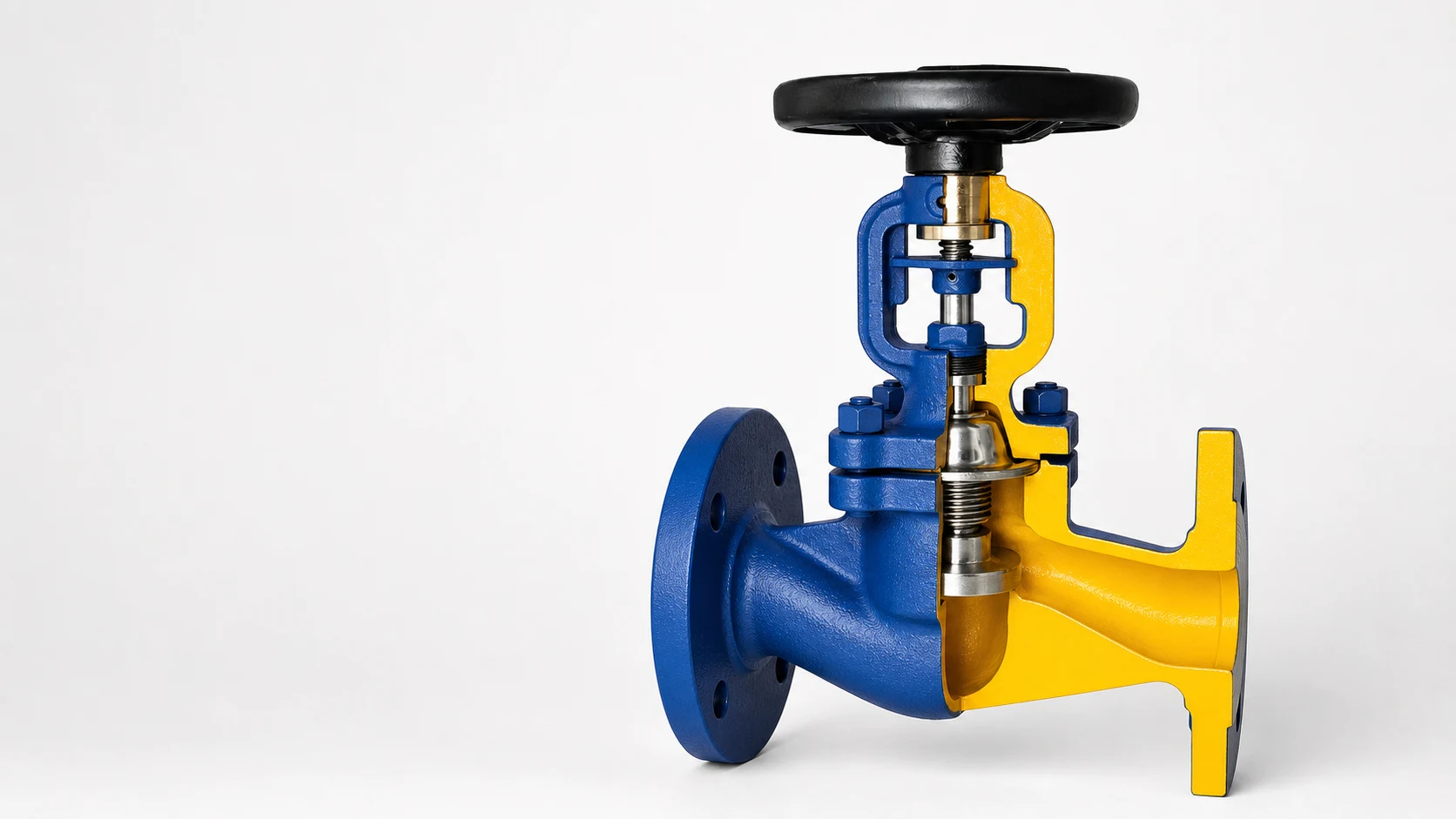
Choosing between an API gate valve and an API globe valve is one of the most common decisions in industrial valve selection. Both are linear-motion valves built to API and ASME standards, both are widely used in oil and gas, petrochemical, power generation, and pipeline projects — but they serve fundamentally different purposes. Gate valves give you full-bore isolation with very low pressure drop when fully open. Globe valves let you set a flow rate — and still close tight when you need to.
Selecting the wrong type does not usually cause an immediate safety failure. It causes operational problems that accumulate over months: eroded seats from throttling a gate valve, excessive pumping costs from a globe valve’s pressure drop on a line that never needed flow control, or premature seat leakage on a valve operated outside its design envelope. This guide explains how to match each flow control valve and pipeline isolation valve to its correct application.
Key Takeaways
- API gate valves are designed for full-open or full-closed isolation — they are not intended for throttling.
- API globe valves handle both shut-off and flow regulation, with higher pressure drop as the trade-off for throttling precision.
- The most common specification error is using a gate valve on a line that requires flow control.
- Pressure drop, not just pressure class, should drive the decision between gate and globe valves in large-diameter lines.
- Honiks HN100 (gate) and HN102 (globe) cover both valve types, matched to project specifications — not a generic catalog.
What Is an API Gate Valve?
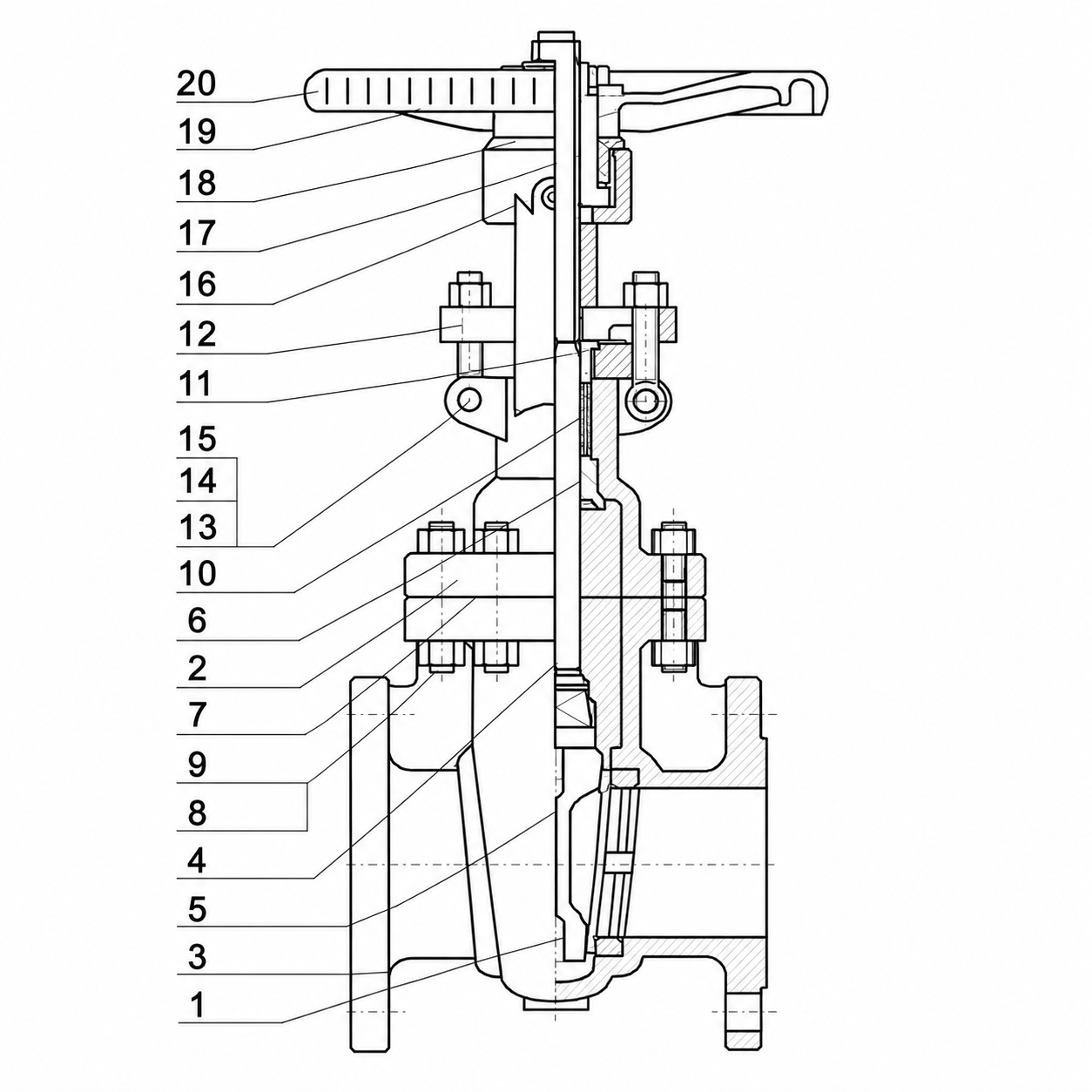
An API gate valve is a linear-motion valve in which a wedge or slab gate moves perpendicular to the flow path. When fully open, the gate retracts entirely into the bonnet, leaving an unobstructed full-bore passage — this is what gives gate valves their defining advantage: minimal pressure drop in the open position. As a pipeline isolation valve, gate valves are commonly considered for crude oil transmission, product pipelines and tank-farm block service when the project requires full-open/full-closed isolation; confirm the specification and operating duty.
Gate valves are specified for isolation service only — fully open or fully closed. The gate and seat geometry is not designed to handle sustained partial opening. When a gate is cracked open for throttling, high-velocity flow concentrates on a narrow opening between the gate and seat, causing localized erosion (wire drawing) and vibration that can score the seating surfaces within weeks.
API gate valves are manufactured to standards published by the American Petroleum Institute, including API 600 (bolted bonnet cast steel gate valves), API 603 (stainless steel gate valves), and API 6D (pipeline valves). Dimensional and pressure-temperature requirements follow ASME standards B16.34, B16.10, and B16.5. Pressure testing is performed per API 598.
For project-based procurement, the API Cast Steel Gate Valve HN100 covers bolted bonnet configurations from Class 150 through Class 2500, sizes NPS 2 to NPS 48, with material options including WCB, WC6, WC9, and LCB. See the full range on the Gate Valves and API Valves category pages.
For selection guidance between gate and ball valve designs, see our API gate valve vs ball valve comparison.
What Is an API Globe Valve?
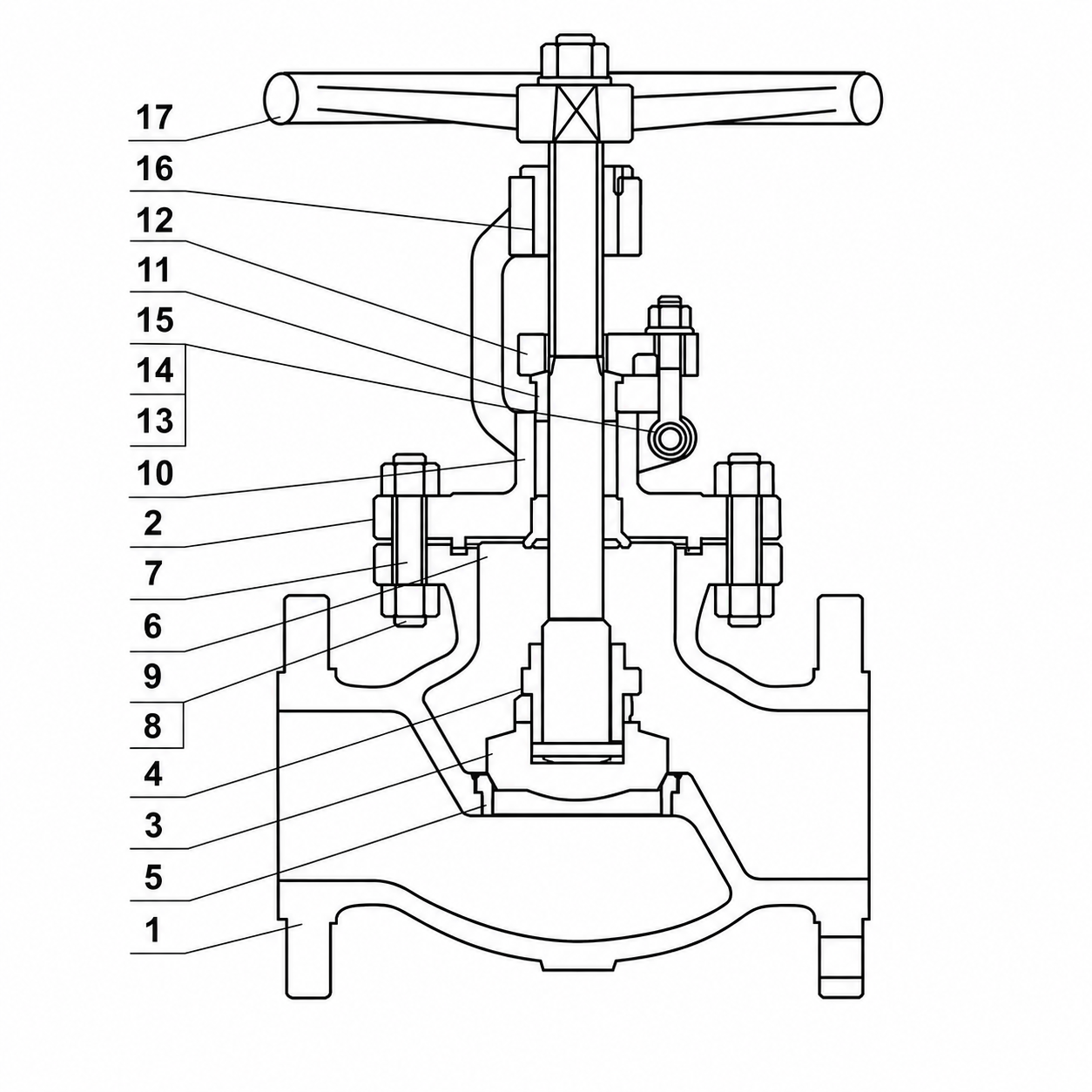
An API globe valve uses a disc that moves perpendicular to the seat, but unlike a gate valve, the flow path makes an S-shaped turn through the valve body. This tortuous path creates deliberate flow resistance — which is precisely what gives the globe valve its throttling capability. As a flow control valve, the globe valve handles applications where flow rate, pressure, or temperature must be adjusted through the valve.
The disc position relative to the seat can be adjusted across the full stroke, allowing the operator to regulate flow rate. When fully closed, the disc seats against the seat ring to provide shut-off. This dual capability — throttling plus positive shut-off — makes the globe valve the standard choice for bypass lines, drain and vent service, steam conditioning, chemical dosing, and any application where flow must be adjusted rather than simply turned on or off.
The trade-off is pressure drop. Even at full open, the S-shaped flow path in a globe valve creates significantly higher head loss than the straight-through passage of a gate valve. In large-diameter lines or applications where pumping energy is a significant operating cost, this pressure drop should be factored into the total cost of ownership — not just the valve purchase price.
API 623 is commonly specified for steel globe valves in some petroleum and refinery projects; BS 1873 or another project-specified standard may also apply. Confirm the controlling standard against the project specification and approved datasheet.
The API Cast Steel Globe Valve HN102 covers bolted bonnet configurations in T-pattern and Y-pattern body styles, suitable for pressure classes from Class 150 through Class 2500. See the full range on the Globe Valves and ANSI Valves category pages.
API Gate Valve vs API Globe Valve: Main Differences
How they compare — function, flow path, standards, and the Honiks model for each:
| Feature | API Gate Valve | API Globe Valve |
|---|---|---|
| Main function | Full-bore on/off isolation | Shut-off + throttling / flow regulation |
| Flow path | Straight through (full bore) | S-shaped / tortuous path |
| Pressure drop | Minimal when fully open | Higher — inherent to the flow path design |
| Throttling ability | Not designed for throttling; partial opening causes seat erosion | Designed for throttling across the full disc stroke |
| Typical service | Pipeline isolation, tank farm block valves, process unit isolation | Bypass control, steam regulation, drain/vent, chemical dosing, flow adjustment |
| Common standards | API 600, API 603, API 6D, ASME B16.34 | API 623, BS 1873, ASME B16.34 |
| Typical Honiks model | API Cast Steel Gate Valve HN100 | API Cast Steel Globe Valve HN102 |
Two things that catch specifiers off guard: first, many globe-valve configurations have a preferred flow direction; confirm the flow arrow, trim arrangement and manufacturer installation instructions for the offered design. Gate valves are commonly bidirectional, which simplifies installation in lines where flow direction may reverse. Second, for a given NPS and pressure class, a globe valve is generally heavier and taller than an equivalent gate valve — this affects pipe support requirements in congested pipe racks.
When to Choose an API Gate Valve
Gate valves are the preferred choice when the application requires:
- Full-bore pipeline isolation where pressure drop must be kept to a minimum — crude oil transmission, product pipelines, tank farm suction and discharge headers, and large-diameter water lines.
- Infrequent operation — gate valves are commonly operated a few times per month or per shutdown cycle, not daily.
- Piggable pipelines — through-conduit gate valves per API 6D provide a smooth bore for inspection gauge passage. Globe valves can’t pass a pig — the S-shaped path blocks it.
- Refinery and petrochemical process isolation — Class 150 through Class 600 gate valves for unit isolation in crude distillation, hydrotreating, and catalytic reforming units.
- Tank farm block valves — large NPS gate valves (NPS 24 and above) for isolating storage tank inlet and outlet lines.
If the line runs wide open most of the time, specify a gate valve. The API Cast Steel Gate Valve HN100 covers these applications across Class 150 through Class 2500.
When to Choose an API Globe Valve
Globe valves are the appropriate choice when:
- Flow regulation is required — any service where the flow rate, pressure, or temperature must be adjusted through the valve.
- Steam service — main steam bypass, turbine bypass, steam conditioning, auxiliary steam letdown stations. Y-pattern designs offer lower pressure drop for high-pressure steam applications.
- Bypass, drain, and vent lines — small-bore globe valves (NPS 1/2 through NPS 4) are standard for bypass around larger block valves, high-point vents, low-point drains, and instrument isolation.
- Chemical dosing and flow control loops — where precise adjustment of flow rate affects process variables such as pH, temperature, or reagent concentration.
- Frequent operation — globe valves are better suited to daily cycling than gate valves.
If someone needs to dial in a flow rate, not just bang-bang open/close, reach for a globe valve. The API Cast Steel Globe Valve HN102 in T-pattern or Y-pattern configuration handles these duties across Class 150 through Class 2500.
Common Selection Mistakes
Mistake 1: Using a gate valve for throttling service.
A partially open gate valve concentrates flow velocity across a narrow gap, causing erosion of the seat faces. The valve may appear to control flow initially, but seat leakage develops rapidly. This is the single most common misapplication in industrial valve selection.
Mistake 2: Specifying a globe valve on a low-pressure-drop line.
If the system was designed around the pressure drop of a full-bore valve, replacing it with a globe valve increases pumping energy consumption. For large-diameter lines (NPS 12 and above) where the valve will be fully open most of the time, a gate valve can offer lower lifecycle cost, even if the unit price is higher.
Mistake 3: Selecting by pressure class alone.
Pressure class is necessary but not sufficient. The service medium, operating temperature (which derates the allowable working pressure per ASME B16.34 curves), end connection type, and applicable design standard all affect whether the valve is suitable. A Class 300 gate valve in WCB at 400°C may have a lower allowable working pressure than the pipeline design pressure — verify against the project pipe specification, not the flange rating.
Mistake 4: Neglecting the operating standard.
A gate valve built to API 600 for refinery service and a gate valve built to API 6D for pipeline service have different design requirements — face-to-face dimensions, piggability, and seat leakage acceptance criteria all differ. Specifying the wrong standard creates a compliance gap even if the pressure class matches.
Buyer Checklist Before Ordering
When preparing an inquiry for gate valves or globe valves, providing the following information allows suppliers to return an accurate technical and commercial proposal:
- Valve type: Gate valve (isolation) or globe valve (shut-off and throttling).
- NPS size: Nominal pipe size. Available ranges vary by valve type and pressure class.
- Pressure class: Class 150, 300, 600, 900, 1500, or 2500 per ASME B16.34.
- Body material: WCB (carbon steel), WC6, WC9 (Cr-Mo alloy), CF8M (stainless), LCB/LCC (low-temperature carbon steel).
- Trim material: API trim numbers (Trim 1, 5, 8, 12). Stellite hardfacing is commonly specified for abrasive or high-cycle service.
- End connection: RF (raised face flanged), BW (butt-weld per ASME B16.25), or RTJ (ring-type joint).
- Operation type: Manual handwheel, gear operator, or actuated (electric, pneumatic).
- Applicable standard: API 600, API 603, API 623, API 6D, or other project-governing standard.
- Medium and temperature: Confirms material compatibility and the correct pressure-temperature derating per ASME B16.34 curves.
- Quantity and documentation: Material test certificates, PMI, NDE scope, pressure test reports, and inspection and test plan — specify at the RFQ stage.
When sourcing from an API valve supplier in China, confirm the supplier holds current API certifications, and request material traceability documentation as part of the quotation package.
Once gate-valve isolation has been selected, use the gate valve RFQ checklist to organize service conditions, configuration and documentation requirements before comparing quotations.
FAQ
Q1: Is a gate valve better than a globe valve?
Gate and globe valves aren’t on a “better or worse” scale — they do different jobs. A gate valve is the right choice for full-bore isolation with minimal pressure drop when the valve will be operated infrequently. A globe valve is the right choice when the application requires flow regulation, frequent operation, or both shut-off and throttling from a single valve. Ask what the line needs to do, and how often — not which valve is “better.”
Q2: Can API gate valves be used for throttling?
Gate valves are not designed for throttling and are not recommended for throttling service. When a gate valve is operated in a partially open position, the flow accelerates through the narrow opening between the gate and seat, causing erosion of the seating surfaces. Over time, this wire-drawing effect scores the seats, and the valve loses its ability to achieve tight shutoff. For applications requiring flow regulation, specify a globe valve or control valve instead.
Q3: Why does a globe valve have higher pressure drop?
The higher pressure drop comes from the S-shaped flow path, which forces the fluid to change direction twice — once entering the seat area and once exiting. This flow resistance is inherent to the design and is the same characteristic that gives the globe valve its throttling precision. The pressure drop can be estimated from the valve’s flow coefficient (Cv), which manufacturers provide for each size and pattern. Y-pattern designs may offer lower pressure drop than standard T-pattern globe valves, depending on size, trim and service conditions.
Q4: Which valve should I choose for steam service?
For main steam isolation — where the valve is either fully open during operation or fully closed during maintenance — a gate valve is commonly specified. For Class 900 and higher high-temperature services, pressure-seal gate valves are widely considered, while the final bonnet construction depends on the project specification and approved valve design. For steam bypass, steam conditioning, attemperator control, and turbine bypass applications where flow must be regulated, a globe valve — particularly Y-pattern for high-pressure steam — is the appropriate selection. The key factor is whether the valve’s role is isolation or regulation.
For a broader overview of API gate, globe, check and ball valve functions, see our API valve types guide.
Conclusion
Gate valves isolate. Globe valves throttle. When reviewing a P&ID, ask whether the line needs to be open most of the time, or whether someone needs to set a flow rate. Each valve type is governed by its own API standards and designed for its own operating profile. The specification should start with the valve’s function in the piping system, then proceed through pressure class, material, end connection, and testing requirements.
For project-based API valve selection, Contact Honiks with the valve type, NPS size, pressure class, body material, end connection type, and quantity. As a factory-backed industrial valve supplier, Honiks reviews your specifications against temperature and medium data before quoting — matching valves to service conditions, not just part numbers.