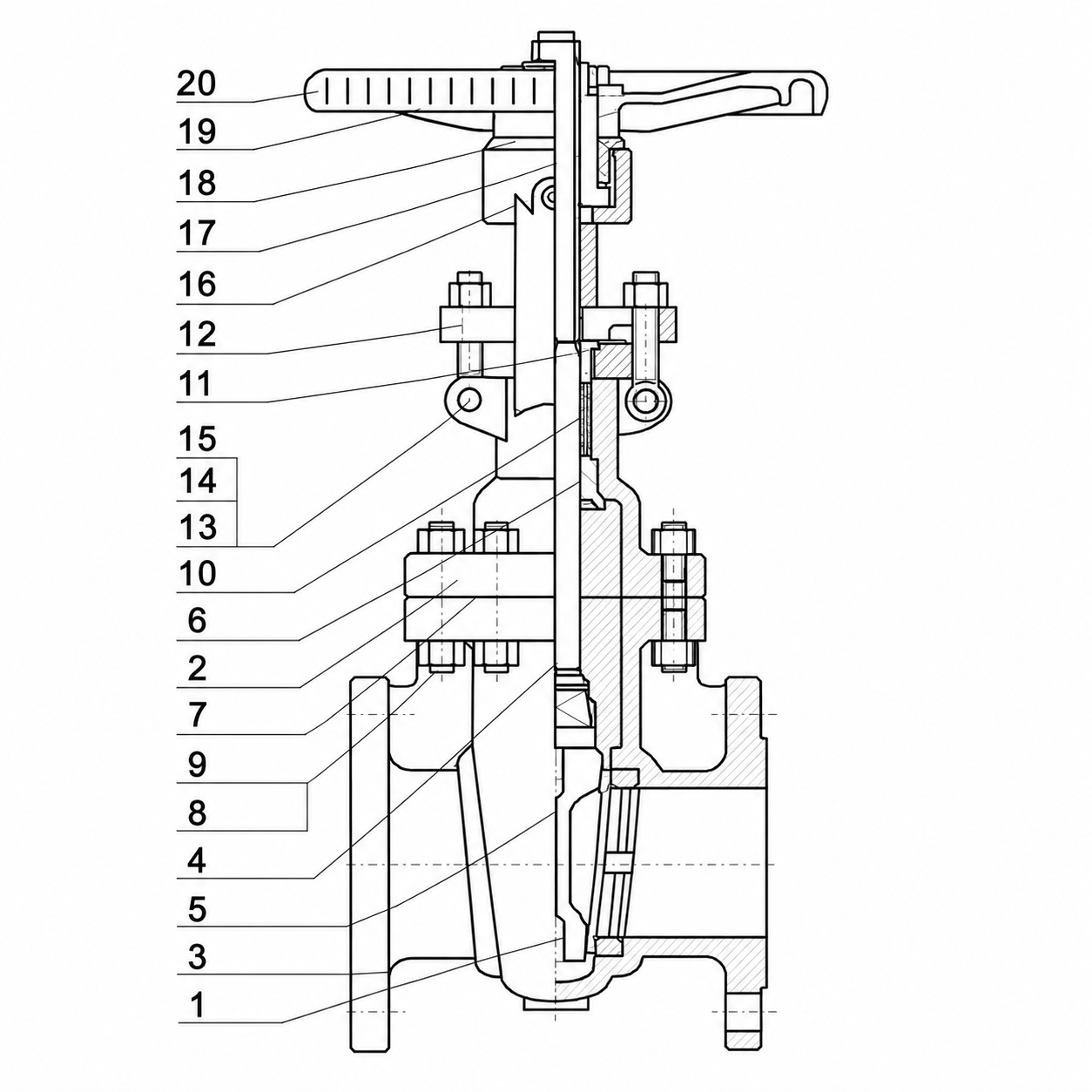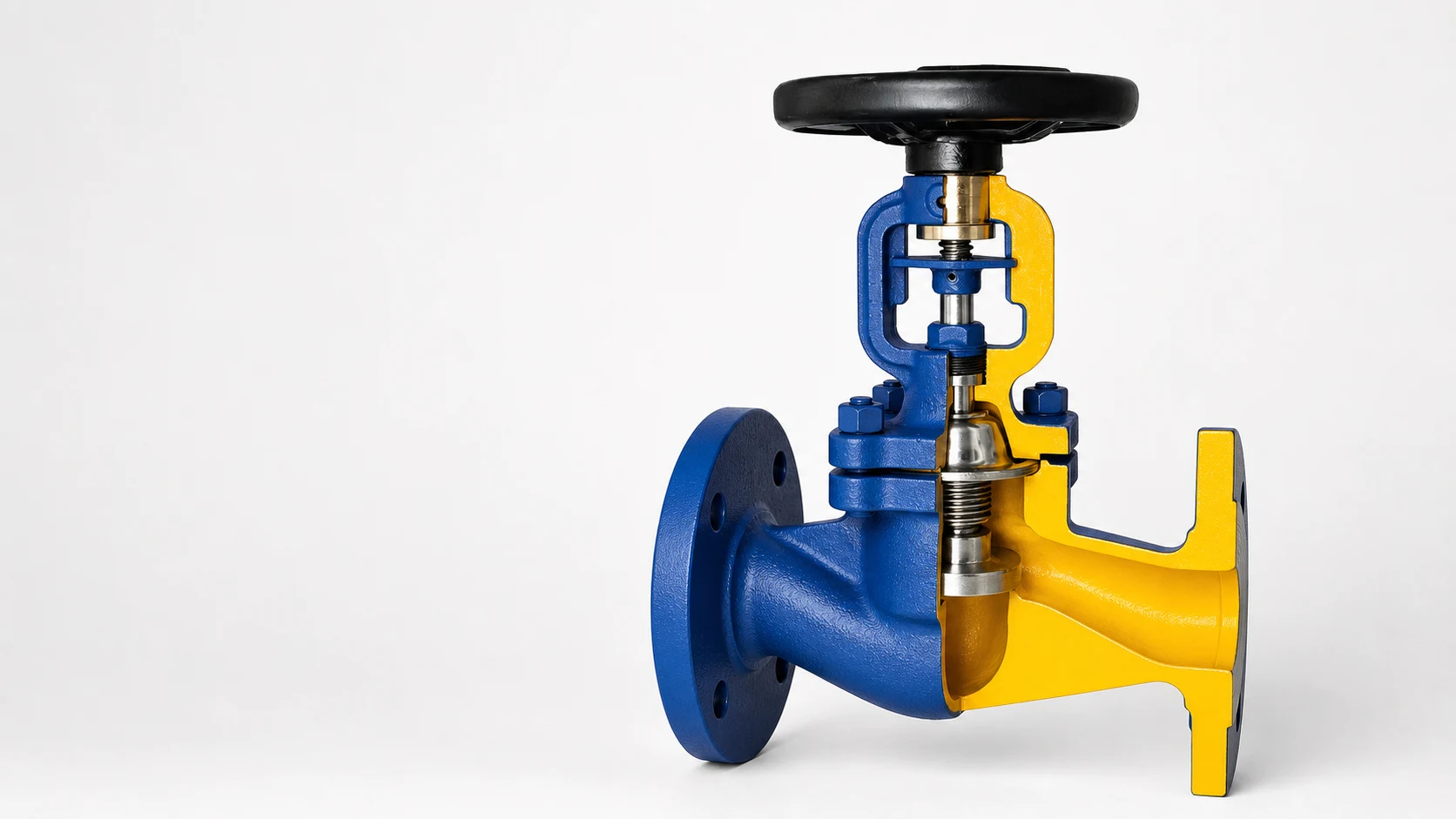
A bellow seal globe valve is a linear-motion valve that uses a welded metal bellow as the primary stem seal, isolating the process fluid from the outside environment. Unlike a standard globe valve that relies on gland packing compressed around a sliding stem, the bellow seal design places a welded metal bellows between the process fluid and the external stem-sealing environment. The bellows expands and compresses with stem movement to help prevent process-fluid leakage through the stem seal; it does not by itself make every packing interface maintenance-free.
This makes bellow seal globe valves a practical choice where stem leakage carries high consequences: toxic or hazardous media, high-temperature steam, thermal oil, and clean-in-place (CIP) systems in pharmaceutical production. Honiks supplies bellow seal valves covering both EN/DIN and ANSI standards for industrial applications.

How It Works
A bellow seal globe valve uses a dual-seal system:
Primary seal – the metal bellow. A welded metal bellow attaches at one end to the valve stem and at the other to the bonnet. As the stem moves up and down, the bellow compresses and extends with it. Because both ends are welded, there is no sliding contact between the stem and process fluid – the bellow helps keep the process fluid contained. This reduces the friction-based wear that degrades packing in standard globe valves.
Secondary seal – backup gland packing. Conventional packing rings sit above the bellow as a secondary atmospheric sealing barrier. The packing may still see relative stem movement depending on the offered valve construction, so it should not be treated as a zero-wear or maintenance-free seal. Under normal operation, the bellow should isolate the process fluid; if the bellow develops a crack or pinhole, the backup packing may help limit leakage. Leakage at the top of the valve signals that the bellow may need inspection.
This dual arrangement can reduce routine packing adjustments compared with a conventional globe valve, but inspection and maintenance remain dependent on the offered construction and service conditions.
Key Advantages
- Stem leakage control – the welded bellow carries the primary process-fluid sealing function rather than relying on conventional gland packing as the primary barrier; the backup packing remains a secondary seal.
- Reduced routine packing maintenance – the bellow carries the primary process-fluid sealing function, while the backup packing remains a secondary barrier; packing movement, wear and adjustment requirements depend on the offered valve construction and service conditions.
- Suitable for hazardous and high-temperature media – commonly specified for steam, thermal oil, heat transfer fluids, and chemical services where fugitive emissions matter.
- Long service life – Required cycle life should be stated in the inquiry and verified against the offered bellow design, stroke, pressure, temperature and supplier qualification data..
- Stem and external-environment protection – the bellow separates the process fluid from the stem-sealing cavity; the backup packing can help limit ingress of external moisture and contaminants, but material compatibility, drainage, inspection and site conditions still govern corrosion protection.
Common Applications
Steam systems. Main steam isolation, turbine drains, and heat exchanger isolation. Bellow seal globe valves handle saturated and superheated steam without the packing degradation that thermal cycling causes in conventional valves.
Chemical processing. Acid lines, caustic service, and solvent recovery systems benefit from the bellow’s ability to contain aggressive chemicals that would rapidly attack standard packing.
Pharmaceutical manufacturing. WFI loops, clean steam, and CIP/SIP systems use bellow seal globe valves to maintain sterile barriers and prevent external contamination.
WFI, clean-steam, CIP/SIP and sterile-service claims require a configuration-specific review: hygienic design, surface finish, drainability, material compatibility, cleaning or sterilization compatibility, cycle duty and documented acceptance criteria must be confirmed for the offered valve with the manufacturer against the project requirements. A bellow seal alone does not establish sanitary or sterile qualification.
Thermal oil systems. At 280-350 °C, thermal oil has low viscosity and high penetrating capability. Bellow seal construction provides the tight stem seal these systems require.
EN/DIN and ANSI Options
Bellow seal globe valves are manufactured to two distinct dimensional standards, and they are not interchangeable.
| Feature | EN/DIN (European) | ANSI (American) |
|---|---|---|
| Pressure rating | PN16, PN25, PN40 | Class 150, Class 300 |
| Flange standard | EN 1092-1 | ASME B16.5 |
| Face-to-face dimension | EN 558 | ASME B16.10 |
| Unit system | Metric (mm) | Imperial (inch) |
| Common body materials | 1.0619, 1.4408 | WCB, CF8M |
The practical consequence is straightforward: an EN/DIN valve will not bolt into an ANSI piping system, and vice versa. Flange bolt patterns differ, face-to-face lengths differ, and pressure-temperature ratings follow different curves. Always confirm which standard governs the project specification before ordering.
For EN/DIN projects, the HN60 bellow seal globe valve covers DN15-DN400, PN16-PN40, flanged or butt-welded options, material/rating dependent. For installations where the offered valve envelope, upper-structure height or approved drawing requires a specific configuration in European district heating and certain chemical plant layouts, the HN68 long-type bellow seal globe valve covers DN15-DN400, PN16-PN40, flanged or butt-welded options, material/rating dependent; confirm the actual L/face-to-face and H dimensions against the offered drawing and applicable EN 558 series before order.
Materials
Body and bellow material selection determines the valve’s pressure-temperature envelope and chemical compatibility.
| Component | Material options | Catalog/reference temperature range | Common use |
|---|---|---|---|
| Body (carbon steel) | ASTM A216 WCB / DIN 1.0619 | Up to 425 °C | Steam, thermal oil, non-corrosive process fluids |
| Body (stainless steel) | ASTM A351 CF8M / DIN 1.4408 | Up to 400 °C | Chemical, pharmaceutical, corrosive media |
| Bellow (stainless) | SS316Ti (1.4571) | Up to 450 °C | Steam, general industrial, thermal oil |
| Bellow (nickel alloy) | Inconel 625 (2.4856) | Up to 600 °C | High-temperature steam, aggressive chemicals |
| Trim / seat | SS316, Stellite hard-faced, PTFE soft seat | Varies by material | Selected for media compatibility, temperature, and shut-off class |
SS316Ti and Inconel 625 are catalog/reference options for different temperature and corrosion conditions. The selected bellow must match the operating temperature, chemical composition, body material, pressure class and cycle duty; the final temperature rating must be confirmed for the offered configuration.
How to Select a Bellow Seal Globe Valve
Use the following checklist when specifying a bellow seal globe valve for a project:
- Confirm the dimensional standard – is the piping system EN/DIN or ANSI? This determines flange drilling, face-to-face length (EN 558 vs. ASME B16.10), and pressure rating format.
- Define the pressure class – PN16, PN25, PN40 for EN/DIN; Class 150 or Class 300 for ANSI. Match the flange rating of the connecting pipework.
- Choose the body material – carbon steel (WCB/1.0619) for non-corrosive services; stainless steel (CF8M/1.4408) for corrosive or high-purity applications.
- Select the bellow material based on the operating temperature, corrosion conditions, body material, pressure class and required cycle duty; SS316Ti and Inconel 625 are catalog/reference options and the final rating must be confirmed for the offered configuration.
- Specify trim and seat – SS316 for general service, Stellite hard-facing for high-cycle or abrasive applications, PTFE soft seat where low seat-leakage performance is required under the specified test method and acceptance criteria.
- Request applicable testing and certification – ISO 15848-1 fugitive emissions testing and EN 10204 3.1 material certification are common requirements for bellow seal valves in industrial service.
Related Honiks Products
Honiks is a factory-backed industrial valve supplier in China, working with qualified partner factories for EN/DIN and ANSI industrial valve projects. The bellow seal globe valve range includes two standard EN/DIN configurations:
- HN60 – compact EN/DIN bellow seal globe valve construction, covering DN15-DN400 and PN16-PN40, with carbon steel (1.0619) and stainless steel (1.4408) body options; confirm the actual L/face-to-face and H dimensions against the approved drawing.
- HN68 – long-type upper-structure configuration for EN/DIN projects, designed for installations where a confirmed dimensional envelope or upper-structure clearance is required, such as European district heating networks and specific chemical plant layouts; confirm the actual L/face-to-face and H dimensions against the approved drawing.
Both product lines are designed for EN/DIN projects, with EN 1092-1 flanged connections and EN 558 face-to-face dimensions. ANSI bellow seal options are available in separate Honiks product series.
Frequently Asked Questions
What is the main advantage of a bellow seal globe valve over a standard globe valve?
The welded metal bellow carries the primary process-fluid sealing function rather than relying on conventional gland packing as the primary barrier. This helps control stem leakage; packing movement, wear and adjustment requirements still depend on the offered valve construction and service conditions.
How many cycles can a bellow seal globe valve handle?
Required cycle life should be stated in the inquiry and verified against the offered bellow design, stroke, pressure, temperature and supplier qualification data.
What happens if the bellow fails?
The backup gland packing above the bellow may help limit leakage if the bellow fails, but it is not a permanent replacement for the primary bellow seal. Leakage at the top of the valve indicates that the bellow and backup seal require inspection and that maintenance or replacement should be scheduled.
Can a bellow seal globe valve be used for throttling?
Yes. Like standard globe valves, bellow seal globe valves are suitable for throttling and flow regulation. The bellow adds no restriction to the flow path and does not affect the valve’s inherent flow characteristic.
What is the maximum temperature rating?
SS316Ti and Inconel 625 are catalog/reference material options for different temperature and corrosion conditions. The actual bellows, body material, pressure class, cycle duty and temperature rating must be confirmed for the offered configuration.
Are EN/DIN and ANSI bellow seal globe valves interchangeable?
No. The two standards use different flange bolt patterns, face-to-face dimensions (EN 558 vs. ASME B16.10), and pressure-temperature rating systems. A valve built to one standard will not fit piping designed to the other. Always confirm the governing standard during specification.
Conclusion
A bellow seal globe valve addresses the persistent stem-leakage challenge of conventional globe valves. By placing a welded metal bellow between the process fluid and the stem-sealing environment, the design reduces reliance on the conventional packing as the primary process barrier. The backup packing provides a secondary safety layer if the bellow eventually reaches its fatigue limit, but it does not remove the need for inspection and maintenance.
For steam, chemical, pharmaceutical, and thermal oil applications where stem leakage carries operational or environmental consequences, bellow seal construction offers a straightforward upgrade – higher initial cost but lower long-term maintenance burden.
When selecting a bellow seal globe valve, confirm the dimensional standard (EN/DIN or ANSI), match the pressure class and body material to the process, and choose the bellow material based on temperature and chemical compatibility. For assistance with selection or a specific project requirement, contact us for technical support.