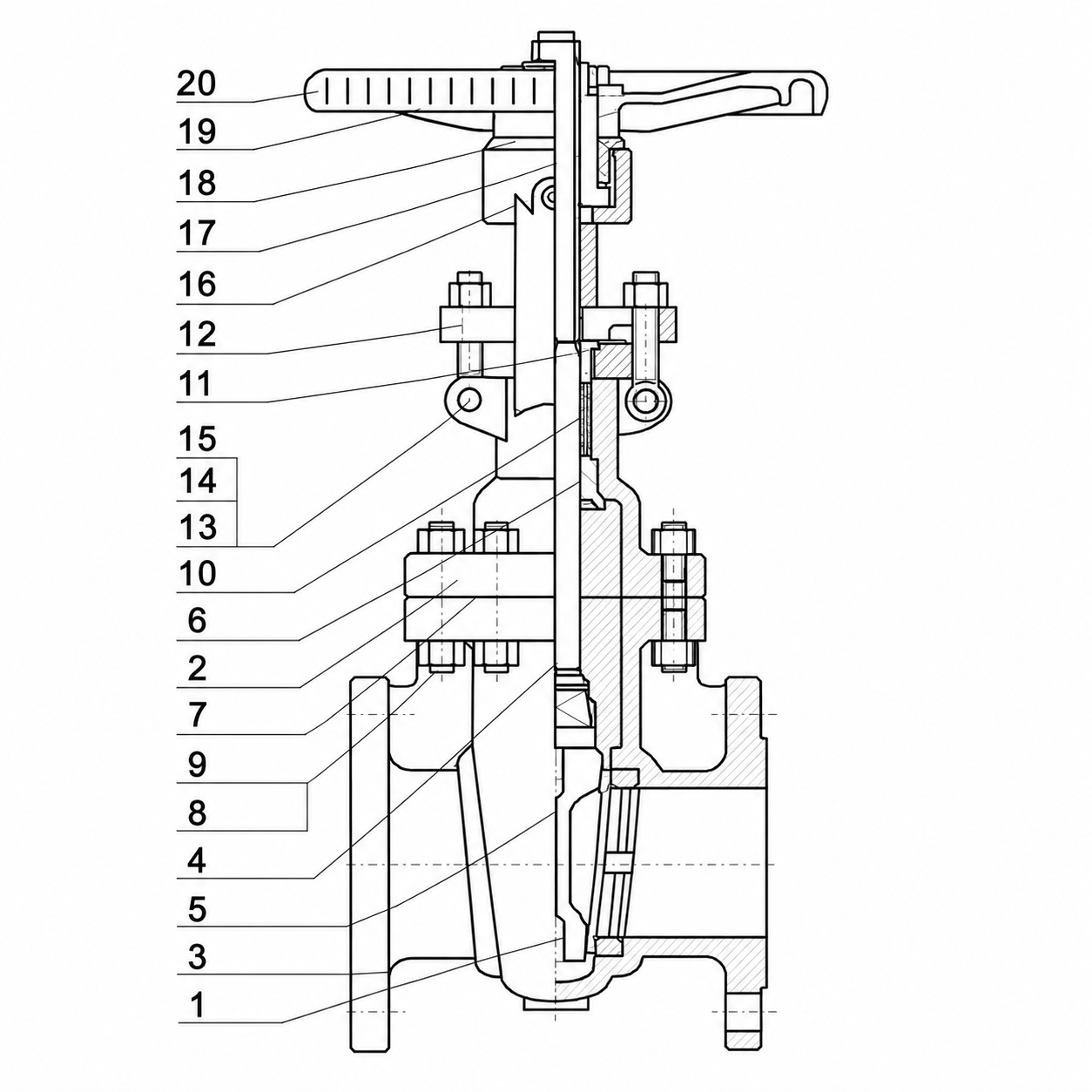
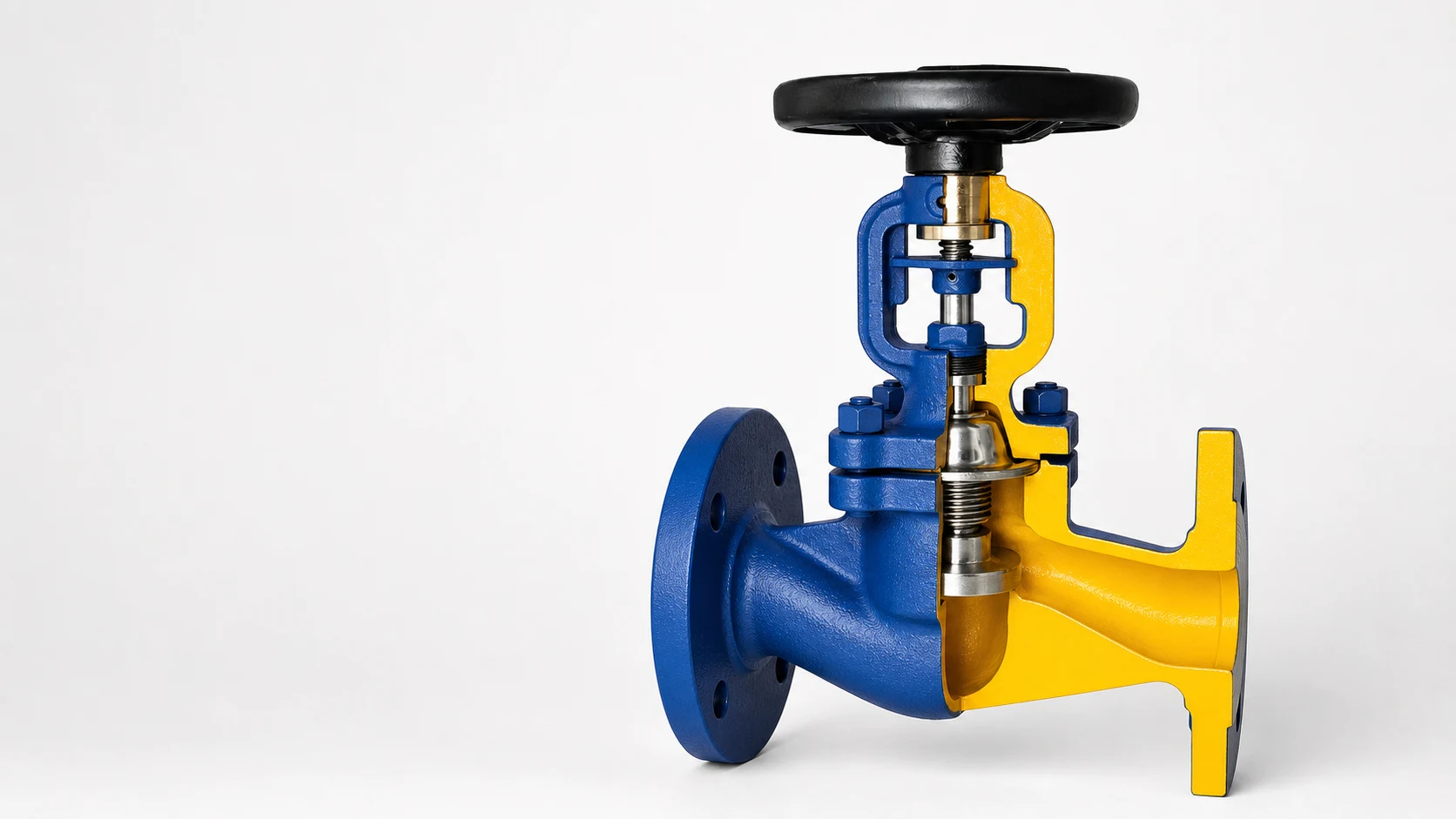
The HN60 and HN68 are both EN/DIN bellow seal globe valves from the same product family. They share similar specifications in size range, pressure rating, and available material options. The main selection difference is the overall construction and installation envelope: HN60 is the compact type, while HN68 is the long-type configuration with a taller upper structure and higher overall H dimension. The actual L/face-to-face or end-to-end dimension must be confirmed from the offered drawing rather than inferred from the model name. This dimension is a primary fit check, but the offered construction, pressure-temperature rating and project requirements must also be confirmed before ordering.
This article breaks down how HN60 and HN68 compare, when to specify each, and what to check before placing an order.
What HN60 and HN68 Have in Common
Before diving into the difference, here is what these two valves share. HN60 and HN68 belong to the same general EN/DIN bellow-seal globe-valve family, but the offered construction, dimensions and applicable standards must be confirmed for each model.
Shared specifications:
- Bellow seal stem sealing: Both use a stainless steel bellow welded to the stem and bonnet, designed to help prevent stem leakage. A secondary graphite packing ring serves as backup containment.
- Globe valve function: Both provide shut-off and throttling capability. The conical seat design delivers reliable closure and flow regulation.
- EN/DIN standards: Both conform to EN/DIN design and testing standards. Flange drilling follows EN 1092-1.
- Size range: DN15 through DN400 on both models.
- Pressure ratings: PN16, PN25, and PN40 available for both.
- Connection options: Flanged (EN 1092-1) or butt-welded ends available on both HN60 and HN68.
- Material grades: Carbon steel (A216 WCB), stainless steel (A351 CF8M), and alloy steel (A217 WC6) options exist across both product lines. Bellow materials include SS304 and SS316L.
- Temperature range: Material and pressure-rating dependent for both models.
For the same DN, PN and material selection, the two models may share many design features, but the bodies, bonnets, bellow assemblies, discs, seats and other configuration details must be confirmed against the offered data and approved drawing. Overall construction and installation clearance are important selection factors; the actual L/face-to-face dimension must be checked against the offered drawing.
Looking for the full bellow seal valves product range? Browse all available configurations including EN/DIN and ANSI options.

Main Difference: Standard Type vs Long Type
The face-to-face dimension is the distance between the two flange faces of a valve. It determines whether the valve physically fits between two fixed pipe flanges in an existing or planned pipeline.
HN60 — Compact construction: The HN60 bellow seal globe valve uses a compact construction; its actual L/face-to-face dimension must be confirmed from the offered drawing. This is the default starting point for many new pipeline projects where the piping is being designed and installed from scratch. The compact construction can help where valve-station space is limited or where conventional EN/DIN piping layouts apply. For general steam, thermal oil, chemical, and industrial pipeline applications, the HN60 is commonly the correct starting point.
HN68 — Long-type upper structure: The HN68 long-type bellow seal globe valve uses a taller upper structure and higher overall H dimension; confirm its actual L/face-to-face or end-to-end dimension from the offered drawing. This matters most in two scenarios:
1. Replacement projects: When an old valve of a specific length is being removed, the new valve must match that exact face-to-face dimension. Some existing EN/DIN installations may require a specific dimensional envelope; confirm the removed valve’s actual L/face-to-face and H dimensions rather than relying on a model-name or nominal-length assumption.
2. Existing pipeline layouts: Some projects — particularly district heating networks and chemical plants — were built around a particular valve envelope or installation-clearance requirement. Installing a valve with an unconfirmed envelope could require pipe-spool changes, adding cost and downtime; confirm the actual L/face-to-face and H dimensions before replacement.
Quick Comparison: HN60 vs HN68
| Feature | HN60 | HN68 |
|---|---|---|
| Valve type | Standard bellow seal globe valve | Long-type bellow seal globe valve |
| Standard | EN/DIN | EN/DIN |
| Size range | DN15-DN400 | DN15-DN400 |
| Pressure rating | PN16-PN40 | PN16-PN40 |
| Connection | Flanged or butt-welded | Flanged or butt-welded |
| Construction / envelope | Compact type | Long-type upper structure |
| Typical applications | New projects, standard installations | Replacement projects, project-specific dimensional envelopes, district heating |
| Best for | General steam, thermal oil, chemical pipelines | Projects requiring a confirmed dimensional envelope, clearance or existing-layout match |
When to Choose HN60
The HN60 is the straightforward choice for most new-build projects. If you are designing a pipeline from scratch and there is no existing valve to match against, HN60 is likely the right call.
Consider HN60 when:
- New pipeline projects where a compact construction fits the approved dimensional envelope
- Standard EN/DIN layouts following conventional piping design practice
- Limited installation space where a more compact valve footprint is beneficial
- General steam, thermal oil, and chemical pipelines requiring reliable bellow seal shut-off
- Cost-conscious standard selection where the compact construction meets all technical requirements without unnecessary envelope or clearance
For the majority of industrial valve applications, HN60 covers the requirement. The compact and long-type configurations serve different installation-envelope requirements; compare the offered bellow construction, shut-off requirements, pressure rating and approved drawing before ordering.
When to Choose HN68
HN68 may be selected where its long-type envelope or upper-structure clearance matches an existing layout; confirm the dimensional, pressure-temperature and material requirements against the project piping specification and approved drawing.
Consider HN68 when:
- Replacement projects where the existing valve being removed has a specific dimensional envelope or clearance requirement
- Dimensional envelope or clearance required to match existing pipe flange spacing
- District heating networks where a project specification or existing layout calls for a particular valve envelope or clearance
- Existing EN/DIN pipeline layouts built with a confirmed dimensional envelope or clearance requirement
- Chemical plants with specified face-to-face requirements in the project piping specification or isometric drawings
If you are replacing a valve and you know the old unit’s face-to-face dimension, measure it and compare the required L/face-to-face and H clearance with the offered drawings. Do not select HN60 or HN68 from L alone: confirm the construction/envelope, pressure-temperature rating, materials and project requirements before ordering.
Selection Checklist: What to Confirm Before Ordering
Before requesting a quotation for either HN60 or HN68, confirm the following parameters. Missing any one of these can result in a valve that does not fit or is not suitable for the service.
- DN size (DN15 to DN400): Confirm the nominal diameter from the pipe specification or existing valve nameplate.
- PN pressure rating (PN16, PN25, or PN40): Match to the system design pressure and applicable pressure-temperature rating table.
- Medium: Steam, thermal oil, chemicals, gas, or other — this drives material selection.
- Operating temperature: Determines body and bellow material grade requirements.
- Body material: Carbon steel (WCB), stainless steel (CF8M), or alloy steel (WC6) — select based on medium and temperature.
- Connection type: Flanged (EN 1092-1) or butt-welded — confirm from the piping specification.
- Dimensional envelope requirement: Compare the existing installation’s L/face-to-face and H dimensions, or confirm them from the project piping isometric drawing and approved drawing.
- EN/DIN standard requirement: Confirm which edition of EN 558 and EN 1092-1 applies to your project.
- Quantity and documentation needs: Specify the number of valves and any required test certificates, material certificates (EN 10204 3.1), or inspection documentation.
Going through this checklist before contacting a supplier saves time on both sides. It also reduces the risk of receiving a quotation for the wrong valve configuration.
Related Honiks Products
Honiks is a factory-backed industrial valve supplier in China, working with qualified partner factories for EN/DIN and ANSI industrial valve projects.
Within the Honiks bellow seal valve lineup, HN60 and HN68 cover the EN/DIN globe valve requirements:
- HN60: Standard face-to-face bellow seal globe valve, DN15-DN400, PN16-PN40. Suitable for new-build steam, thermal oil, and chemical pipelines with conventional EN/DIN layouts. Flanged to EN 1092-1 or butt-welded.
- HN68: Long-type bellow seal globe valve with taller upper structure, DN15-DN400, PN16-PN40. Designed for replacement projects, district heating networks, and installations requiring a confirmed dimensional envelope or upper-structure clearance.
Both product series target EN/DIN projects with EN 1092-1 flanges and EN 558 face-to-face dimensions. ANSI bellow seal globe valve models are available separately through the Honiks product range.
FAQ
Are HN60 and HN68 interchangeable?
Not directly. HN60 and HN68 have different overall/upper-structure arrangements; the actual L/face-to-face or end-to-end dimensions must be confirmed from the offered drawings. If your pipeline is designed around a particular valve envelope, the offered HN68 envelope may not fit the available space. If the project requires a particular envelope or upper-structure clearance, confirm which offered configuration matches it. The two models are not dimensionally interchangeable — always confirm the required L/face-to-face dimension and H clearance from the offered drawings before specifying one or the other.
Is HN68 always better than HN60?
No. HN68 is not automatically a higher-performance version of HN60. It is a long-type construction variant with a taller upper structure and a similar bellow-seal application; its actual L/face-to-face and H dimensions, pressure-temperature rating and other configuration details must be confirmed for the offered model. Overall construction and installation clearance are important selection factors. If the offered HN60 drawing fits the required envelope, it may be suitable; HN68 should be selected only when the offered long-type construction and approved drawing match the project requirement.
Can both valves be used for steam?
Yes. Both HN60 and HN68 are suitable for saturated and superheated steam service. The material grade should be selected according to the steam temperature and pressure — carbon steel (WCB) for moderate steam conditions, alloy steel (WC6) for elevated-temperature steam. The bellow seal design in both models helps prevent stem leakage, which is particularly important in steam systems where fugitive emissions and maintenance access are ongoing concerns.
What information should I provide before requesting a quote?
Provide the DN size, PN pressure rating, medium type and temperature, required body material, connection type (flanged or butt-welded), and — critically — the face-to-face dimension required. If replacing an existing valve, include the make, model, and face-to-face measurement of the unit being removed. Quantities and any documentation requirements (test certificates, material certificates) should also be included in the initial inquiry.
Are ANSI bellow seal valves available separately?
Yes. Honiks offers ANSI bellow seal globe valves in a separate product series. ANSI models follow ASME B16.10 for face-to-face dimensions and ASME B16.5 for flanged ends. These are separate from the EN/DIN HN60 and HN68 product lines and should be specified under the applicable ANSI standards.
Conclusion
Choosing between HN60 and HN68 starts with dimensional compatibility; compare the offered construction, materials, pressure-temperature rating and other project requirements before ordering.
HN60 is the compact bellow seal globe valve for new EN/DIN projects. HN68 is the long-type variant for replacement projects and existing installations that demand a specific envelope or upper-structure clearance. Both are designed for bellow seal stem sealing in EN/DIN pipeline projects, the same DN15-DN400 coverage, and the same PN16-PN40 pressure range.
Before you order, confirm the required L/face-to-face and H clearance from the existing installation or project drawing. That dimensional check should control the selection.
For technical data sheets, dimensional drawings, or a quotation for either HN60 or HN68, contact us with your project specifications.