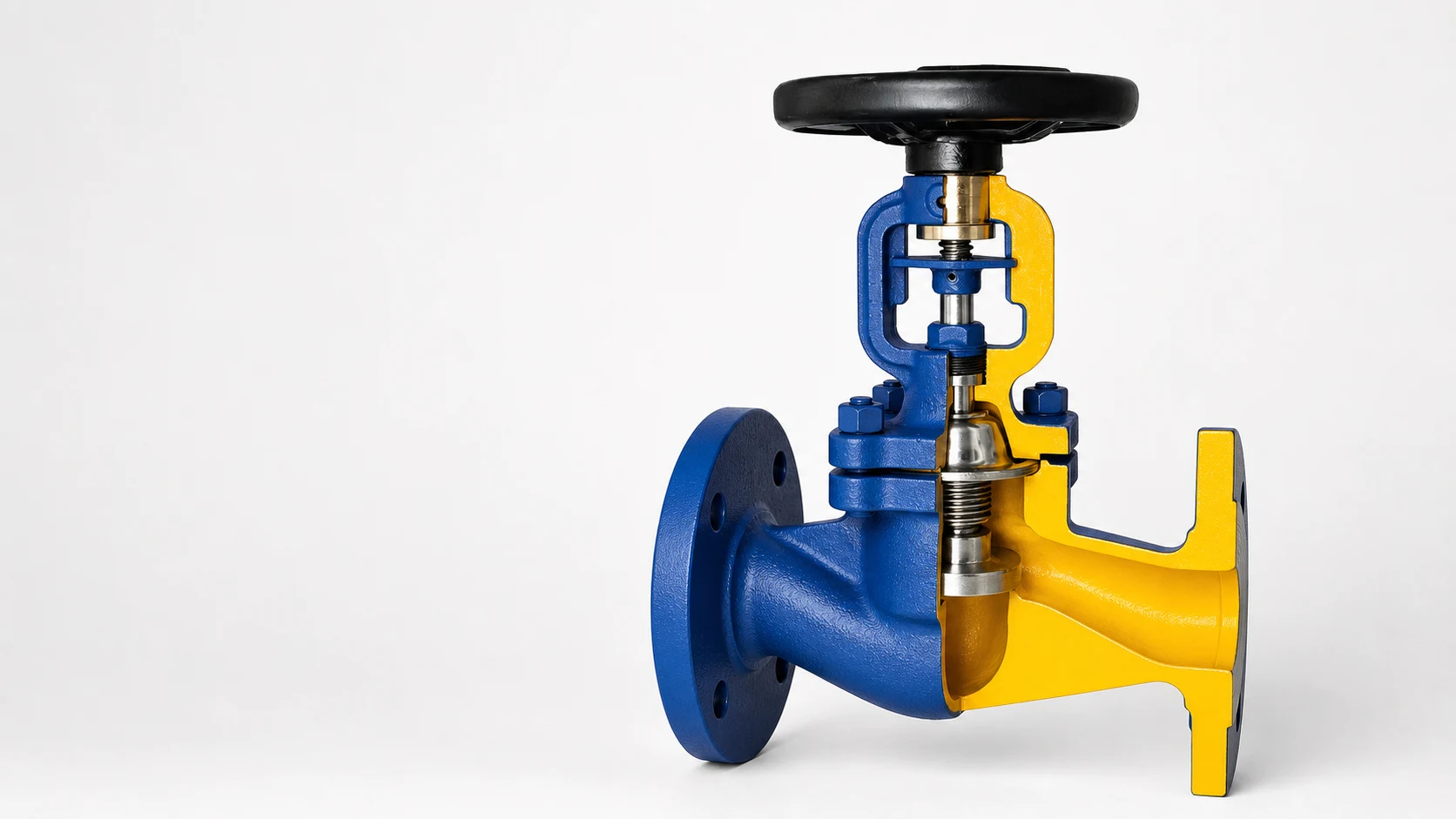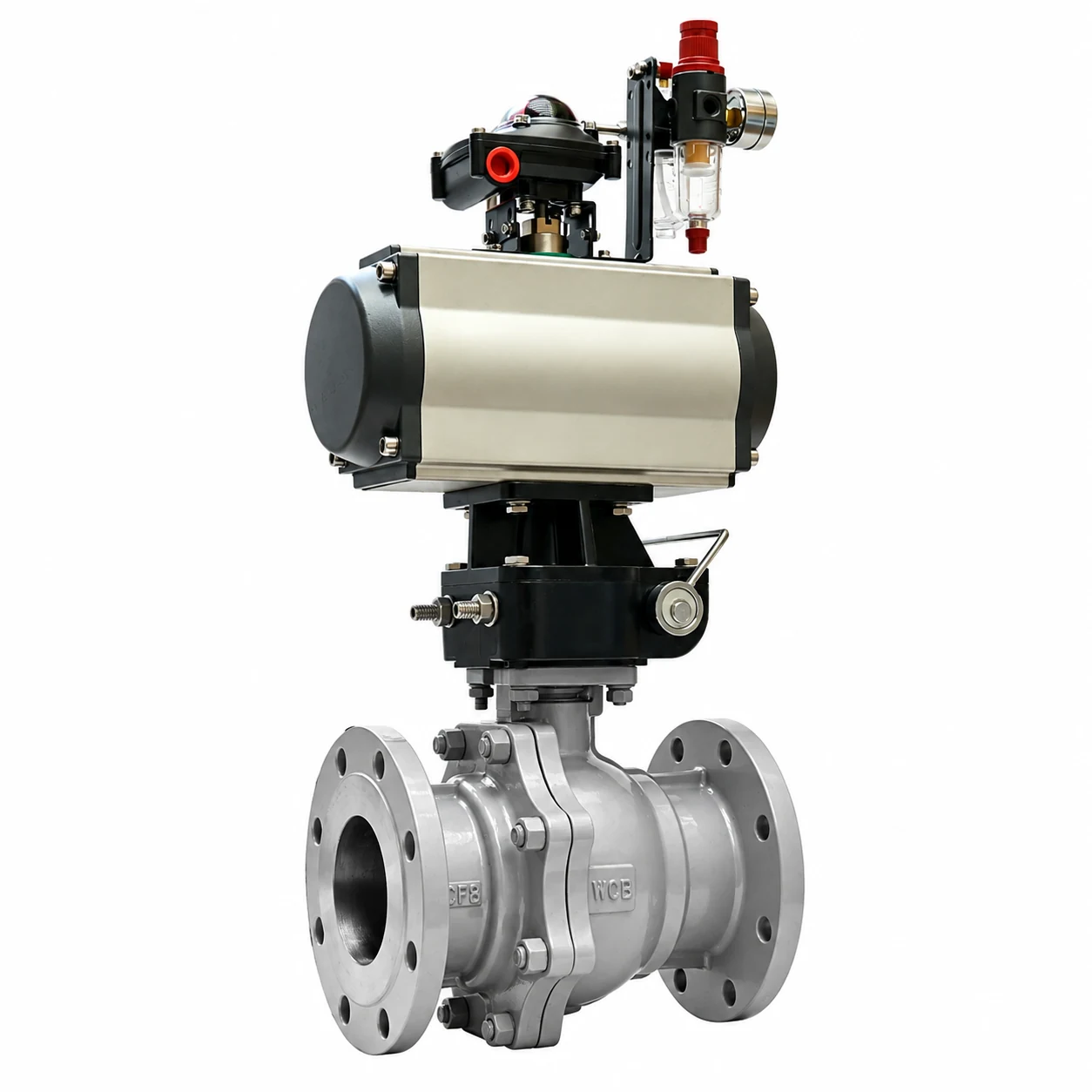
A floating ball valve seals by pushing the ball downstream under pressure. A fixed (trunnion) ball valve locks the ball in place and moves the seats instead. That one mechanical difference drives everything: torque requirements, size limits, pressure ratings, and how much maintenance the valve needs over its service life.
Get this choice wrong on a large-bore, high-pressure line, and the cost shows up fast — in oversized actuators, uneven seat wear, or unplanned downtime. This comparison breaks down both designs side by side, using the HN105 floating and HN106 fixed product lines as reference points. Honiks is a factory-backed industrial valve supplier in China, working with qualified partner factories to supply API ball valve configurations across both floating and trunnion-mounted designs.
Key Takeaways
- Floating ball valves use line pressure to push the ball against the downstream seat. Fixed ball valves use spring-loaded seats that move against a bearing-supported ball.
- Floating design is commonly used below NPS 8 and Class 600. Above these thresholds, fixed (trunnion-mounted) design is often selected for better mechanical support and torque control.
- Double block and bleed (DBB) is a defined seat, cavity and bleed arrangement, not an automatic result of the ball-support style. Fixed/trunnion designs are often offered with DBB, but the offered valve’s seat arrangement, bleed connections, applicable definition and test evidence must be confirmed; a floating or fixed label alone is not sufficient.
- Actuator sizing costs can swing the total project economics — fixed ball valves may offer a lower or more predictable torque requirement in some sizes and configurations; actuator sizing must be checked against the offered valve and duty.
- Honiks supplies both configurations through the HN105 floating and HN106 fixed product lines, matched to project specifications.
What Is a Floating Ball Valve?
In a floating ball valve, the ball is not bolted down. It “floats” between two seat rings, held in place by the stem and seat compression. Close the valve, and upstream pressure pushes the ball against the downstream seat — that is the primary seal.
This simplicity is the floating design’s biggest advantage. Fewer internal components mean fewer potential failure points and a lower unit cost at small to medium sizes. The trade-off: as the ball gets larger and pressure climbs, the force pushing the ball into the downstream seat increases. That force translates directly into operating torque — the larger the ball and the higher the pressure, the harder it becomes to turn. For a 6-inch Class 600 floating ball valve, the hand lever is still manageable. For a 8-inch Class 900, the torque can climb beyond what a standard gear operator handles comfortably — and that is the signal to switch to a fixed design.
Floating ball valves are commonly supplied to API 608 and API 6D standards, in sizes from NPS 1/2 through NPS 8 depending on pressure class. Above approximately NPS 8, ball weight starts wearing seats unevenly, and actuator torque requirements become the deciding factor against the floating design.
The Floating Ball Valve HN105 covers this configuration for general process isolation, available in carbon steel, stainless steel, and alloy body materials with soft-seated or metal-seated options. See the Floating Ball Valves category for the full range.
What Is a Fixed (Trunnion) Ball Valve?
A fixed ball valve — also called a trunnion mounted ball valve — solves the floating design’s torque problem by supporting the ball with bearings at top and bottom. The ball does not move under pressure. Instead, spring-loaded seat rings press against the ball to create the seal.
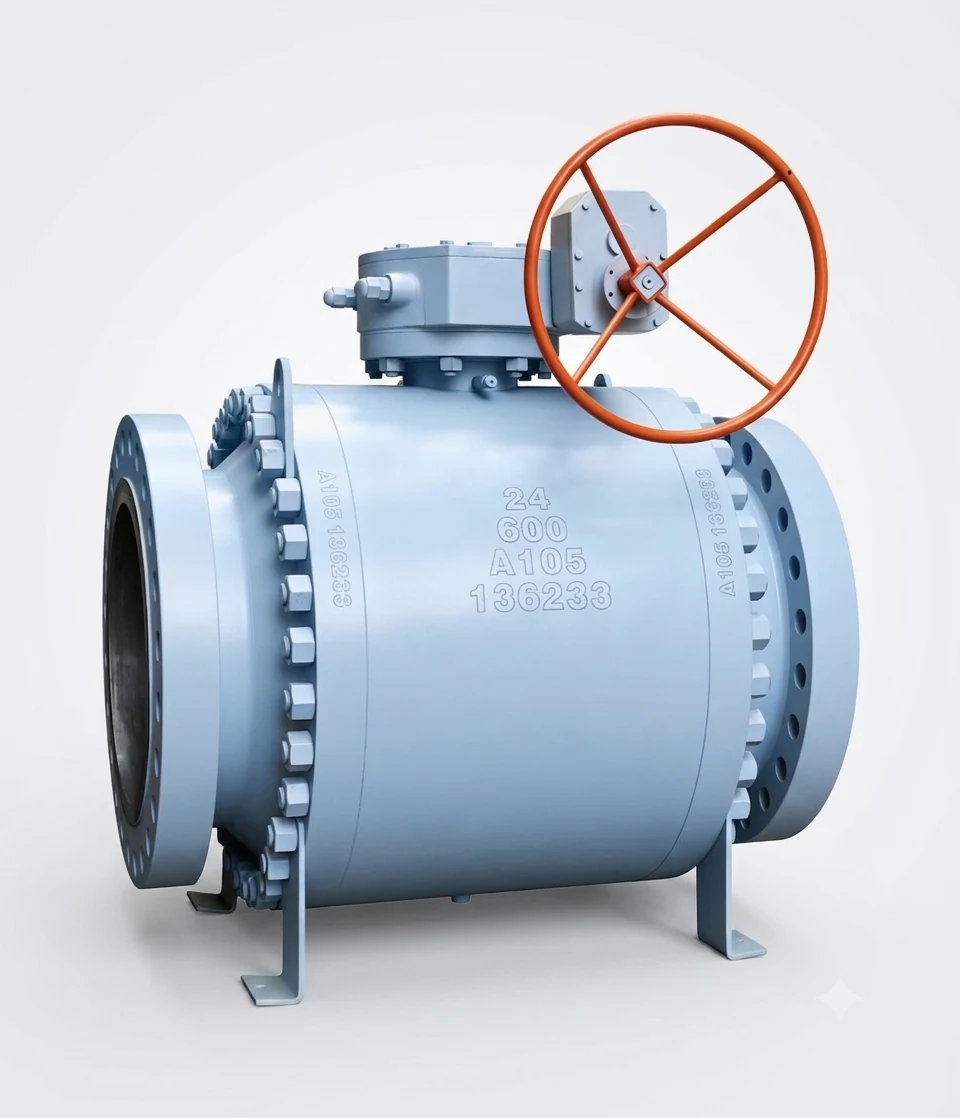
Because the ball is mechanically supported, a fixed/trunnion design may reduce the effect of downstream ball loading compared with a floating design; operating torque still depends on differential pressure, seat load, bearing and stem friction, materials, temperature, cycling and the offered configuration. For a 12-inch Class 900 ball valve, compare the floating and fixed options using the manufacturer’s torque data and actuator calculation; an actuator-size or cost advantage is not universal and must be confirmed for the specified duty.
Fixed ball valves are manufactured to API 6D and API 608, with material and dimensional requirements from ASME B16.34. They are often selected for NPS 8 and above and Class 900 and above. Where double block and bleed is required, confirm the offered seat, cavity and bleed arrangement, applicable definition and test evidence against the project specification.
The Fixed Ball Valve HN106 covers trunnion-mounted configurations from Class 150 through Class 2500, with soft-seated and metal-seated options. If DBB is required, confirm the specific seat, cavity and bleed arrangement and test documentation for the offered configuration. See the Fixed Ball Valves category for specifications.
Floating Ball Valve vs Fixed Ball Valve: Main Differences
Side-by-side — HN105 vs HN106:
| Feature | Floating Ball Valve (HN105) | Fixed Ball Valve (HN106) | Selection Note |
|---|---|---|---|
| Ball support | Supported by seat rings only | Supported by top and bottom bearings | Fixed removes ball weight from the seats |
| Sealing mechanism | Line pressure pushes ball into downstream seat | Spring-loaded seats press against fixed ball | Fixed = predictable seat load across all pressures |
| Typical size range | NPS 1/2–8 | NPS 2–60 | Floating is commonly used below NPS 8; fixed is often selected above that range |
| Pressure class | Class 150–600 standard; Class 900 in smaller sizes | Class 150–2500 | Class 900+ strongly favors fixed design |
| Torque requirement | Increases with size and pressure — can become the limiting factor | Lower and more predictable — bearing-supported ball | Fixed wins on actuator sizing and cost |
| Double block & bleed | Not determined by floating construction alone; confirm the offered seat, cavity and bleed arrangement and test definition | Often offered on trunnion API 6D configurations, but confirm the supplied arrangement and test evidence | Specify the required DBB/DIB definition and verification documents |
| Weight | Lighter at small sizes | Heavier due to bearing and body structure | Weight difference narrows above NPS 8 |
| Unit cost | Lower at NPS 2–6 | Higher at equivalent size/class | Cost gap narrows above Class 600 when actuator cost is included |
| Maintenance | Simpler internals; full disassembly required for seat access | Access depends on the supplied entry design and seat construction; some configurations may allow seat servicing without removing the ball | Potentially lower downtime when the approved configuration permits seat service without ball removal; verify access and procedure |
| Best applications | Process isolation up to NPS 8, general industrial, chemical dosing, utility lines | Large-diameter pipelines, high-pressure gas, ESD, DBB isolation, frequent cycling | Rule of thumb: spec for worst case, not average |
For full API-compliant ball valve options across both configurations, see the Ball Valves and API Valves, and ANSI Valves categories.
When to Choose a Floating Ball Valve (HN105)
Go with a floating ball valve when:
- The size is NPS 8 or below. This is the floating design’s sweet spot — simple mechanics, lower cost, and torque that stays manageable with standard handles or small actuators.
- Pressure class is Class 600 or below. At Class 900, floating designs work in smaller sizes (NPS 2–4) but actuator torque starts driving the economics toward fixed.
- The valve is in general process isolation, utility, or non-critical service where DBB is not required.
- Budget is the primary driver and the service conditions fall well within the floating envelope.
The Floating Ball Valve HN105 matches these conditions across Class 150 through Class 600 with soft-seated and metal-seated trim options.
When to Choose a Fixed Ball Valve (HN106)
Switch to a fixed ball valve when conditions cross these thresholds:
- NPS 8 or above. Ball weight and seat loading make the floating design impractical — torque climbs, seat life shortens, and actuator cost erases any valve unit-cost savings.
- Class 900 or above. At these pressure levels, a trunnion-mounted design may be evaluated for its torque and seat-load behavior; confirm the size, pressure class, seat arrangement and actuator calculation for the offered configuration.
- Double block and bleed is required. Specify the required DBB/DIB definition, seat arrangement, cavity and bleed connections and test evidence; fixed/trunnion designs are commonly offered for this duty, but the support style alone does not prove the capability and floating designs should not be ruled out without checking the offered configuration.
- The valve cycles frequently or serves as an emergency shutdown valve. Consistent seat loading and A fixed or trunnion-supported ball can provide more predictable support and operating torque at larger sizes and higher pressure classes; required cycle duty and actuator sizing should be verified for the offered configuration..
- In-line maintenance matters, but access is configuration-specific. Some top-entry or other trunnion configurations may permit seat servicing without removing the ball; confirm the supplied entry design, approved IOM and drawing before relying on that feature. Installation in the piping does not mean maintenance may be performed while the valve is pressurized: isolate, depressurize and drain or bleed as required by the approved procedure.
The Fixed Ball Valve HN106 covers these thresholds from Class 150 through Class 2500 with full-bore and reduced-bore configurations and soft or metal seats. If DBB is required, confirm the specific seat, cavity and bleed arrangement and test documentation for the offered configuration.
Floating versus trunnion-mounted construction does not by itself determine the governing standard. Use the API 608 vs API 6D ball valve guide to check project context, bore, testing and documentation as a separate RFQ decision.
Ball support and bore are separate decisions. Use the full-bore vs reduced-bore ball valve guide to define the required passage, hydraulic review, pigging function and drawing evidence before comparing floating and fixed configurations.
Selection Checklist for Industrial Projects
- Valve type: Floating ball valve (NPS 1/2–8) or fixed/trunnion ball valve (NPS 2–60). Rule of thumb: floating below NPS 8, fixed above.
- NPS size and pressure class: Per ASME B16.34. Class 600 and below favors floating. Class 900 and above favors fixed regardless of size.
- Body and trim material: WCB carbon steel, CF8/CF8M stainless, duplex, or alloy grades depending on medium and temperature. Confirm seat material compatibility with the process fluid.
- End connection: RF flanged per ASME B16.5, butt-weld per ASME B16.25, or RTJ for high-pressure gas service.
- Operation: Manual lever (small sizes), gear operator, or actuated (electric/pneumatic). Fixed ball valves reduce actuator sizing cost.
- Applicable standard: API 608 (process plant) or API 6D (pipeline). For pipeline service, API 6D project specifications may call for full-bore piggable construction, DBB capability, cavity pressure relief, or related documentation. Confirm these requirements against the datasheet.
- Fire-safe and anti-static: Confirm API 607 fire-safe and anti-static stem design if required by the project specification.
- Quantity and documentation: Material test certificates per EN 10204, PMI, NDE scope, API 598 pressure test reports, and project ITP.
FAQ
What is the main difference between floating and fixed ball valves?
Floating: the ball moves to seal. Fixed (trunnion): the ball stays put and spring-loaded seats do the work. The floating design is simpler and more economical at small sizes; the fixed design handles large sizes and high pressure, and may be offered for DBB when the specific seat, cavity and bleed arrangement and test evidence are confirmed.
At what size should I switch from floating to fixed ball valve?
Between NPS 6 and NPS 8 is the typical transition zone. Below NPS 6 or at lower pressure classes, floating designs are often considered; above NPS 8 or at higher pressure classes, fixed/trunnion designs are often evaluated. Confirm the offered configuration, differential pressure and actuator calculation rather than applying a universal threshold.
Are fixed ball valves always trunnion mounted?
Yes — “fixed ball valve” and “trunnion mounted ball valve” refer to the same design: a ball supported by upper and lower bearings, with spring-loaded seats providing the seal.
Can floating ball valves be used for high-pressure service?
Floating valves handle Class 600 without issue. Class 900 is possible in smaller sizes (NPS 2–4) with the right seat material selection, but actuator torque increases significantly. Above Class 900, fixed is the appropriate choice.
Does a fixed ball valve cost more?
Unit cost, yes — the bearing assembly and body structure add manufacturing expense. But total installed cost including actuator sizing often favors the fixed design at Class 900+ and NPS 8+. The actuator cost difference alone can outweigh the valve price difference.
For tank farm piping applications, see our oil and gas tank farm ball valve selection notes.
For metal seated configurations that extend the temperature range beyond soft-seat limits, review the metal seated ball valve selection notes.
Floating versus fixed describes how the ball is supported; soft versus metal describes the sealing interface. Review both decisions separately in the metal seated vs soft seated ball valve guide.
Conclusion
The checklist above covers the main decision points. For a separate comparison of gate versus ball valve selection, see the API Gate Valve vs Ball Valve selection guide. Here is the short version:
If your line is NPS 8 or below at Class 600 or below — start with the Floating Ball Valve HN105. If you are above NPS 8 or at Class 900+, compare the offered fixed/trunnion configuration against the project requirements. If DBB is required, select the configuration only after its seat, cavity and bleed arrangement and test evidence have been confirmed; the mounting style alone is not a guarantee.
For projects requiring an industrial ball valve supplier with API-compliant product documentation and specification-matched configurations, Honiks provides HN105 and HN106 ball valves with material traceability, pressure test reports, and configuration support. Both floating and fixed configurations are supplied with full documentation packages including EN 10204 material certificates, API 598 pressure test reports, and NDE records as specified by the project.
Contact Honiks with valve type, NPS size, pressure class, body material, end connection, medium, and quantity for a specification-matched quotation.