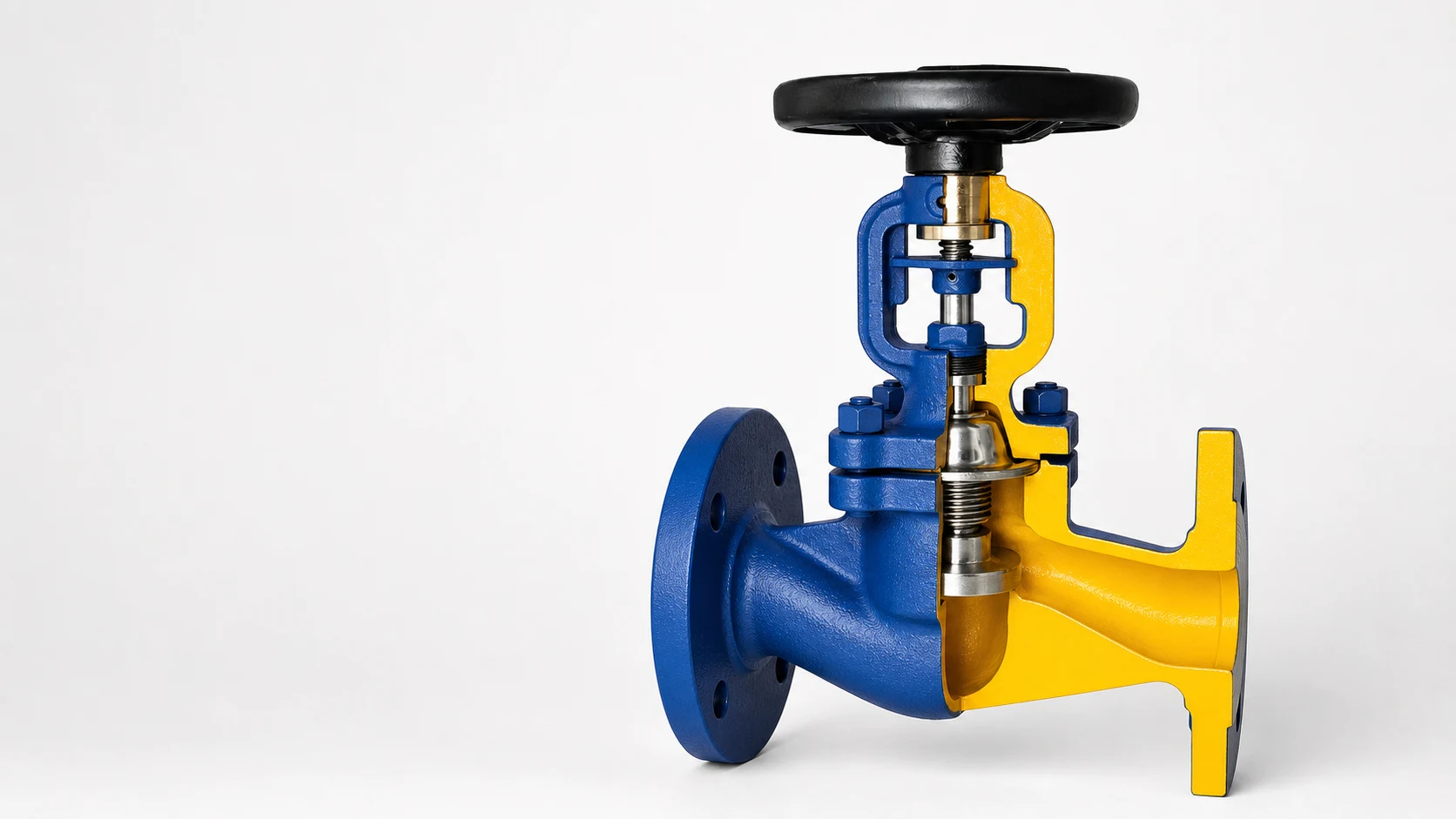
When a project specification calls for a globe valve above Class 600, the bonnet design becomes one of the first decisions an engineering team needs to make. An API globe valve with a bolted bonnet is commonly evaluated in the Class 150–600 range, while the current HN102 catalog page also lists Class 900, 1500 and 2500 reference configurations. For Class 900 and above, a pressure seal globe valve is commonly selected, but the offered bonnet design, size, material, end connection and pressure-temperature rating must be confirmed against the project specification and approved drawing. The difference is not just a design detail — it affects sealing reliability, maintenance planning, installed weight, and total project cost.
This guide explains how bolted bonnet and pressure seal bonnet designs compare, helping engineers and buyers determine which high pressure globe valve configuration fits their service conditions. Honiks is a factory-backed industrial valve supplier in China, working with qualified partner factories.
What Is an API Globe Valve?
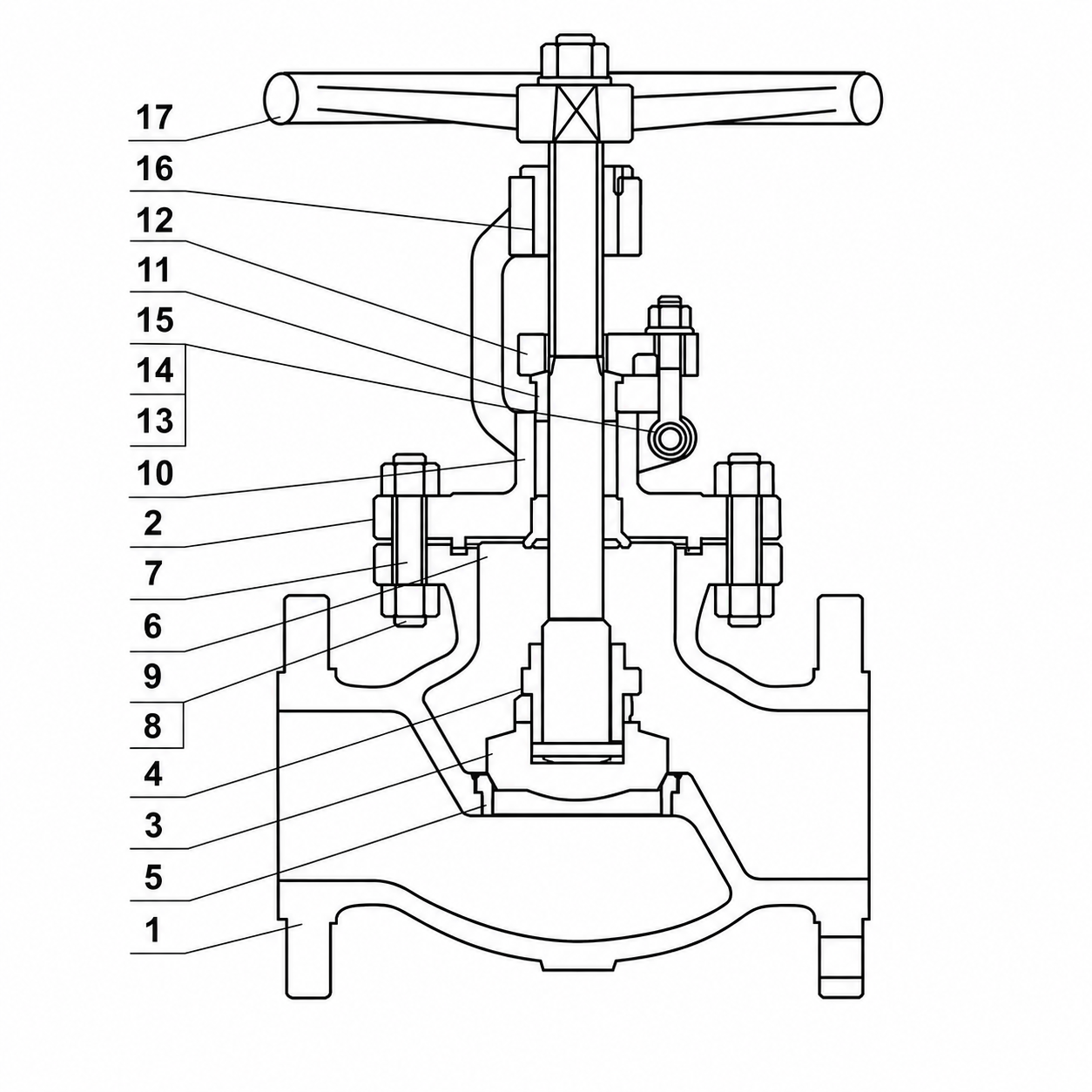
A standard API globe valve — also referred to as an API cast steel globe valve or ANSI globe valve — uses a bolted bonnet connection. The body and bonnet are joined by a circle of stud bolts, with a gasket (commonly spiral-wound stainless steel/graphite or ring-type joint) compressed between the machined flange faces to form the pressure boundary.
The HN102 bolted bonnet globe valve may be evaluated against API 623, BS 1873 and ASME B16.34 where applicable; the controlling design and testing requirements must be confirmed against the offered product package, project specification and approved drawing. End connections follow ASME B16.5 (flanged) or ASME B16.25 (butt-weld). Pressure testing is performed per API 598.
For this comparison, Class 150–600 is treated as the typical bolted-bonnet selection envelope. The current HN102 catalog reference lists Class 150, 300, 600, 900, 1500 and 2500; availability of each class depends on size, material, end connection, bonnet construction and approved project requirements. As pressure class increases, the bolted joint may become heavier and more material-intensive, so the offered configuration should be reviewed against the project specification and approved drawing.
The key practical advantage of the bolted bonnet is straightforward maintenance access. Technicians can break the bonnet joint with standard hand tools, inspect the disc and seat, replace the gasket, and reassemble. For plants where valves are maintained during short-duration shutdowns and access to specialized tooling is limited, this field-serviceability is a meaningful operational consideration.
The API Cast Steel Globe Valve HN102 represents this category in the Honiks catalog. Its current product page lists Class 150, 300, 600, 900, 1500 and 2500 reference configurations; this guide uses Class 150–600 as the typical bolted-bonnet comparison envelope. Confirm any higher-class HN102 selection against the offered bonnet construction, size, material, end connection, pressure-temperature rating and approved project documents.
What Is a Pressure Seal Globe Valve?
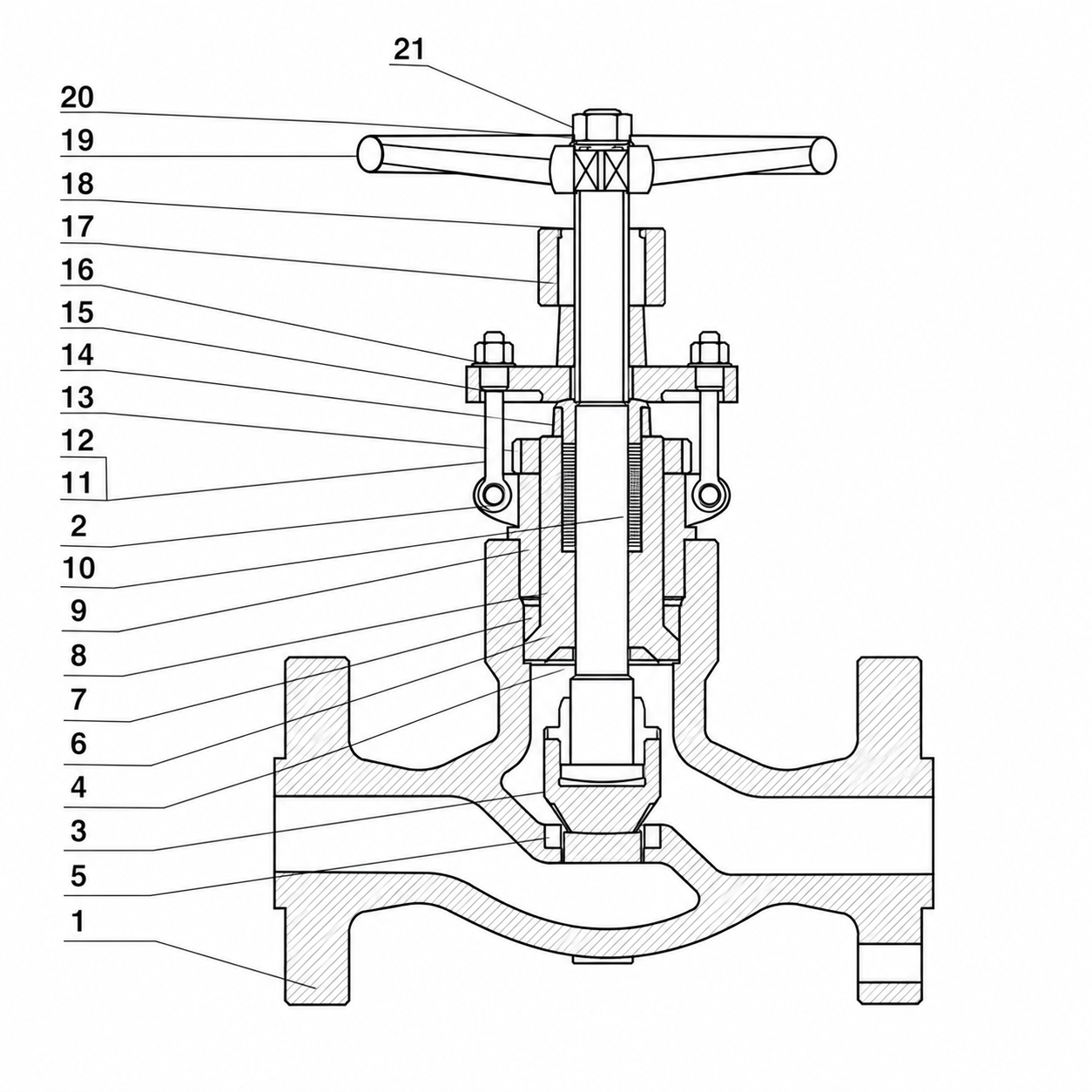
A pressure seal globe valve replaces the bolted flange joint with a self-energizing seal arrangement. Instead of bolts compressing a gasket, a seal ring — usually a graphite-based composite — sits between the bonnet and the body bore. A segmented retaining ring holds the bonnet in place.
When the line is pressurized, the process medium pushes the bonnet upward against the seal ring, compressing it radially against the body wall. Higher pressure produces a tighter seal. This is the defining difference: system pressure assists the seal rather than working against it.
This self-energizing behavior makes the pressure seal design the commonly selected configuration for Class 900 globe valve, Class 1500 globe valve, and Class 2500 globe valve applications. Per ASME B16.34 at ambient temperature, these classes correspond to working pressures of 2,220 PSI, 3,705 PSI, and 6,170 PSI for WCB carbon steel — pressures at which bolted bonnet flanges become impractically large.
Pressure-seal construction can reduce weight compared with an equivalent bolted bonnet design, but the difference depends on size, pressure class, body and bonnet design, end connection and material. Confirm the actual weight against the approved drawing for the offered configuration. Eliminating the bonnet flange and bolt circle saves material and simplifies the body casting, which can translate into smaller pipe supports and fewer lifting points during installation.
Maintenance requires more care. The bonnet may use a segmented retaining ring, and maintenance tooling depends on the selected valve design and supplier drawing. The graphite seal ring has a finite service life and should be replaced during overhaul. However, pressure seal globe valves in high-pressure steam and feedwater service are normally maintained during planned unit outages, so the incremental complexity is absorbed into the turnaround workflow.
The HN103 pressure seal globe valve should be confirmed against ASME B16.34 pressure-temperature ratings, API 598 testing requirements and the project datasheet. The Pressure Seal Globe Valve HN103 covers Class 900 through Class 2500 in the Honiks catalog. See the Pressure Seal Valves category for the full range.
For the equivalent comparison on the gate valve side, see our API gate valve vs pressure seal gate valve comparison.
Key Differences at a Glance
| Factor | API Globe Valve (HN102) | Pressure Seal Globe Valve (HN103) |
|---|---|---|
| Sealing mechanism | Gasket compressed by bolt preload | Self-energizing; seal force proportional to system pressure |
| Typical pressure class | Class 150–600 typical; HN102 catalog reference lists Class 150–2500 by configuration | Class 900–2500 |
| Standards | API 623, BS 1873, ASME B16.34 | ASME B16.34, API 598; confirm against project datasheet |
| Weight (relative) | Heavier — bonnet flange and bolt array add mass | Can be lighter for the same bore and class; confirm through the supplier’s drawing |
| Maintenance access | Standard tools; gasket replacement is straightforward | May require knockout tool; seal ring is a wear item |
| Leak paths | Bonnet gasket; potential for bolt relaxation over thermal cycles | Single seal ring — self-tightening; potentially fewer paths at high pressure |
| Temperature range | Temperature range depends on body material, gasket selection, pressure class and applicable pressure-temperature rating. | Graphite seal ring; commonly –29 °C to 550 °C depending on body/trim |
| Best-fit applications | Water treatment, chemical processing, oil pipelines, HVAC, low-to-moderate pressure steam | Power plant main steam/feedwater, refinery hydroprocessing, superheated steam, boiler blowdown |
| Honiks model | HN102 API Cast Steel Globe Valve | HN103 Pressure Seal Globe Valve |
The actual difference depends on valve size, pressure class, body and bonnet design, end connection and material; confirm the weight against the approved drawing for the offered configuration.
When to Choose HN102 API Cast Steel Globe Valve
The API Cast Steel Globe Valve HN102 is a practical choice when:
- Pressure class is Class 150, 300, or 600 — the envelope where bolted bonnet construction balances cost, weight, and sealing performance.
- The valve will be inspected or maintained on a regular schedule, and the maintenance team prefers standard tooling over specialized knockout equipment.
- The project specification references API 623 or BS 1873 with bolted bonnet construction as the default.
- Cost sensitivity favors the lower acquisition price of bolted bonnet designs at these pressure classes.
The HN102 is available in carbon steel (WCB), stainless steel (CF8/CF8M), and alloy steel grades with flanged or butt-weld ends. Pressure-temperature ratings should be confirmed against the specific material grade and operating temperature per ASME B16.34 tables. For broader product coverage, see the API Valves and Globe Valves categories. For projects referencing ANSI piping specifications, the ANSI Valves category provides additional options.
When to Choose HN103 Pressure Seal Globe Valve
The Pressure Seal Globe Valve HN103 is commonly the preferred choice when:
- Operating pressure is Class 900 or above. At these levels, the self-energizing seal can provide improved bonnet joint integrity than a gasketed bolted joint at comparable weight.
- The service involves high-temperature steam, feedwater, or hydrocarbon streams where thermal cycling could relax bolted joint preload over repeated startup-shutdown cycles.
- Weight is a design constraint — offshore platforms, congested pipe racks, or locations with lifting capacity limits may benefit from the weight reduction.
- The application is in power generation (main steam, turbine bypass, boiler feedwater), refinery hydroprocessing, or high-pressure petrochemical service — industries where pressure seal construction is widely adopted.
The HN103 line is configurable in carbon, alloy, and stainless steel bodies with a range of trim material options. The pressure seal design is not a premium feature — it is the appropriate engineering choice for the pressure-temperature envelope these applications demand.
Selection Factors
When comparing a bolted bonnet and pressure seal globe valve for a specific line, several factors beyond pressure class should be evaluated:
Temperature. The maximum operating temperature and the magnitude of thermal cycling both affect bonnet joint reliability. Graphite seal rings in pressure seal valves perform well to approximately 550 °C in non-oxidizing environments. For bolted bonnet valves, repeated thermal cycling can relax stud preload — a consideration for services with frequent startups.
Process medium. Aggressive media — hydrogen, sour gas, high-chloride water — influence body and trim material selection and may affect gasket or seal ring compatibility. For corrosive services, stainless steel (CF8/CF8M) or duplex grades are common. Alloy steels (WC6, WC9) are specified for high-temperature hydrogen service.
End connection. Flanged ends (raised face per ASME B16.5) are standard for both valve types. Butt-weld ends (ASME B16.25) provide a permanent connection preferred for high-pressure, high-temperature, or hazardous services where flange leak points should be minimized.
Maintenance philosophy. If the plant maintenance team is equipped for bolted bonnet disassembly and stocks standard gaskets, the HN102 may align better with operational practices. If the valve will be overhauled during planned unit outages with specialized support, the HN103 presents no additional maintenance burden.
Material certification and testing. Both valve types should be supplied with EN 10204 Type 3.1 or 3.2 material certificates as required by the project specification. API 598 pressure testing is standard. For critical service, additional NDE — radiography, ultrasonic testing, dye penetrant — should be specified at the RFQ stage.
Frequently Asked Questions
Can an API bolted bonnet globe valve be used for Class 900 service?
Some manufacturers offer bolted bonnet globe valves rated for Class 900. In most project specifications, the pressure seal design is commonly preferred at Class 900 and above because the self-energizing seal maintains joint integrity more reliably under sustained high pressure. For Class 900 applications, the pressure seal design may be the more appropriate default unless there is a documented operational reason — such as tooling availability or maintenance access — to use a bolted bonnet.
Is a pressure seal globe valve more expensive than a bolted bonnet globe valve?
At Class 600 or Class 900 where both designs may be viable, the pressure seal valve may carry a higher unit cost. At Class 1500 and Class 2500, pressure seal becomes cost-competitive when total installed cost — including structural supports, lifting equipment, and pipe stress — is accounted for. The acquisition price alone does not capture the full cost difference.
What standards apply to high-pressure globe valves?
For bolted bonnet designs, API 623 (Steel Globe Valves — Flanged and Butt-Welding Ends, Bolted and Pressure Seal Bonnets) is a primary reference standard, published by the American Petroleum Institute. ASME B16.34 defines pressure-temperature ratings and material groups. BS 1873 remains a legacy reference for bolted bonnet designs. For pressure seal designs, the applicable standards should be confirmed against the project datasheet — ASME B16.34 and API 598 are typical references. Procurement specifications should cite the applicable edition of each standard.
How is the correct pressure-temperature rating confirmed?
Pressure-temperature ratings are defined in ASME B16.34 tables and vary by body material group. A Class 1500 WCB valve at ambient temperature has an allowable working pressure of 3,705 PSI — at 500 °C, the allowable pressure is substantially lower. The material group, class, and maximum operating temperature should be cross-referenced against the applicable ASME B16.34 table. The supplier should provide this data in the quotation package.
What is the typical lead time for a pressure seal globe valve?
Lead times depend on size, pressure class, material grade, and current production load. Standard carbon steel models in sizes up to DN200 (8-inch) are normally available with shorter lead times. Alloy steel bodies, non-standard trim, or large diameters may extend production. Confirming lead time at quotation is recommended for project scheduling.
For a wider comparison of API valve types beyond globe valves, see our API valve types guide.
Conclusion
For Class 150 through Class 600, the bolted bonnet API globe valve — represented by the API Cast Steel Globe Valve HN102 — provides practical, field-serviceable flow control. For Class 900 through Class 2500 in power generation, refining, and high-pressure steam, the self-energizing seal of the Pressure Seal Globe Valve HN103 is commonly selected where the project specification calls for that bonnet design; higher-class HN102 catalog references must be evaluated configuration-by-configuration.
Before finalizing a specification, confirm the system pressure class, maximum operating temperature, and process medium. For Class 600 and below, start with a bolted bonnet. For Class 900 and above, the pressure seal configuration is generally the more appropriate default. Cross-reference material grades against ASME B16.34 pressure-temperature tables, and evaluate total lifecycle factors — maintenance frequency, spare parts, and tooling — not just unit price.
For procurement teams specifying globe valves for high-pressure service, Honiks supplies the HN102 and HN103 ranges through qualified partner factories. As a globe valve supplier in China, Honiks provides material traceability and documentation aligned to project requirements.
Contact Honiks with valve type, pressure class, NPS size, body material, end connection, and quantity for a specification-matched quotation. Engineering datasheets and pressure-temperature rating tables are available on request.