Pressure Seal Valves
What Are Pressure Seal Valves?
Pressure seal valves use a self-energising bonnet sealing arrangement where internal line pressure helps energise the bonnet seal, making the seal tighter as system pressure increases. Unlike conventional bolted bonnet designs, the pressure seal bonnet relies on a gasket and sealing ring arrangement that is activated by the internal pressure of the pipeline medium.
This design is commonly selected for high-pressure ANSI pipeline service where bolted bonnet designs would require disproportionately large and heavy bolting. Pressure seal valves are found in Class 900 and above, in applications such as power plant steam systems, high-pressure oil and gas pipelines, and refinery high-pressure process units.
Pressure Seal Gate Valve and Globe Valve Options
Honiks is a factory-backed industrial valve supplier in China with access to qualified partner factories for pressure seal valve production. Our pressure seal valve program covers gate and globe valve types:
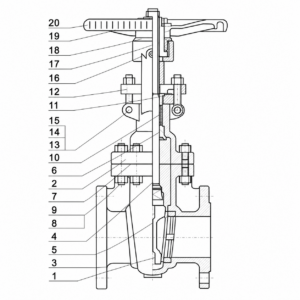
Pressure Seal Gate Valve: Class 900-2500, pressure self-seal bonnet, flexible disc with guide, solid or open loop disc options. Designed for high-pressure isolation service. See HN101 for catalog reference data.
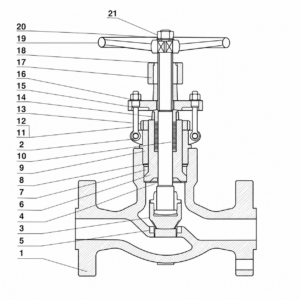
Pressure Seal Globe Valve: Class 900-2500, pressure self-seal bonnet, guided disc and seat arrangement for shut-off and selected throttling service. See HN103 for catalog reference data.
High-Pressure Class 900, 1500 and 2500 Service
Pressure seal valves are available in Class 900, Class 1500 and Class 2500 configurations. The available size range depends on valve type and pressure class. For high-pressure steam, oil, gas or power plant applications, contact Honiks with your operating pressure, temperature, line size and medium for a suitability check.
Materials, End Connections and Standards
Standard body materials include carbon steel (A216-WCB), Cr-Mo alloy steel (A217-WC6) and low-temperature carbon steel (A352-LCB). Stainless steel options are available for selected configurations. End connections include raised face (RF), butt-weld (BW) and ring type joint (RTJ), depending on pressure class and project specification. Design reference documents include API 600, BS 1873, ASME B16.34, ASME B16.10, ASME B16.5, ASME B16.25 and API 598.
Typical Applications
High-pressure steam and power plant isolation and throttling service
Oil and gas high-pressure pipelines
Petrochemical and refinery high-pressure process lines
Pipeline systems requiring pressure seal bonnet gate or globe valves
Related Categories
API Valves — All API-referenced industrial valves
ANSI Valves — All ANSI-referenced industrial valves
Gate Valves — Including pressure seal gate valves
Globe Valves — Including pressure seal globe valves
Frequently Asked Questions
What is a pressure seal valve used for?
Pressure seal valves are used for high-pressure isolation and throttling service where the self-energising bonnet design provides a more compact and reliable sealing arrangement compared with conventional bolted bonnet valves at the same pressure class.
Which Honiks pressure seal valve types are available?
Honiks supplies pressure seal gate valves and pressure seal globe valves in Class 900, Class 1500 and Class 2500 configurations. Contact us with your project specification for a current availability check.
Are pressure seal valves mainly used for high-pressure service?
Yes. Pressure seal bonnet design is most commonly specified for Class 900 and above, where internal pressure helps energise the bonnet seal and the compact design offers practical advantages over large bolted bonnet arrangements.
For engineering guidance on high-pressure gate valve selection, read our pressure seal gate valve selection guide.
For globe valve applications at Class 900 and above, see our pressure seal globe valve selection guide.
Related Technical Guide: API valve types guide.
For steam, feedwater, drain and auxiliary service, see this pressure seal valves for power plant piping guide.
Showing all 2 results