Ball Valves
What Are Ball Valves?
Ball valves are quarter-turn pipeline valves that use a rotating ball with a through-bore to control flow. When the ball bore is aligned with the pipeline, flow passes through. A 90-degree turn of the stem rotates the ball to the closed position, providing tight shut-off. Ball valves are widely used in oil, gas, water, steam and industrial pipeline systems where reliable quarter-turn isolation or flow control is required.
Ball valve designs are divided into two main categories: floating ball valves and fixed ball (trunnion-mounted) valves. The choice between the two depends on valve size, pressure class, operating torque and project specification.
Floating Ball Valves vs Fixed Ball Valves
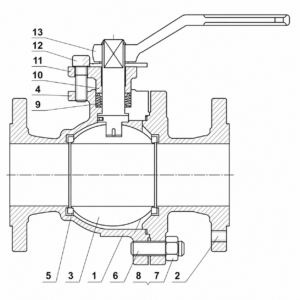
Floating ball valves use the ball itself as the downstream sealing element. Under line pressure, the ball is pressed against the downstream seat, creating the seal. This design works well for smaller sizes and moderate pressure classes. See HN105 Floating Ball Valve for catalog reference data.
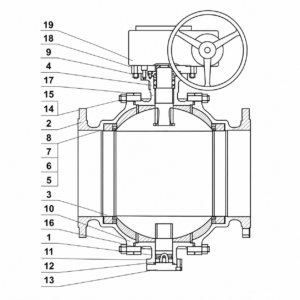
Fixed ball valves use bearing-supported trunnion components to hold the ball in position. The operating torque is independent of line pressure, making this design suitable for larger sizes and higher pressure classes. Fire-safe, anti-static and injection options are available. See HN106 Fixed Ball Valve for catalog reference data.
Honiks is a factory-backed industrial valve supplier in China with access to qualified partner factories for both floating and fixed ball valve production.
Pressure Classes and End Connections
Ball valves are available in pressure classes from Class 150 through Class 2500. End connections include raised face (RF), butt-weld (BW) and ring type joint (RTJ), depending on pressure class and project specification. Full bore and reduced bore options may be selected according to flow requirements. Final size, material and end connection should be confirmed according to the approved project specification.
Fire-Safe, Anti-Static and Operator Options
Fire-safe design according to API 607 or BS 6755, and anti-static device according to API 608, are available for both floating and fixed ball valve configurations. Operator options include handle for smaller sizes, and worm gear, electric, pneumatic or hydraulic actuation for larger sizes or automated service.
Typical Applications
Oil and gas pipeline isolation
Petrochemical and refinery process lines
General industrial ANSI pipeline systems
Water, steam, oil and compatible gas service
Projects requiring API 608 / API 6D ball valve specifications
Related Categories
API Valves — All API-referenced industrial valves
ANSI Valves — All ANSI-referenced industrial valves
Floating Ball Valves — Compact quarter-turn ball valves
Fixed Ball Valves — Trunnion-mounted ball valves for larger sizes and higher pressure
Frequently Asked Questions
What is the difference between floating and fixed ball valves?
In a floating ball valve, the ball is not supported by trunnion bearings and is pressed against the downstream seat by line pressure. This design works well for smaller sizes and moderate pressures. A fixed ball valve uses trunnion-style bearing components to hold the ball in position, helping reduce operating torque and providing better stability in larger sizes and higher pressure classes.
Which pressure classes are available?
The catalog reference covers Class 150, 300, 600, 900, 1500 and 2500. The available size range depends on the selected pressure class, end connection and valve configuration.
Can ball valves be supplied with RF, BW or RTJ ends?
Yes. Raised face, butt-weld and ring type joint end configurations can be selected according to pressure class, piping design and project specification.
Related Resources: API gate valve vs API ball valve.
Related Technical Guide: API valve types guide.
For configuration selection, compare floating and fixed ball valve designs in our floating vs fixed ball valve selection guide.
For oil and gas storage and transfer line applications, see our guide to industrial ball valves for oil and gas tank farm piping.
For tight shut-off, seat material and chemical medium review, see the industrial valves for chemical processing guide.
Showing all 2 results