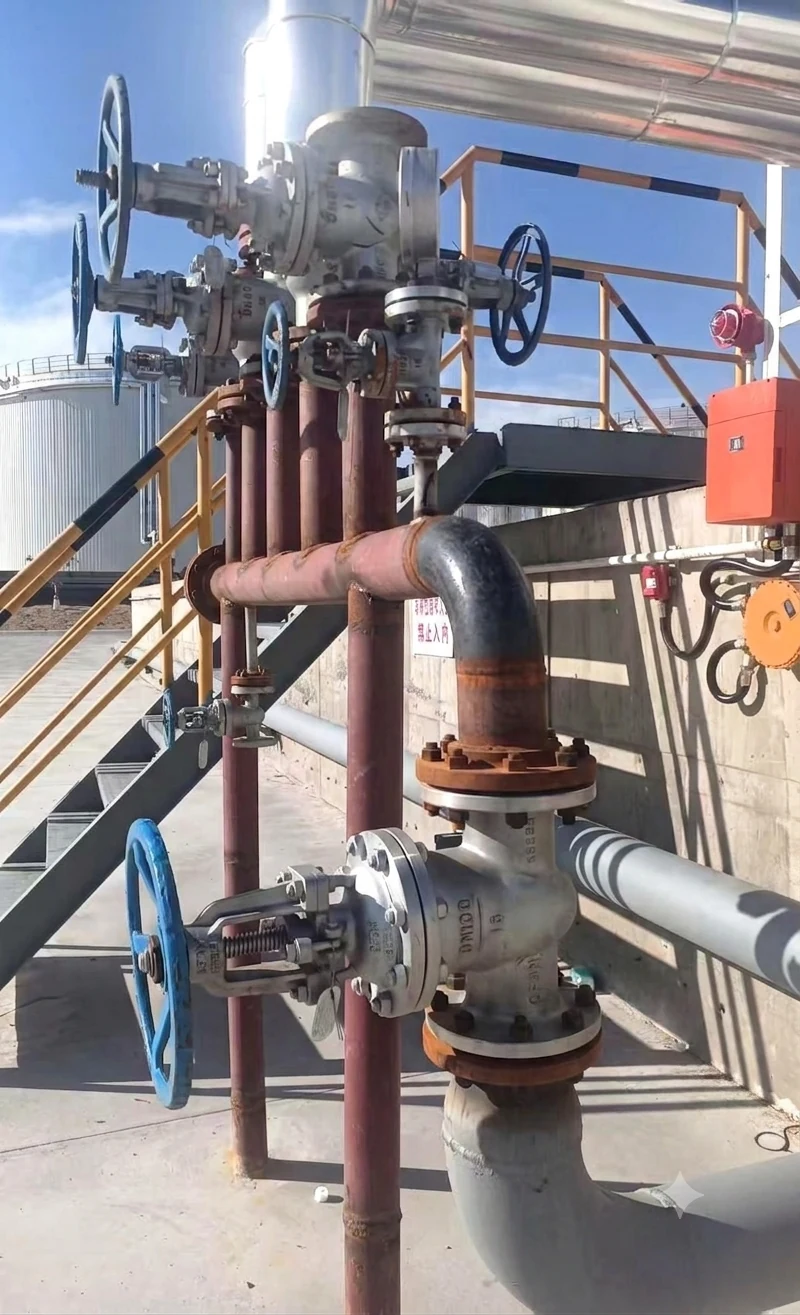
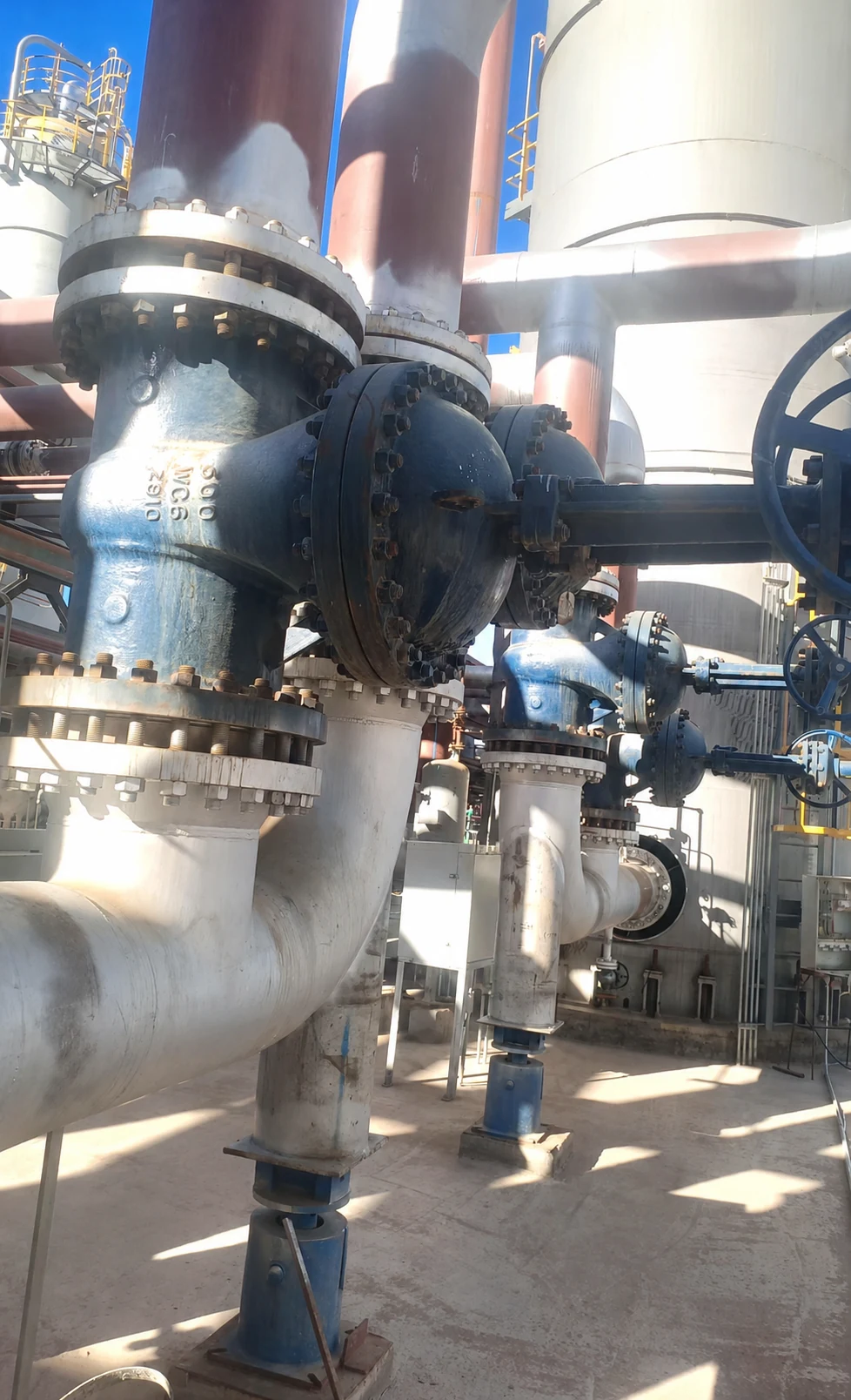
A valve quote that should take two days stretches into two weeks. The delay is not the valve — it is the missing medium concentration, the unspecified seat material, the corrosion allowance left blank on the data sheet. In chemical processing, material compatibility can change with concentration, impurities and temperature. Getting the specification right before the RFQ goes out helps reduce premature replacement risk and unplanned shutdown work.
Industrial valves for chemical processing sit at reactor feed lines, heat exchanger isolation, pump suction and discharge, tank farms, utility headers, dosing skids, drain and vent points, and steam tracing. Honiks is a factory-backed industrial valve supplier based in China, supporting project inquiry review, inspection coordination, and documentation preparation for chemical plant valve supply.
Key Takeaways
- Choose the valve type by duty: globe valves for flow regulation, ball valves for tight shut-off, bellow seal valves where stem leakage matters, and gate valves for large-diameter isolation.
- The medium data sheet drives material selection. A material that resists one chemical at one concentration and temperature may fail rapidly when the stream contains trace impurities — confirm compatibility, do not assume it.
- Bellow seal valves reduce fugitive emission risk on toxic or volatile media, but they cost more and the bellow is a wear component. Use them where stem leakage has a safety or regulatory consequence, not as a blanket upgrade.
- Missing data points on the inquiry form — medium, concentration, temperature, seat material — are the single biggest cause of quotation delays. Suppliers guess, or they come back with questions.
Valves in Chemical Processing — Where They Matter
Walk a chemical plant from the reactor feed line to the utility header, and valves connect every process stage. On reactor feed and discharge lines, isolation and flow control determine product quality and batch consistency. At distillation column reboilers and condensers, valves manage steam and cooling water that keep the column profile stable. Tank farm transfer lines move raw materials and finished products between storage and processing. Chemical dosing skids meter precise quantities of catalyst, inhibitor, or pH control agent into the process stream. Drain and vent valves handle liquids and vapours during startup, shutdown, and maintenance. Utility headers distribute steam, nitrogen, instrument air, and cooling water across the site.
Each of these positions has different demands on the valve. The chemical processing valve selection exercise matches type, material, and sealing method to the medium, temperature, and pressure at each location. The chemical plant valve selection outcome can affect whether the line remains within its planned maintenance interval or requires earlier shutdown work. For a broader view of how Honiks supports these projects, see the Chemical Processing Solutions page.
Valve Type Selection by Duty
Globe Valves for Flow Regulation
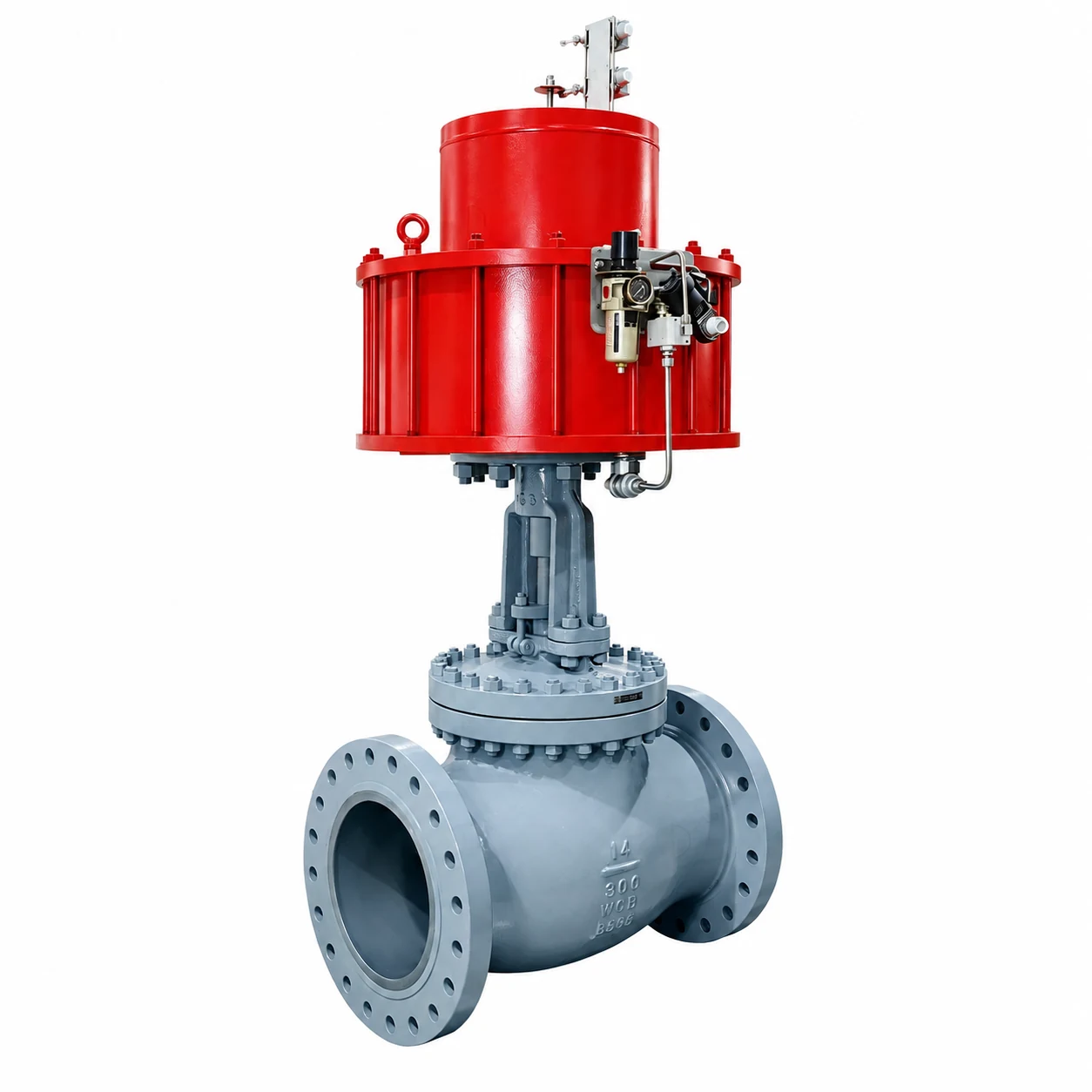
For flow regulation — bypass lines around control valves, chemical dosing circuits, steam headers, drain and vent points — globe valves for chemical service are the default. The disc moves perpendicular to the seat, and the S-shaped flow path creates controlled resistance that enables throttling across the stroke range. The trade-off is pressure drop. On a chemical dosing line handling a few litres per minute, precise control matters more than flow efficiency.
The API Cast Steel Globe Valve HN102 covers bolted bonnet globe configurations for chemical process isolation and throttling. Additional options are in the Globe Valves category.
Ball Valves for Tight Shut-Off
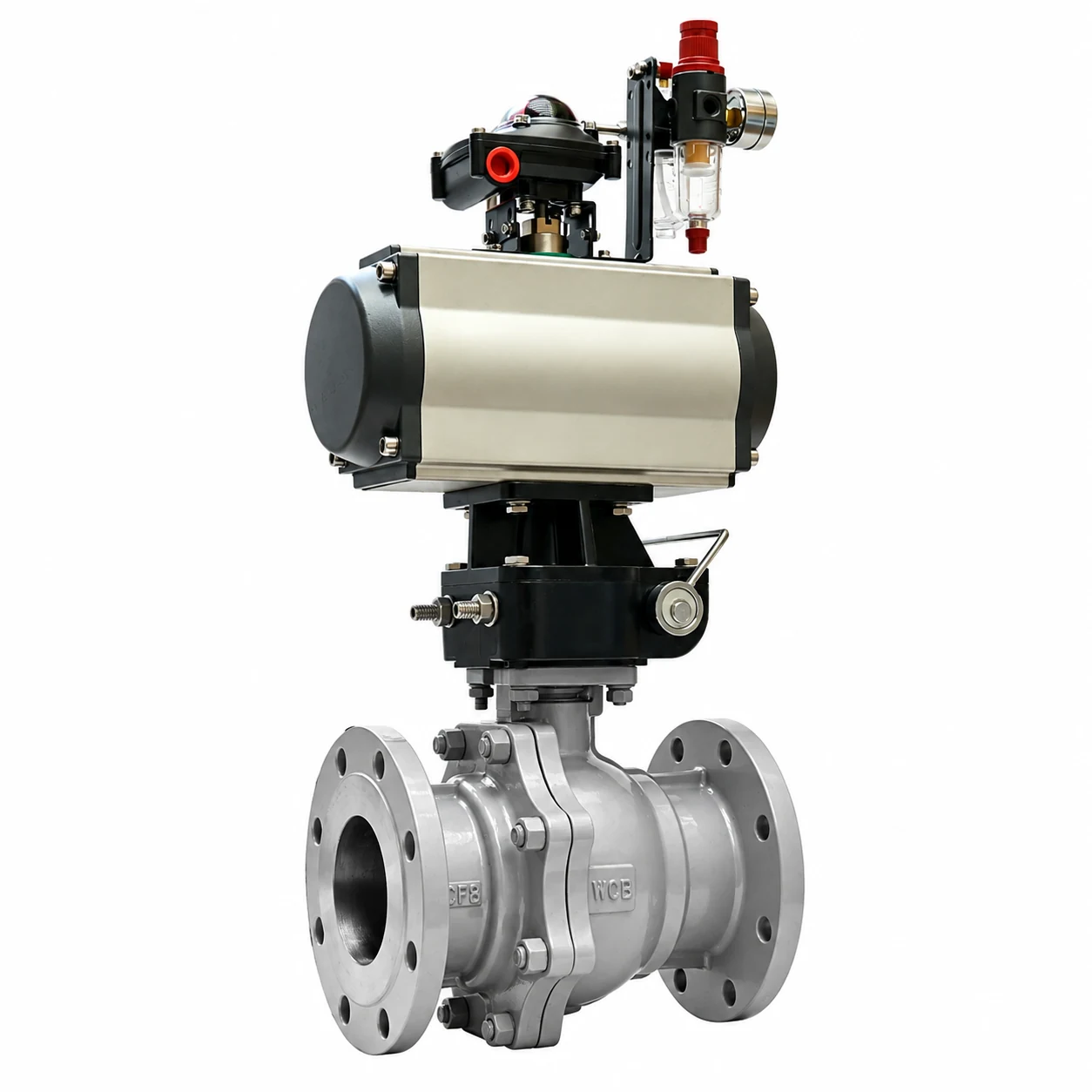
If the application requires low seat-leakage performance with quarter-turn operation — for gas, vapour, solvent, or piggable lines — ball valves for chemical processing are the practical choice. A 90-degree rotation takes the valve from fully open to fully closed. Soft-seated designs can provide low seat-leakage performance when the seat material, pressure class, medium and applicable test acceptance criteria are correctly specified. Ball valves are suited to frequent quarter-turn operation when seat material, differential pressure, medium, temperature, operating frequency and actuator setup are selected for the required duty.
Floating ball valves cover smaller sizes up to roughly NPS 8. Trunnion-mounted ball valves handle larger sizes, higher pressure classes, and double block and bleed requirements. The Floating Ball Valve HN105 and Fixed Ball Valve HN106 cover both configurations. The Ball Valves category lists additional material and seat combinations.
Bellow Seal Valves for Emission Control
Stem leakage on a standard packed globe valve is a maintenance fact — the packing wears, the gland needs adjustment, and trace emissions increase between service intervals. On lines carrying chlorine, ammonia, phosgene, heat transfer fluids, or high-value intermediates, that trace leakage is a safety, regulatory, or product-loss problem.
A bellow seal valve replaces the conventional packed gland with a metallic bellow welded to the stem and bonnet. The primary seal is the bellow itself, with a standard packing set above it as a secondary barrier. Bellow seal valves for chemical service provide two barriers between the process medium and the atmosphere. The bellow is a wear component with a finite cycle life — it is not a fit-and-forget upgrade for every line.
The Bellow Seal Globe Valve HN70 covers bellow seal globe configurations for hazardous and high-value chemical service. The Bellow Seal Valves category includes additional configurations.
Gate Valves for Process Isolation
On larger-diameter lines — tank farm transfer headers, cooling water mains, firewater — where the valve stays open during normal operation and cycles only for maintenance, gate valves for process piping provide full-bore isolation with minimal pressure drop. Gate valves are not designed for throttling. A partially open gate exposes the seating surfaces to high-velocity flow erosion.
The Gate Valves category lists gate configurations for chemical process isolation service.
Globe Valve vs Ball Valve for Chemical Service
| Selection factor | Globe Valve (HN102) | Ball Valve (HN105/106) | What to check for chemical service |
|---|---|---|---|
| Primary duty | Shut-off and throttling | Quarter-turn isolation with tight shut-off | Confirm whether the line needs flow regulation or only on/off isolation |
| Throttling | Designed for controlled throttling across the disc stroke | Not designed for throttling without characterised trim | A ball valve cracked open for flow control washes the seats with a high-velocity jet |
| Pressure drop | Higher — S-shaped flow path creates inherent resistance | Low — straight-through when fully open | Pressure drop matters on large-diameter lines; on small dosing lines, the globe valve penalty is acceptable |
| Shut-off tightness | Metal-to-metal; seat leakage acceptance must be confirmed against the specified API 598 test method, seat material and project requirements. | Low seat-leakage or bubble-tight shutoff when the offered soft-seat configuration is qualified to the project-specified test standard and acceptance criteria; metal-seated options available | Soft seats limit upper temperature; confirm seat material is compatible with the medium |
| Operation frequency | Moderate — designed for regular cycling | High — Cycle life depends on seat material, differential pressure, medium, temperature, operating frequency and actuator setup. Specify the required cycle duty and obtain supplier confirmation or qualification data for the offered construction. | On frequently operated lines, ball valves outlast globe valve seats |
| Temperature limit | Higher — metal seating handles steam and hot oil service | Limited by soft seat material; the applicable PTFE/seat temperature limit must be confirmed against the offered seat grade, medium, pressure class and project datasheet. | Metal-seated ball valves extend the temperature range but trade off some shut-off tightness |
| Maintenance | Disc and seat inspection requires bonnet removal | Seat servicing may be possible with the valve installed for some trunnion or top-entry configurations; confirm the supplied design and IOM | Plan maintenance access around service intervals; installed-in-pipe access is not a live-work permission—follow the approved IOM and isolate, depressurize and drain or bleed before work |
When to Use Bellow Seal Valves
Start with one question: what is the consequence of stem leakage on this line? If the answer is personnel exposure, a regulatory reportable event, or loss of a high-value intermediate, a bellow seal valve is the appropriate specification. If the answer is minor weepage that the operator can address with a gland adjustment, standard packed construction is adequate.
Bellow seal valves are commonly specified on chlorine, ammonia, phosgene, ethylene oxide, heat transfer fluid, and high-purity intermediate service. The bellow material — stainless steel or alloy — should be compatible with the process medium. Bellow cycle life should be matched to the expected stem strokes over the service interval and verified against supplier qualification data for the offered construction.
Material, Sealing and Corrosion Review
Chemical streams are rarely pure. A material that handles 98 percent sulfuric acid at 20 deg C may corrode rapidly in a stream containing 96 percent acid with trace chlorides at 60 deg C. The medium data sheet — concentration, temperature, phase, and any trace impurities — determines material selection, not a generic compatibility chart.
Carbon steel (WCB) covers general utility service — cooling water, instrument air, nitrogen, low-pressure steam. Stainless steel (CF8/CF8M) is specified where corrosion resistance or product purity is required. Alloy steels and duplex grades are selected when the medium demands specific corrosion resistance — confirm availability against the project specification.
Seat and sealing materials follow the medium. PTFE and RPTFE seats cover a wide range of chemical service at moderate temperatures. Metal seats are selected for higher temperatures or abrasive service. Graphite packing is standard; PTFE packing is specified where chemical compatibility requires it. For fugitive emission control, bellow seal valves for chemical service eliminate stem leakage through the primary seal, with the packing acting as a secondary barrier. Sealing and emission standards such as ISO 15848 may be referenced in the project specification and should be confirmed at the quotation stage.
Pressure Class, End Connection and Operation
Most chemical plant piping operates at Class 150 or Class 300. Higher pressure classes — Class 600 or Class 900 — apply to reactor feed pumps, high-pressure hydrogenation, or certain compressor discharge lines. Project specifications may reference API or ASME standards for material, design, and testing requirements.
Flanged end connections to ASME B16.5 are standard for most chemical plant valves above DN25. Butt-weld ends to ASME B16.25 are specified where the piping is fully welded or where flange leakage is a concern. Threaded ends are used on small auxiliary lines.
Manual operation with a handwheel or lever covers most chemical plant positions. Gear operators are specified where handwheel effort exceeds the operator’s working range. Pneumatic actuators are common where instrument air is available and fail-safe spring-return operation is required. Electric actuators are used where the valve is integrated into a DCS loop or where instrument air is not available. When specifying an actuated valve, confirm power supply, control signal, fail position, and enclosure rating for the area classification.
Inspection and Documentation
Chemical plant valve orders require documentation that confirms the valve matches the specification. Material test certificates to EN 10204 Type 3.1 or 3.2 verify chemical composition and mechanical properties of pressure-containing parts. Pressure test reports document shell and seat tests at the required test pressure and duration.
Non-destructive examination — radiography, ultrasonic, dye penetrant — may be specified for critical service locations. Dimensional inspection records confirm face-to-face, flange, and overall dimensions. For bellow seal valves, the bellow material certificate and cycle test documentation should be included. Honiks works with qualified partner factories to coordinate inspection and documentation for chemical plant valve orders. See the Quality Control page for inspection management and the Factory Capability page for production and supply arrangements.
Buyer Inquiry Checklist
Every blank cell on an inquiry form costs a round of clarification. If you cannot answer a field below, neither can the supplier — and the quotation clock does not start until the data is complete.
- Medium name and chemical formula
- Concentration — weight or volume percent
- Operating temperature — normal and maximum
- Design pressure and pressure class
- Phase — liquid, gas, vapour, slurry, or multiphase
- Solids content — particle size and concentration if present
- Corrosion allowance or specific material requirement
- Valve type — globe, ball, gate, or bellow seal
- Valve size — DN or NPS
- Body and trim material — or request supplier recommendation with medium data
- Seat and sealing material — PTFE, RPTFE, metal, or bellow seal
- End connection — flanged, butt-weld, or threaded
- Operation — manual, gear, pneumatic, or electric actuator
- If actuated — voltage, signal type, fail position, enclosure rating
- Documentation — MTC level, NDE scope, test reports, bellow certificates
Frequently Asked Questions
Which valve type is most common in chemical processing plants?
No single type accounts for the majority. Globe valves are the most numerous because they cover the widest range of duties — flow regulation, shut-off, steam, chemical dosing, and drain/vent. Ball valves appear where tight shut-off and frequent cycling matter. Gate valves are used on larger-diameter lines and firewater. Bellow seal valves are specified on lines where stem leakage carries a safety or regulatory consequence.
When should I use a bellow seal valve instead of a standard globe valve?
Use a bellow seal valve when the medium is toxic, volatile, or high-value and stem leakage has a measurable consequence — personnel exposure, a regulatory report, or product loss. Do not use one on clean cooling water where a gland adjustment once a year is adequate maintenance. The bellow adds cost and is a wear component with a finite cycle life.
What seat material should I choose for chemical service?
Start with the medium, concentration, and maximum temperature. PTFE and RPTFE cover a broad range of chemical service at moderate temperatures. Metal seats are selected for higher temperatures, abrasive slurries, or where soft seats would degrade. No single seat material is universal — confirm compatibility against the specific process stream, not a general chemical resistance chart.
What information delays valve quotations the most?
Missing medium data. A quotation request that lists valve size and pressure class but omits the chemical name, concentration, and temperature forces the supplier to either guess or ask questions. Guessing produces a quotation that may not match the service. Asking questions adds days to the response. Complete the medium data first, then send the RFQ.
Does every chemical valve need stainless steel?
No. Carbon steel covers cooling water, instrument air, nitrogen, low-pressure steam, and firewater. Stainless steel is specified where corrosion resistance is required — acidic, chloride-containing, or high-purity streams. The material should follow the medium, not a default preference.
When ball valve service involves aggressive chemicals, solids or elevated temperatures, review the metal seated ball valve for chemical and abrasive service.
When chemical or abrasive service calls for a metallic sealing butterfly valve, review the metal seated butterfly valve for chemical and abrasive service.
For a structured review of soft-seat compatibility against metal-seat temperature, wear, torque and leakage considerations, read the metal seated vs soft seated ball valve selection guide.
Send Your Chemical Valve Requirements
Valve selection for chemical processing starts with the medium data sheet, not the valve model number. Send your completed inquiry checklist with project requirements and the Honiks team can return a quotation that addresses the specific service conditions rather than a generic product listing.
Contact Honiks with your valve list, medium data sheets, and project specification for review.