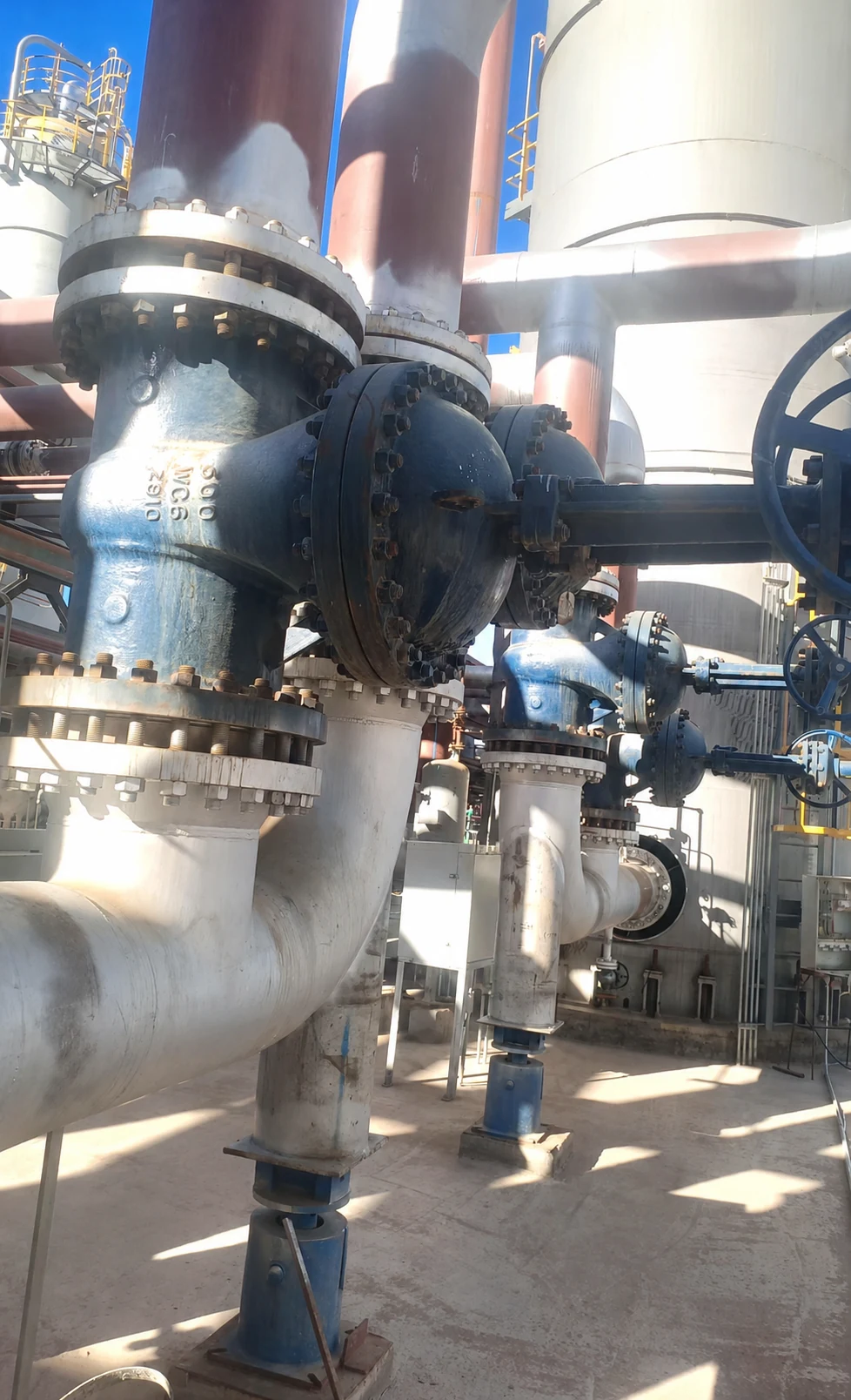
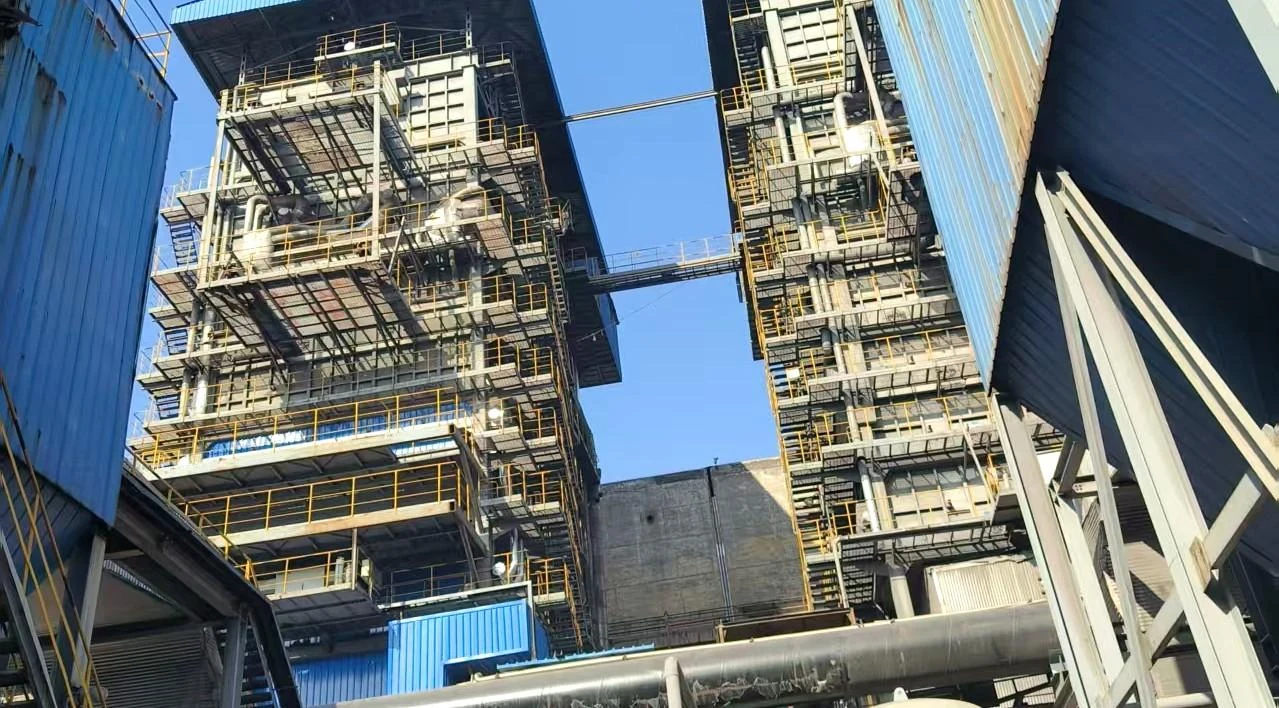
When a tank farm piping specification is being prepared, ball valves are frequently specified for isolation duties across storage tanks, loading lines, transfer pumps, manifolds, drain lines, vent lines, and utility connections. In some applications — slurry service, severe throttling, or large temperature swings — gate or globe designs may be preferred instead. The objective of this note is to outline the main points that buyers and engineers consider when reviewing ball valves for tank farm piping, without suggesting a single configuration fits every project.
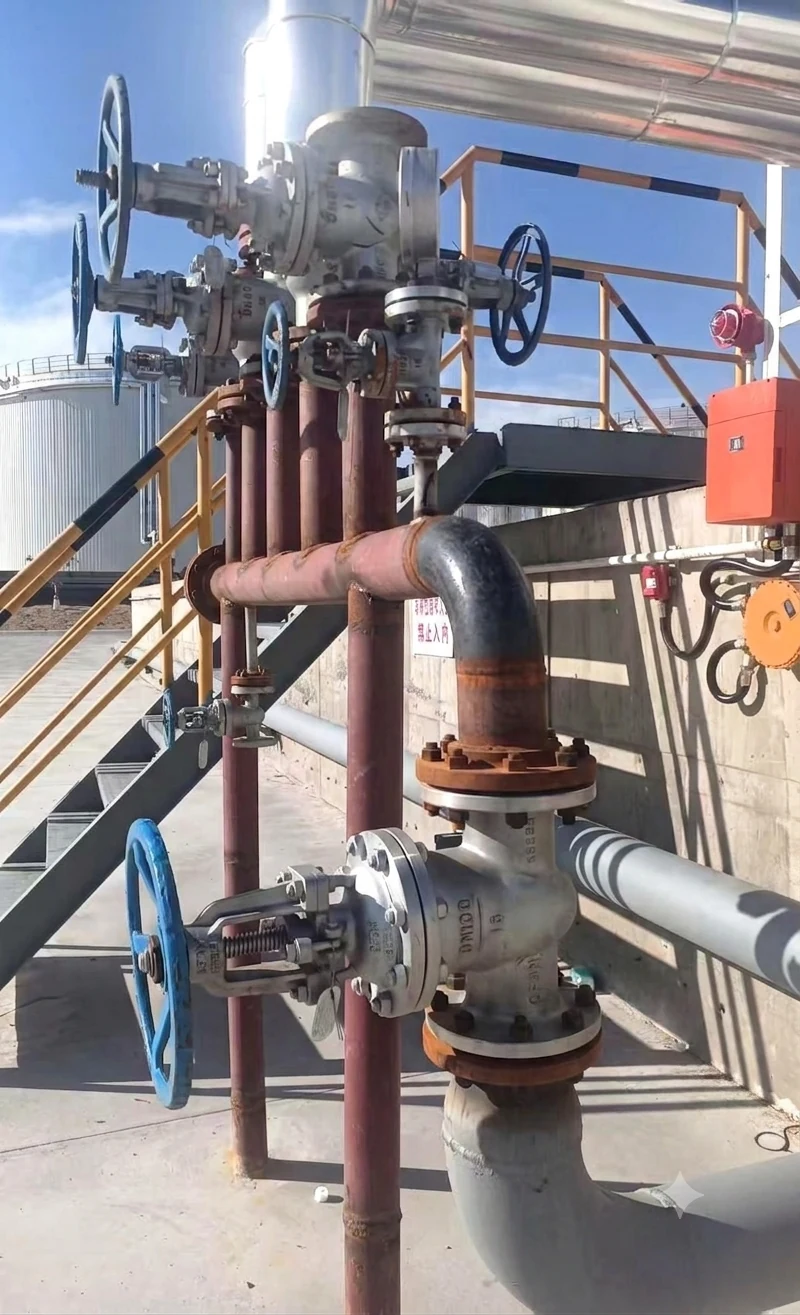
Why Ball Valves Are Used in Tank Farm Piping
Ball valves are commonly selected for tank farm isolation service for several reasons that matter in day-to-day terminal operations.
Quarter-turn operation. A 90-degree handle or actuator movement takes the valve from fully open to fully closed, which is practical for operators working across multiple manifold positions during product transfer.
Compact face-to-face dimensions. Compared with gate valves of the same class and bore, short-pattern ball valves reduce the pipe rack footprint, an advantage on congested tank farm manifolds.
Tight shut-off. Soft-seated ball valves can provide low seat-leakage or bubble-tight shutoff when the offered seat configuration is qualified to the project-specified test standard and acceptance criteria, which helps when product contamination between tanks or grades is a concern.
Broad compatibility. Ball valves are produced in carbon steel, stainless steel, and low-temperature grades, covering most tank farm fluids from crude and refined products to LPG and chemical feedstocks.
Floating Ball Valve or Trunnion Mounted Ball Valve
The floating ball valve vs trunnion ball valve selection decision is driven by size, pressure, and operating requirements. Getting this right early avoids oversized actuators and uneven seat wear down the line.
A floating ball valve supports the ball through the seat rings. Line pressure pushes the ball against the downstream seat to create the primary seal. This design is the economical choice for smaller sizes — commonly NPS 2 to NPS 6 in Class 150 or Class 300, and into Class 600 in the lower size range. The Floating Ball Valve HN105 covers this configuration for general process isolation in tank farm applications.
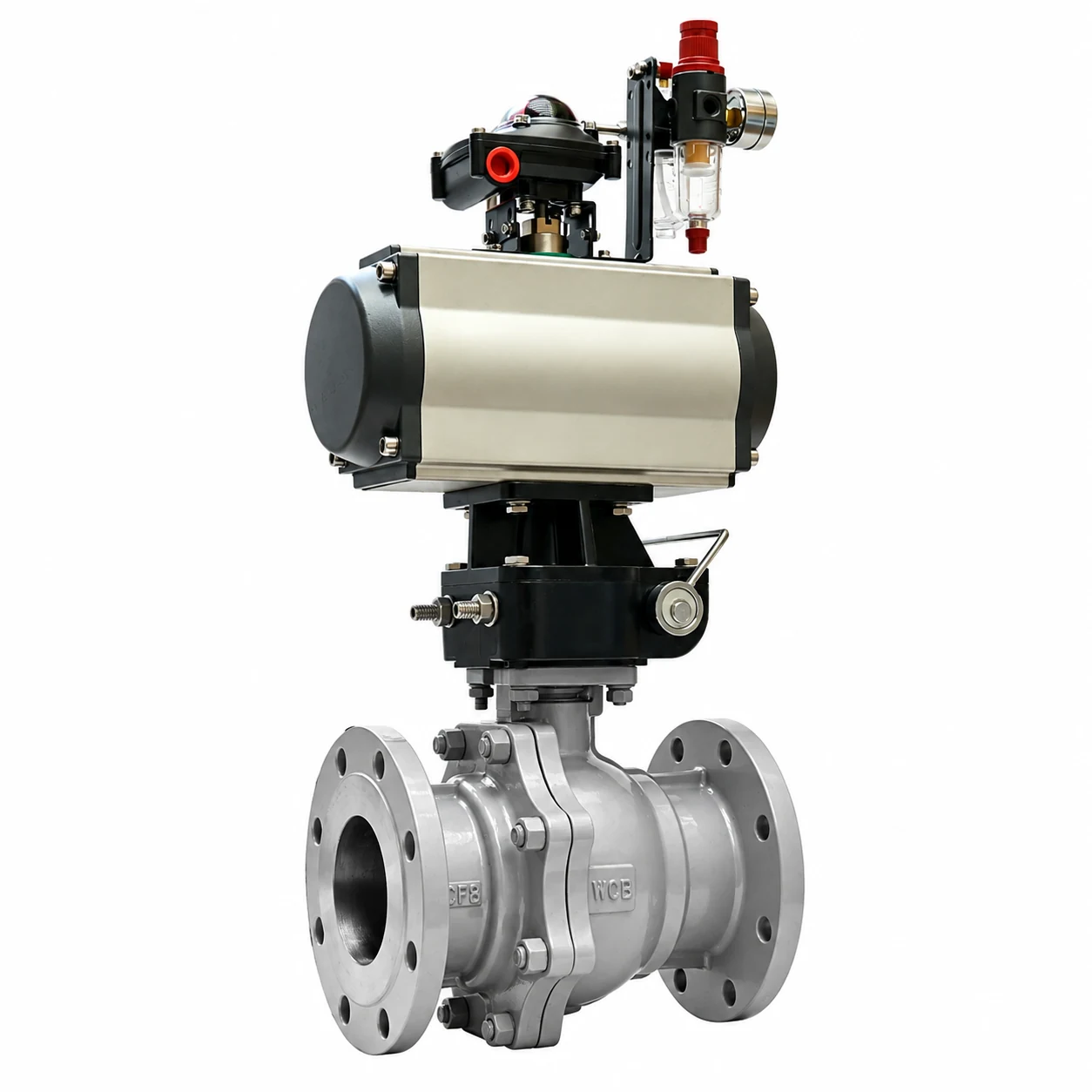
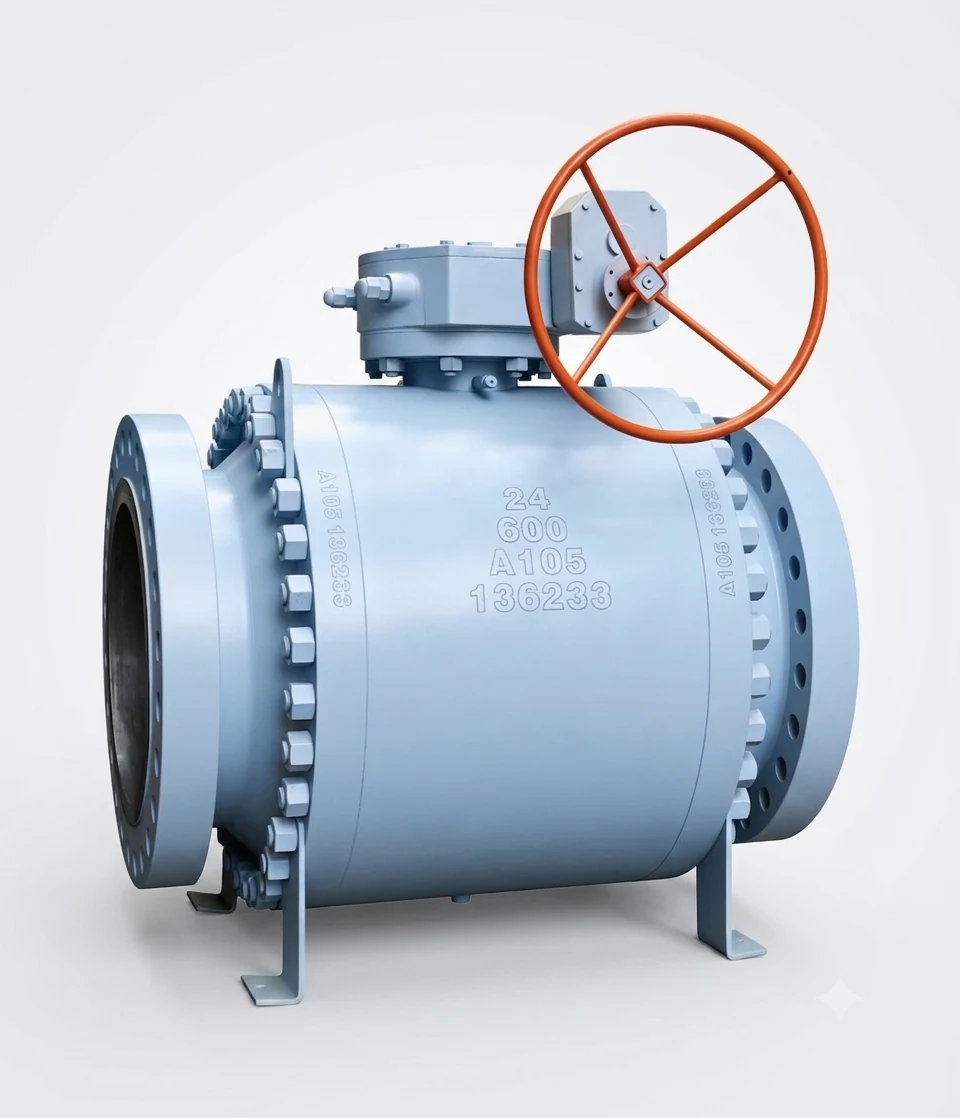
A trunnion-mounted ball valve supports the ball with upper and lower bearings. Spring-loaded seats press against the ball, and the bearing support keeps operating torque lower and more predictable than a floating design of the same size and class. This configuration is often selected above NPS 8 and at Class 900 and above. Where DBB is required, confirm the supplied seat, cavity and bleed arrangement, applicable definition and test evidence; do not infer the capability from trunnion mounting alone. The Fixed Ball Valve HN106 covers trunnion-mounted configurations for larger-diameter and higher-pressure tank farm isolation.
Size alone does not decide the design. Pressure class, seat material, actuation method, and fire-safe requirements all play into the choice. A more detailed comparison is covered in the Floating vs Fixed Ball Valve guide.
A tank-farm location does not by itself determine whether API 608 or API 6D governs a ball valve. Use the API 608 vs API 6D selection guide to confirm the project context, configuration, edition, testing and documentation requirements.
Selection Factors for Oil and Gas Service
The following table outlines the main factors that influence ball valve selection for tank farm piping. Each factor should be reviewed against the project piping specification and operating philosophy.
| Selection factor | Why it matters |
|---|---|
| Valve size | Determines whether floating or trunnion design applies. Most tank farm ball valves fall between NPS 2 and NPS 16, with floating designs common below NPS 8 and trunnion designs standard above. |
| Pressure class | Class 150 and Class 300 cover most tank farm transfer and loading line duties. Higher classes may be required for LPG, high-pressure transfer, or certain manifold isolation positions. |
| Material | WCB carbon steel is widely used for hydrocarbons. LCB/LCC is specified for low-temperature LPG or refrigerated product service. CF8M stainless steel is selected where corrosion or product purity is a concern. |
| Seat design | Soft-seated PTFE or Devlon seats are standard for most tank farm services. Metal-seated alternatives exist for higher-temperature service, but the supplier should review the effect on shut-off tightness. |
| Operation method | Manual lever is practical up to about NPS 6 at Class 300. Gear operators are fitted on larger sizes or higher classes. Actuated operation — electric or pneumatic — is common where the valve is part of an automated loading or tank gauging system. |
| Fire-safe requirement | If the tank farm fire protection philosophy requires fire-safe isolation, API 607 or API 6FA fire-safe certification should be confirmed at the specification stage. Not every ball valve carries this certification. |
| Documentation | For export projects, material certificates to EN 10204, pressure test records, and inspection documentation form part of the supply package. The required standard and inspection acceptance criteria should be confirmed before ordering. Project specifications may reference API or ASME requirements. |
Operation and Actuation
Manual operation is straightforward for smaller ball valves in accessible locations on the tank farm. Lever handles suit NPS 2 to NPS 4 at moderate pressure classes. Gear operators are fitted from approximately NPS 6 upward or wherever handle force exceeds the operator’s comfortable working range.
For actuated valves, the selection depends on the site infrastructure and control philosophy. Electric actuators are common where three-phase or single-phase power is available at the valve location, particularly on tank inlet and outlet isolation valves tied to a tank gauging or SCADA system. When specifying an electric actuator, confirm the power supply voltage and phase, the control signal type, the required fail position, whether a local handwheel override is needed, and the enclosure rating for the installation environment.
Pneumatic actuators are used where instrument air is available, or where the valve serves an emergency shutdown function that requires spring-return fail-safe operation. The supply pressure, spring-return configuration, solenoid voltage, and positioner accessories all need to match the project specification.
Before requesting records, define the technical selection. The API 6D ball valve RFQ checklist structures pipeline ball-valve data, while the full-bore vs reduced-bore guide separates passage, hydraulic and pigging evidence.
Inspection and Documentation
For tank farm projects destined for export, the documentation package is often as important as the valve itself. Buyers commonly request material test certificates to EN 10204 Type 3.1 or 3.2, confirming the chemical composition and mechanical properties of the pressure-containing parts. Pressure test records per API 598 — shell test and seat test — should be included.
Inspection photos taken during assembly and testing, marking and nameplate review against the purchase order, and a final packing list with weight and dimension details are standard. Commercial invoice and shipping documentation complete the export package.
The applicable inspection scope — whether visual, dimensional, or NDE — should be agreed at the quotation stage. Honiks works with qualified partner factories to support specification matching, inspection coordination, documentation support, and export project handling. For an overview of how inspection is managed, see the Quality Control page. For manufacturing and supply arrangements, see the Factory Capability page.
When a tank farm specification must balance tight shut-off in clean service against temperature, solids or wear, use the soft seat and metal seat ball valve comparison before confirming the offered seat construction.
Related Honiks Valve Options
Beyond ball valves, tank farm piping may call for other valve types depending on the service. Gate valves are often used on larger-diameter tank suction and discharge headers. Globe valves are fitted on bypass, drain, and vent lines where flow regulation is needed.
For a broader oil and gas project view, see our oil and gas valve solutions overview.
Within the ball valve range, Honiks supplies floating and trunnion-mounted configurations covered by the Floating Ball Valve HN105 series and the Fixed Ball Valve HN106 series. A broader view of available configurations — including reduced-bore, full-bore, soft-seated, and metal-seated options across multiple pressure classes — is available in the Ball Valves product category.
Honiks is a factory-backed industrial valve supplier based in China and can support the specification of a range of industrial valves beyond ball valves.
Send Tank Farm Valve Requirements
Preparing a clear inquiry saves time. For a tank farm ball valve quotation, the following information helps the Honiks team return a proposal matched to the project rather than a generic quote:
- Valve type — floating or trunnion
- Valve size and pressure class
- Body material and seat material
- End connection — flanged RF or butt-weld
- Operation — manual lever, gear, electric actuator, or pneumatic actuator
- If actuated — power supply, signal type, fail position, and enclosure rating
- Quantity per size and class
- Documentation requirements — material certificates, test reports, inspection scope
- Applicable project standard or specification reference
Send these details and the Honiks team can return a proposal matched to the project for review. Contact Honiks with the valve list or data sheet.