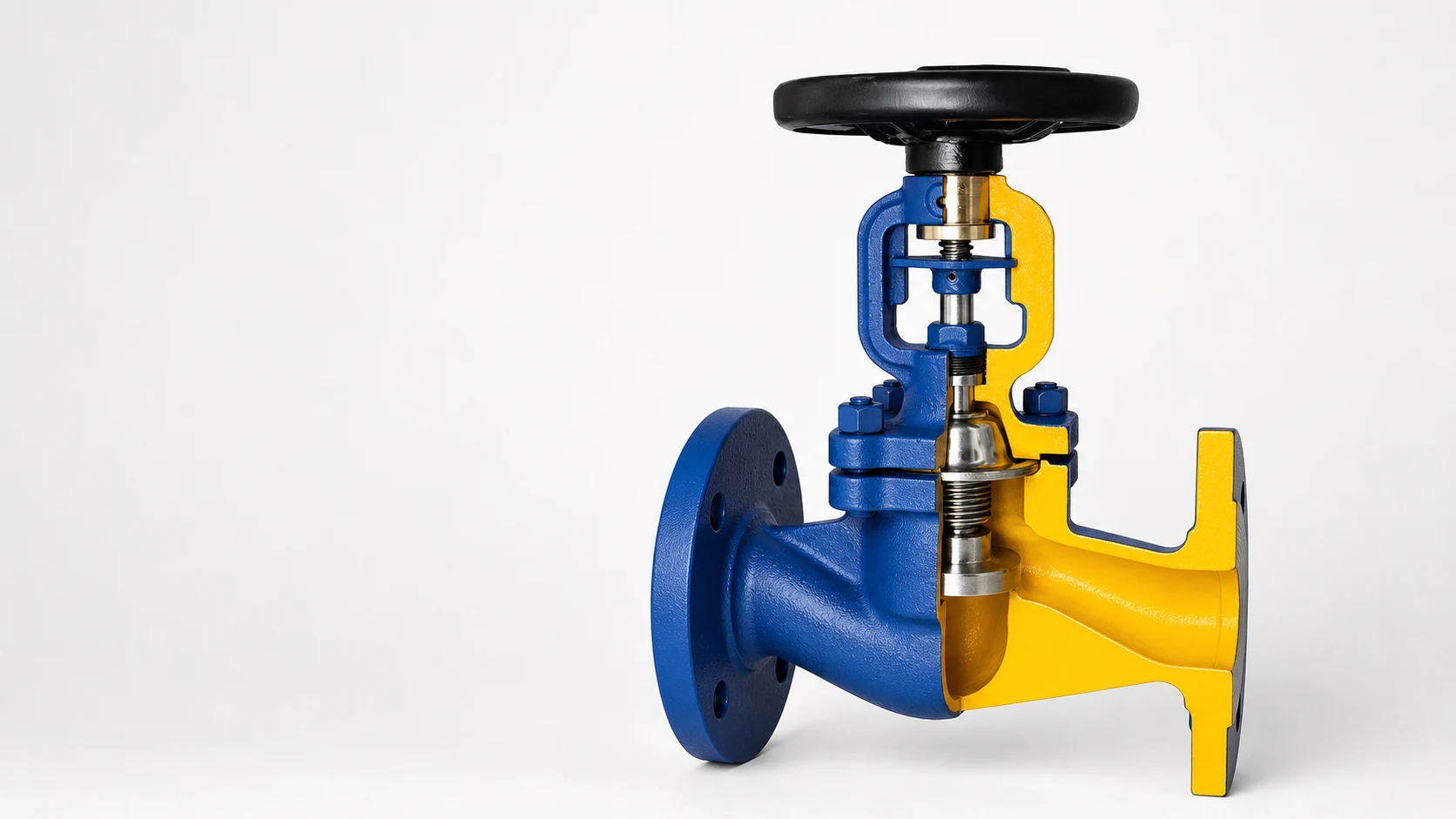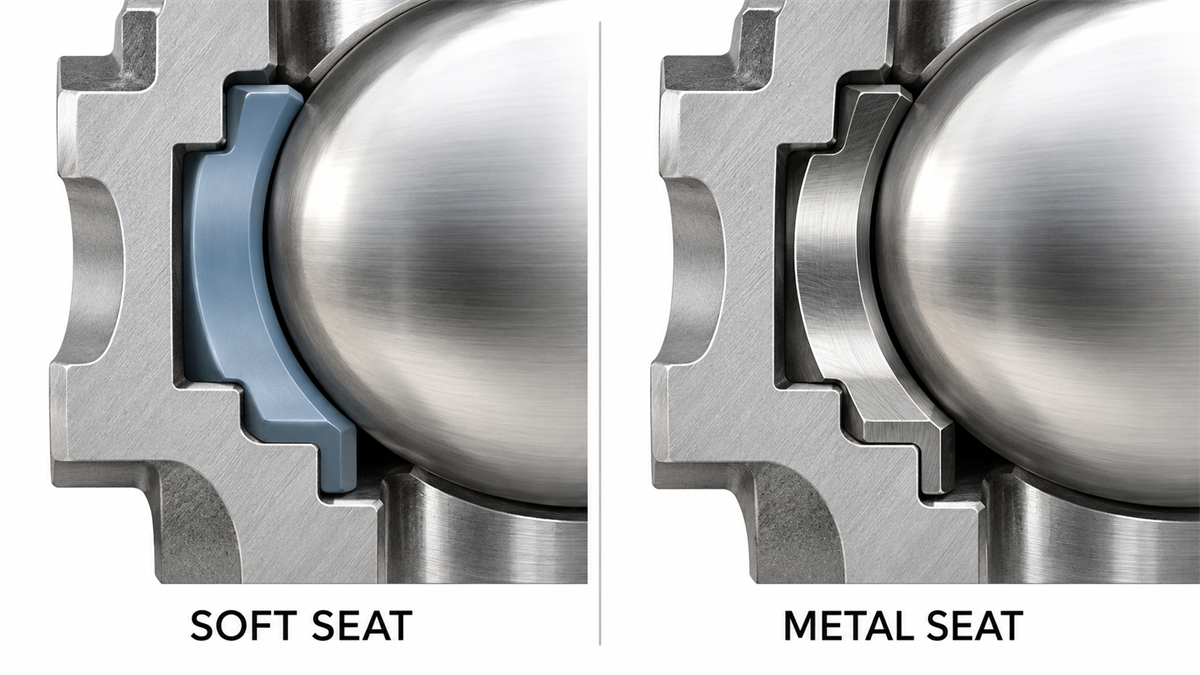
Short answer: choose a soft seated ball valve when clean, compatible media and tight shutoff are the main priorities within the selected seat material’s pressure-temperature limits. Start with a metal seated design when heat, solids, abrasion, thermal cycling or seat wear would make a polymer seat unreliable. The final choice still depends on the exact materials, pressure differential, leakage acceptance, operating frequency and test requirements.
Metal Seated vs Soft Seated Ball Valves: Quick Selection
Neither seat type is universally better. The useful question is which sealing system retains enough margin under the actual service conditions. Use this table as a screening step, then confirm the offered valve against the project datasheet and approved drawings.
| Selection factor | Soft seated ball valve | Metal seated ball valve | What the buyer should confirm |
|---|---|---|---|
| Media cleanliness | Often preferred for clean, compatible liquids or gases | Often reviewed when particles, scale or abrasive solids threaten a polymer seat | Solids content, particle size, hardness and flow condition |
| Temperature | Limited by the specific polymer, pressure and construction | Can extend the usable range when the complete metal-seat configuration is qualified | Normal, design and upset temperature; pressure-temperature rating |
| Shutoff expectation | Can provide very tight shutoff in suitable clean service | May use a different allowable leakage acceptance | Test standard, test medium, direction and acceptance level |
| Wear exposure | Seat can be cut, embedded or deformed by unsuitable duty | Hard-facing or coating may improve wear resistance when correctly selected | Base material, coating, hardness, corrosion and erosion mechanism |
| Operating torque | Often lower, but configuration and differential pressure still matter | May require a different torque basis and actuator margin | Breakaway, running and closing torque for the offered valve |
| Cost and maintenance | Usually the simpler starting point for compatible general service | Higher initial complexity may be justified where soft-seat replacement or downtime is the larger risk | Expected cycles, maintenance access and cost of failure |
The seat system is separate from the way the ball is supported. A floating or fixed/trunnion-mounted ball valve can use different seat constructions. Select the ball-support arrangement from size, pressure, bore, cavity and operating requirements, then select the seat system from the service and shutoff requirements. For the construction decision, use the floating vs fixed ball valve guide.
What Is a Soft Seated Ball Valve?
A soft seated ball valve seals against a non-metallic seat, commonly a PTFE-family or another engineered polymer selected for the medium, temperature and pressure. The seat can conform to the ball surface, which supports tight shutoff in suitable service. It is often the practical starting point for clean process fluids, utilities and pipeline isolation where the selected polymer remains compatible.
“Soft seat” is not one material or one temperature limit. PTFE, reinforced PTFE and other polymers have different chemical, pressure and temperature behavior. The complete valve rating, not the material name alone, controls the selection. The HN105 floating ball valve is one existing Honiks soft-seat reference and lists R.PTFE seats for its documented configurations.
What Is a Metal Seated Ball Valve?
A metal seated ball valve uses a metal-to-metal sealing interface between the ball and seat. Depending on the design, the sealing surfaces may use hard-facing, coating, lapping and a spring-loaded seat arrangement. The purpose is not simply to replace one material with another; it is to preserve the sealing geometry when heat, wear, particles or cycling would damage a soft seat.
Metal seating does not automatically prove zero leakage, fire-tested construction, corrosion resistance or suitability for every abrasive fluid. Base materials, coating system, spring arrangement, packing, test method and allowable leakage must all be confirmed for the offered configuration. The HN108 metal seated ball valve is one Honiks product route for PN-rated hard-seat service, subject to its documented range and project confirmation.
Seven Inputs That Decide the Seat Type
1. Medium and solids
State the full medium rather than writing only “oil,” “water” or “chemical.” Include concentration, solids content, approximate particle size, tendency to crystallize or polymerize, and whether scale can enter the seat area. A soft seat can perform well in clean compatible service, while particles can score, embed in or deform an unsuitable polymer. A metal seat may be the better review direction for dirty or abrasive duty, but its coating and base material must match the wear and corrosion mechanisms.
2. Operating, design and upset temperature
Provide the normal operating range, design temperature, startup condition and credible excursions. Do not select a valve from a generic “soft seat temperature” or “metal seat temperature” found online. Pressure, seat material, body material, packing and thermal cycling change the available envelope. For HN108, the source catalog gives a reference range of -28°C to 400°C; the final rating still depends on the selected materials, packing, medium and pressure-temperature conditions.
3. Pressure and differential pressure
Valve class or PN rating describes only part of the duty. The supplier also needs the maximum differential pressure across the closed valve and, for actuated service, the pressure conditions during opening and closing. These values affect seat loading, operating torque and actuator sizing.
4. Required shutoff and test method
A request for “zero leakage” is not a complete specification. Identify the governing test standard, test medium, pressure, direction, duration and acceptance criterion. Soft seats can provide very tight shutoff in compatible clean service. Metal-seated designs may be supplied to a defined allowable leakage rate. The actual acceptance must be agreed for the offered valve rather than inferred from the words “soft” or “metal.”
5. Operating mode and cycle frequency
Confirm whether the valve is normally open, normally closed, emergency isolation, frequently cycled or expected to remain idle for long periods. Standard ball valves are commonly selected for on-off service. Do not assume a standard metal seated valve is suitable for continuous throttling: partially open operation can concentrate velocity and wear at the ball and seat. A control duty requires a separately reviewed design and sizing basis.
6. Torque and actuation
The actuator must be selected from the offered valve’s torque data at the stated pressure and temperature, with an agreed safety factor and fail position. Metal-seat contact, coating, seat preload and deposits can change breakaway and running torque. Avoid sizing an actuator from another model or from a general soft-versus-metal rule.
7. Materials, testing and documentation
List body, ball, stem, seat, coating or hard-facing, packing and gasket requirements. Also state whether the project needs material certificates, pressure test records, leakage test evidence, coating records, inspection hold points, fire-test evidence or other documentation. A standard reference in a catalog is not the same as proof for every size, pressure class and material combination. See Honiks’ quality control and inspection support process and the valve testing and documentation checklist for documentation planning.
Common Selection Mistakes
- Assuming metal seated means leak-free. Define the allowable leakage and test method instead.
- Using one universal temperature number. Confirm the complete pressure-temperature envelope of the offered construction.
- Treating metal as automatically corrosion-proof. Coating and base material compatibility both matter.
- Assuming fire-safe from the seat label. Specify the required standard and verify evidence for the offered configuration.
- Ignoring actuator torque. Seat design, pressure differential, deposits and temperature can change the required output.
- Using an on-off valve for continuous control without review. Throttling can accelerate localized erosion and seat damage.
- Comparing PN and ASME Class products as direct substitutes. End connections, design standards, dimensions and test requirements must align with the piping specification.
Honiks Product Routes for Project Review
The product references below help route an inquiry. They are not interchangeable solely because all three are ball valves.
| Reference | Documented direction | Use in the first review |
|---|---|---|
| HN105 Floating Ball Valve | ANSI pipeline shutoff; Class 150, 300 and 600; R.PTFE seat shown in the documented materials | Starting point for compact soft-seat quarter-turn isolation within the offered size and duty envelope |
| HN106 Fixed Ball Valve | Fixed/trunnion route; Class 150 through Class 2500 depending on size and configuration; seat options require offer confirmation | Review route for larger sizes, higher pressure classes or a fixed-ball structure |
| HN108 Metal Seated Ball Valve | PN16, PN25 and PN40; DN15-DN200; metal-seat construction; catalog reference -28°C to 400°C subject to configuration | Review route where elevated temperature, particles or wear make a hard-seat design relevant |
You can also review the full Ball Valves category.
A Practical Decision Sequence
- Reject any seat material that is incompatible with the medium or temperature.
- Check whether solids, scale, flashing, erosion or thermal cycling threaten the remaining seat options.
- Define the shutoff test and allowable leakage before comparing quotations.
- Confirm the valve standard, PN or Class system, size, end connection and face-to-face requirement.
- Obtain torque data for the offered valve and size the operator or actuator for the stated duty.
- Verify materials, coating, packing, inspection and documentation against the project specification.
- Compare total operating risk, maintenance access and downtime—not only the valve purchase price.
Application context can change the answer. For dirty or chemically demanding lines, review the chemical processing valve selection guide. For storage and transfer systems, see the tank farm ball valve selection notes.
RFQ Checklist for Metal or Soft Seated Ball Valves
Send the following information for each line item. Missing service data is more likely to cause a wrong seat selection than the choice of a brand name. The industrial valve inquiry checklist provides a broader format for organizing these inputs.
- Medium, concentration and phase
- Solids content, approximate particle size and abrasive characteristics
- Operating, design and upset temperature
- Operating pressure, design pressure and maximum differential pressure
- Size, PN or ASME Class, design standard and end connection
- Required body, ball, stem, seat, coating, packing and gasket materials
- Required shutoff test standard, test medium and acceptance level
- On-off or control duty, operating frequency and expected cycles
- Manual, gear, pneumatic, electric or hydraulic operation
- For actuated valves: supply pressure or voltage, control signal, fail position and enclosure requirement
- Quantity, delivery schedule and approved drawing requirements
- Material certificates, pressure/leakage records, coating records and third-party inspection requirements
Frequently Asked Questions
Is a metal seated ball valve always better for high temperature?
No. Metal seating is often reviewed when the service exceeds a polymer seat’s usable envelope, but the complete valve still needs suitable body, trim, coating, packing, gaskets and pressure-temperature ratings. The actual offered configuration controls the limit.
Does a metal seated ball valve provide zero leakage?
Do not assume so. Metal-seated and soft-seated valves can use different leakage acceptance criteria. State the required test standard, test medium, pressure, direction and allowable leakage in the inquiry.
Can a soft seated ball valve handle steam?
Only when the exact seat material, pressure-temperature rating and complete valve construction are suitable for the stated steam conditions. “Steam” alone is not enough information; provide operating and design temperature, pressure, cycling and upset conditions.
Is every metal seated valve fire-safe?
No. Seat material alone does not establish fire-tested construction. Specify the required fire-test standard and confirm that the evidence applies to the offered design, size, pressure rating, materials and sealing arrangement.
Which seat is better for slurry or solids?
A metal-seat direction is often reviewed when particles would cut or deform a soft seat, but particle size, hardness, concentration, velocity, corrosion and deposit behavior all matter. Coating selection and seat-area design must be checked for the actual service.
Can HN108 replace HN105 or HN106 directly?
Not by model name alone. HN108 is documented as a PN/GB-route metal seated product, while HN105 and HN106 cover ANSI/API-oriented configurations. Confirm the piping standard, rating, dimensions, end connections, materials and test requirements before treating any models as alternatives.
Send the Service Conditions for Review
For a seat-selection and quotation review, send the medium, solids, temperature, pressure and differential pressure, size, rating, materials, shutoff test, operating frequency, actuation, quantity and documentation requirements. Honiks will compare the available configuration with the project specification and identify the points that still require supplier confirmation.
Review Honiks’ factory capability and project support, then contact Honiks with your valve datasheet or line-item list.