
Product Overview
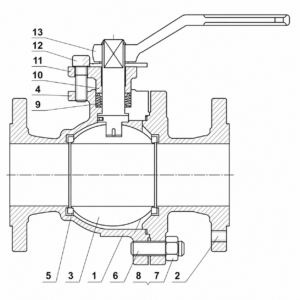
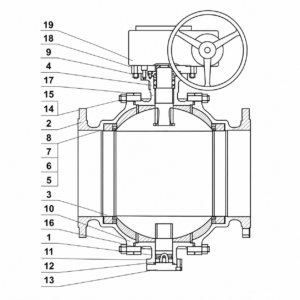
The Metal Seated Ball Valve HN108 is a hard-sealed ball valve designed for industrial service where elevated temperatures, abrasive media or demanding operating conditions require a metal-to-metal seating arrangement. The construction uses a spring-loaded sealing structure, employing plate spring or cylindrical spring elements, to help maintain sealing contact between the ball and seat rings under the specified pressure and temperature conditions.
HN108 covers DN15 through DN200 in PN16, PN25 and PN40 pressure ratings, with manual lever, worm gear, pneumatic and electric actuation options. Honiks is a factory-backed industrial valve supplier based in China, supporting project inquiry review, inspection coordination and documentation preparation for HN108 supply.
Metal Seat Construction
A metal seated or hard-sealed ball valve replaces the non-metallic soft seat (PTFE, RPTFE or other polymer compounds) with a hardened metal seat ring. The ball and seat contact surfaces use hard-faced or hardened sealing materials according to the offered configuration, and a spring-loaded mechanism (plate spring or cylindrical spring) helps maintain contact force between the sealing faces under the specified service conditions.
This spring-loaded design compensates for differential thermal expansion between the body, ball and seat components, and for wear that develops over the operating life of the valve. The result is a valve that can operate in temperature ranges and media conditions where soft seats would degrade, soften or extrude.
Technical Range
- Size range: DN15 through DN200, 1/2 inch through 8 inch
- Pressure ratings: PN16, PN25, PN40 / PN1.6 through 4.0 MPa
- Temperature reference: The source catalog lists a reference range of -28 degrees C to 400 degrees C. The final pressure-temperature rating depends on the selected body material, seat design, packing material, media characteristics and project operating conditions. Confirm the applicable rating against the project datasheet.
- End connections: Flanged ends to applicable flange standards
Materials and Sealing Options
Body: WCB carbon steel or stainless steel equivalents, selected based on media, temperature and project material specification.
Ball and stem: 2Cr13 martensitic stainless steel or equivalent stainless steel grades, selected for hardness and corrosion resistance appropriate to the service.
Seat and sealing ring: Special hardening material applied to the seat contact surfaces to provide the metal-to-metal sealing interface. The hardening process and seat material grade should be confirmed for the specific media and temperature conditions.
Packing: Carbon fiber, PTFE (for temperature-limited chemical applications) or flexible graphite, selected based on the temperature range and media compatibility requirements. Graphite packing is common for higher-temperature service where PTFE would exceed its temperature limit.
Material selection should follow the medium data sheet, confirming chemical compatibility, temperature limits, and any solids content or abrasive characteristics of the process stream.
Operation Options
- Manual lever: Quarter-turn operation for smaller sizes and lower torque applications, with open and closed position indication; locking or intermediate-position features depend on the offered lever design.
- Worm gear operator: Specified for larger sizes or higher torque applications where mechanical advantage is required. A worm gear operator helps manage higher operating torque on larger sizes or higher differential pressure duties; position holding and locking details should be confirmed on the offered operator.
- Pneumatic actuator: Double-acting or spring-return configurations for automated or remote operation. Spring-return is available where the valve must drive to a safe position on loss of instrument air or control signal.
- Electric actuator: For integration with plant control systems. Voltage, control signal, position feedback requirements and enclosure rating must be specified at the ordering stage.
Applications
HN108 metal seated ball valves are suitable for industrial service where a hard-seal design provides practical advantages:
- High-temperature water, steam and thermal fluid service: Where soft seat materials would degrade or soften, a metal-to-metal seat avoids the temperature limitation of polymer seats.
- Oil and hydrocarbon service: Including heavy oil, slurry, or streams with suspended solid particles where the hardened seat surfaces resist abrasive wear.
- Chemical and acid/alkali service: Where the media may attack polymer seat materials. Confirm material compatibility against the specific chemical, concentration and temperature conditions.
- Carbon powder and solids-handling service: Where the hardened metal seat surfaces, combined with the spring-loaded sealing mechanism, provide resistance to abrasive media.
Media compatibility must be confirmed against the body, ball, seat and packing material selection before the valve is specified for a particular process stream.
Standards and Testing Notes
The HN108 product references the following Chinese national and industry standards for design, dimension and testing. These are catalog references; confirm the applicable standards, editions and any supplementary project requirements before order:
- Design reference: GB/T 12237
- Face-to-face and structure length: GB/T 12221
- Flange standards: JB/T 79, GB/T 9113, HG/T 20592
- Inspection and testing: GB/T 13927, JB/T 9092
Pressure test reports, material certificates and dimensional inspection records can be coordinated as part of the project documentation package. If fire-tested construction is required, the applicable test standard and acceptance criteria should be specified and verified before order.
Inquiry Checklist
When preparing an HN108 inquiry, include the following for each line item:
- DN or inch size
- Pressure rating: PN16, PN25 or PN40
- Body material: WCB or stainless steel
- Ball and stem material
- Seat and sealing material. Specify hardening treatment if required
- Packing material: carbon fiber, PTFE or flexible graphite
- Flange standard: JB/T 79, GB/T 9113 or HG/T 20592
- Operation: manual lever, worm gear, pneumatic or electric actuator
- If actuated: voltage, control signal type, fail position, enclosure rating
- Medium: name, concentration, temperature range, solids content if any
- Quantity per size, pressure class and configuration
- Documentation requirements: test reports, material certificates
Frequently Asked Questions
What is the difference between a metal seated ball valve and a soft seated ball valve?
A metal seated ball valve uses hardened metal seat rings and a spring-loaded mechanism to maintain sealing contact between the ball and seat. This allows operation at higher temperatures and in abrasive media where soft seats (PTFE, RPTFE) would degrade. The choice between metal and soft seating depends on the temperature, media and required shut-off performance. Metal-seated designs may have different allowable seat leakage rates under applicable test methods.
What temperature range can HN108 handle?
The source catalog lists a reference range of -28 degrees C to 400 degrees C. The allowable temperature for a specific configuration depends on the body material, seat hardening treatment, packing material, media properties and project operating conditions. Confirm the final pressure-temperature rating against the project datasheet.
Can HN108 be specified for projects with fire-tested construction requirements?
If fire-tested construction is required, the applicable test standard, edition, acceptance criteria, seat design, packing, and offered configuration should be specified and verified before order.
What seat leakage rate should be expected?
Metal seated ball valves are tested to the applicable inspection standard referenced in the project specification, such as GB/T 13927 or JB/T 9092, which define permissible leakage rates for metal-seated designs. Confirm the required leakage class or acceptance level in the inquiry to ensure the offered configuration is tested to the correct criteria.
Can HN108 be used for throttling or flow control?
A ball valve is selected for on-off isolation service. Prolonged operation at partially open positions creates high-velocity flow across the seat and ball surfaces, which can accelerate wear on both soft and hard seated designs. If continuous throttling is required, a globe valve may be a more suitable choice.
For butterfly valve configurations in abrasive or demanding service, see the metal seated butterfly valve for abrasive service.
For a side-by-side review of shut-off expectations, temperature, solids, torque and testing, read the metal seated vs soft seated ball valve selection guide.
Related Products and Resources
For soft-seated ball valve configurations, see the Floating Ball Valve HN105 and Fixed Ball Valve HN106 product pages. Review the Ball Valves category for additional material and seat combinations. For a comparison of ball valve types, see our Floating Ball Valve vs Fixed Ball Valve guide. For chemical processing applications, review the industrial valves for chemical processing guide.
See Quality Control for inspection management and Factory Capability for production and supply arrangements. Contact Honiks with your HN108 requirements for review and quotation.
Reviews
There are no reviews yet.